The Notting Hill Carnival Float That Never Left the Yard
Toque em qualquer palavra para uma tradução instantânea. Use os botões de reprodução para ouvir a história enquanto lê.
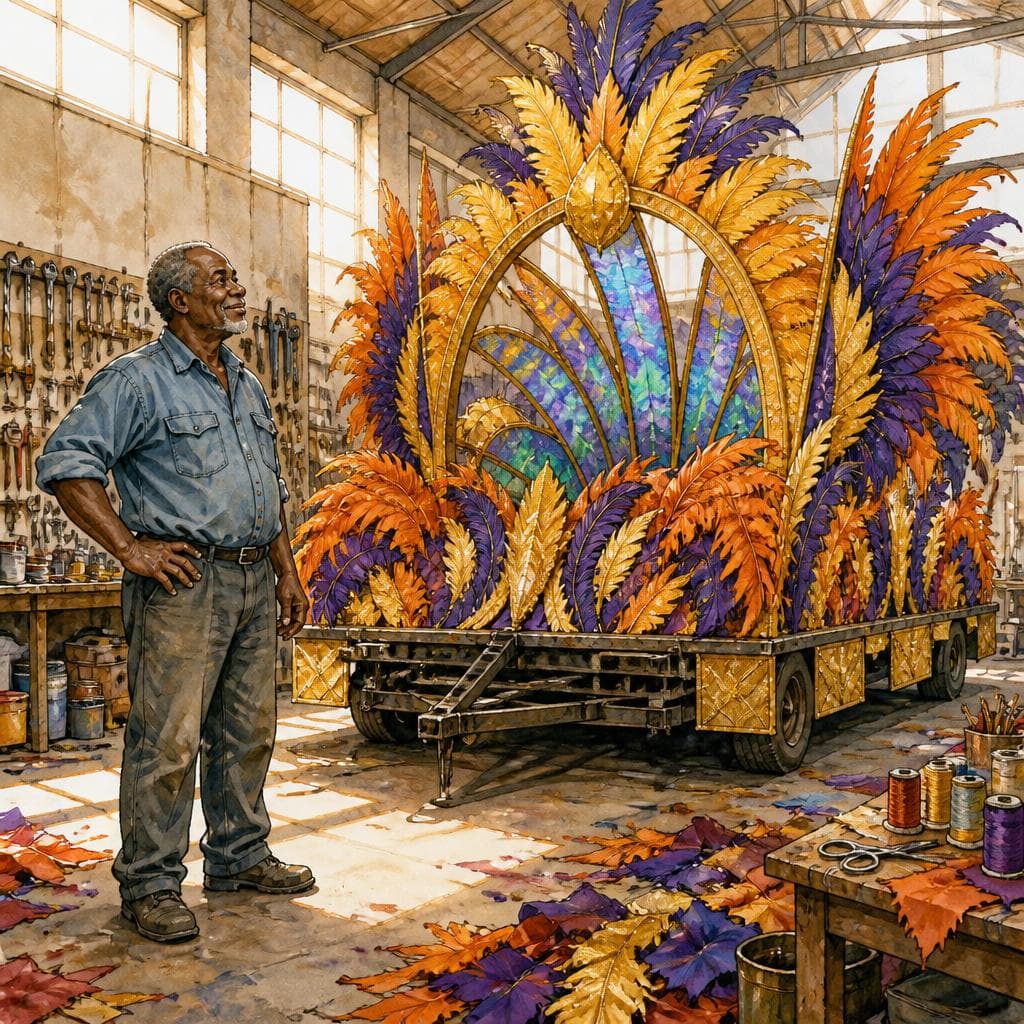
The float was finished by Thursday. It was always finished by Thursday.
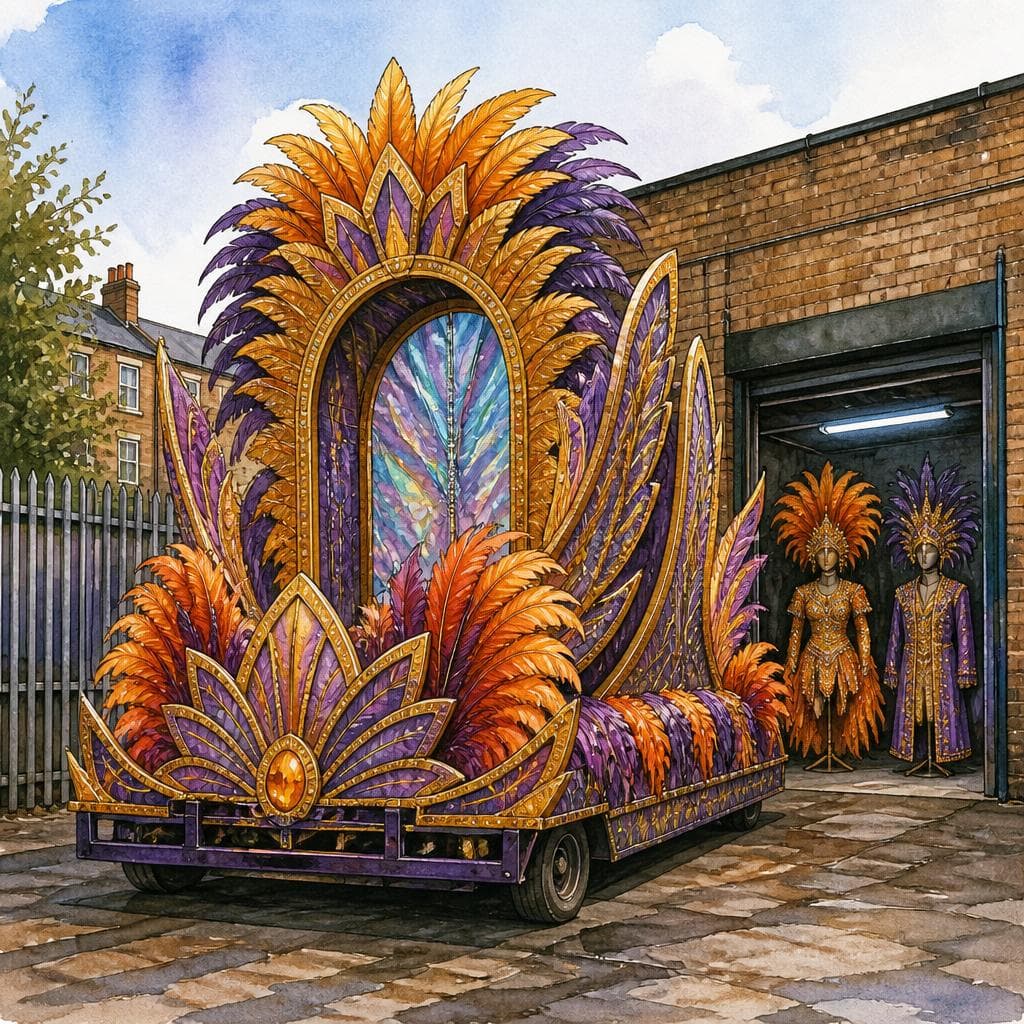
Seventeen feet of welded steel, draped in three thousand hand-sewn feathers—gold, burnt orange, and a deep, almost painful shade of violet—it sat in the yard behind Delroy Ambrose's garage in Brixton like a ship built too far from the sea. The sound system was wired. The generator was tested. The king and queen costumes hung on dress forms inside the garage, glittering under a single strip light.
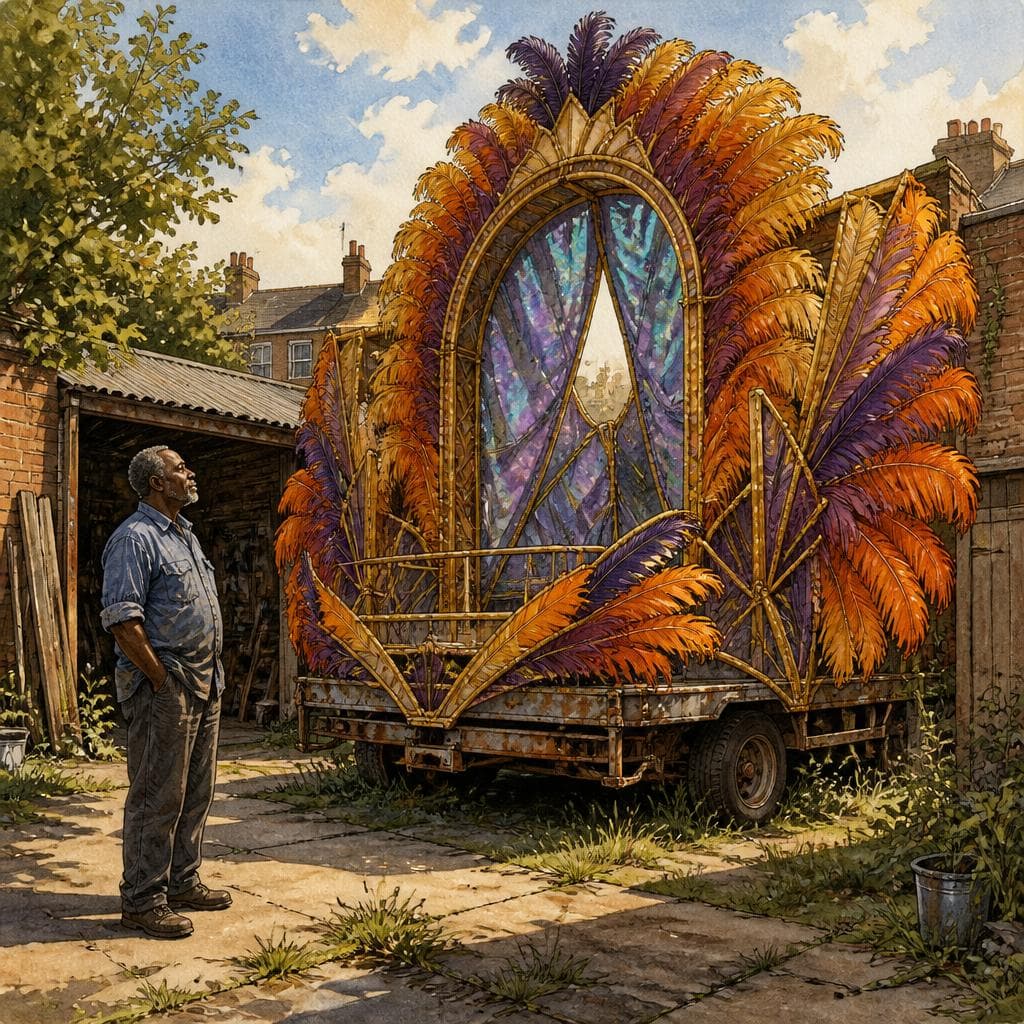
And yet, every year, the float did not move. It had not moved in eleven years.
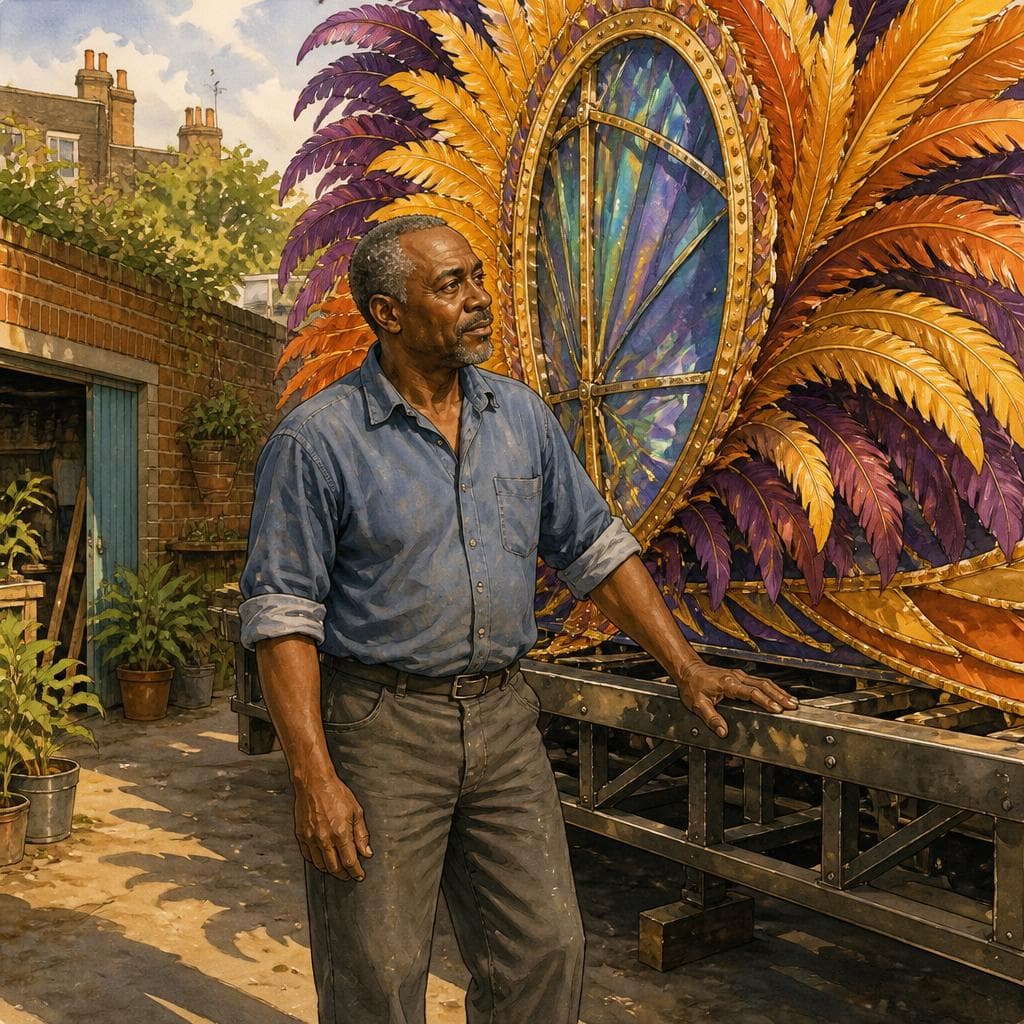
People in the neighbourhood had stopped asking why. The question had aged into local mythology, the kind of story told to a newcomer at a pub: 'Delroy builds a float every year for Carnival. Never takes it. No, I don't know why. Yes, I've asked him. No, he doesn't really answer.'

But this year, something was different. This year, his daughter had come home.
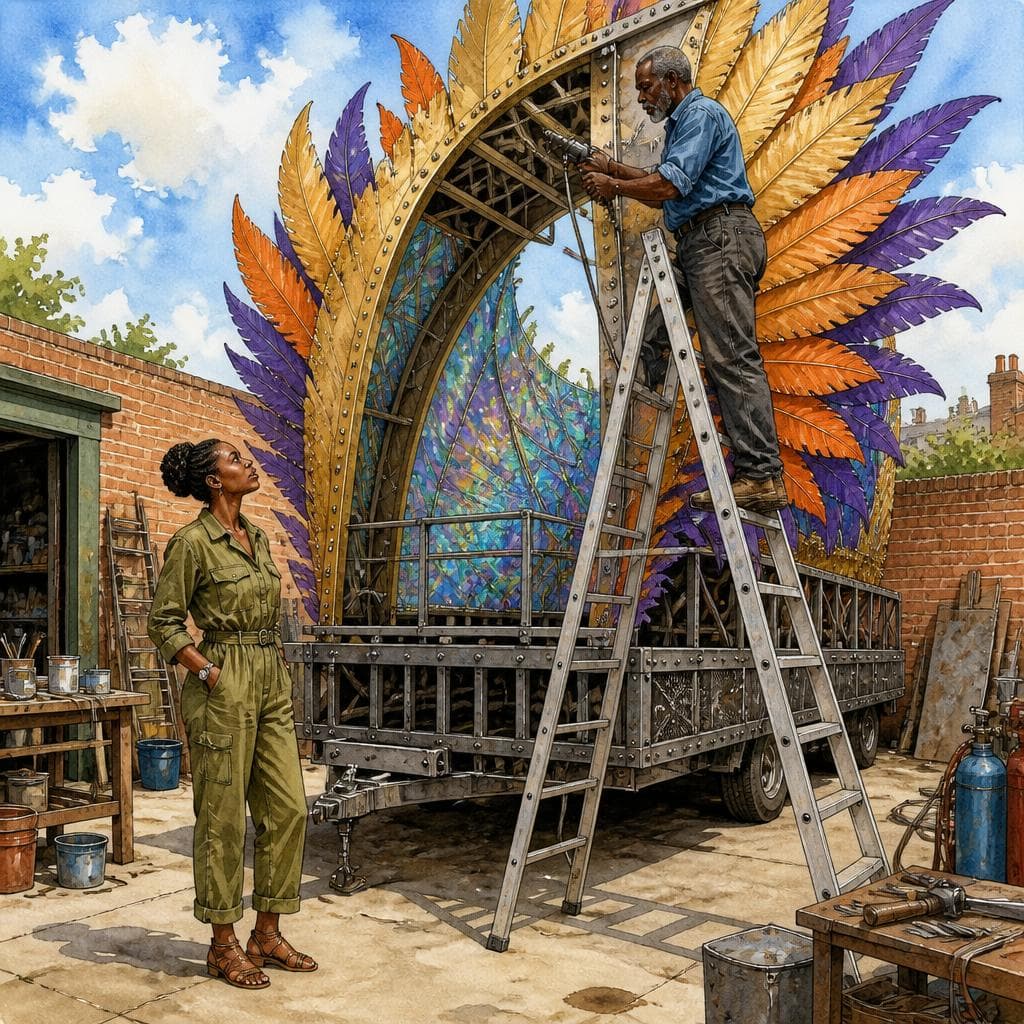
Marcia Ambrose had spent the last six years in Toronto, working in textile design. She had come back for her mother's birthday and found the float already half-assembled in the yard. Her father was balanced on a ladder with a rivet gun, wearing the same sun-faded work shirt he had owned since 1987.
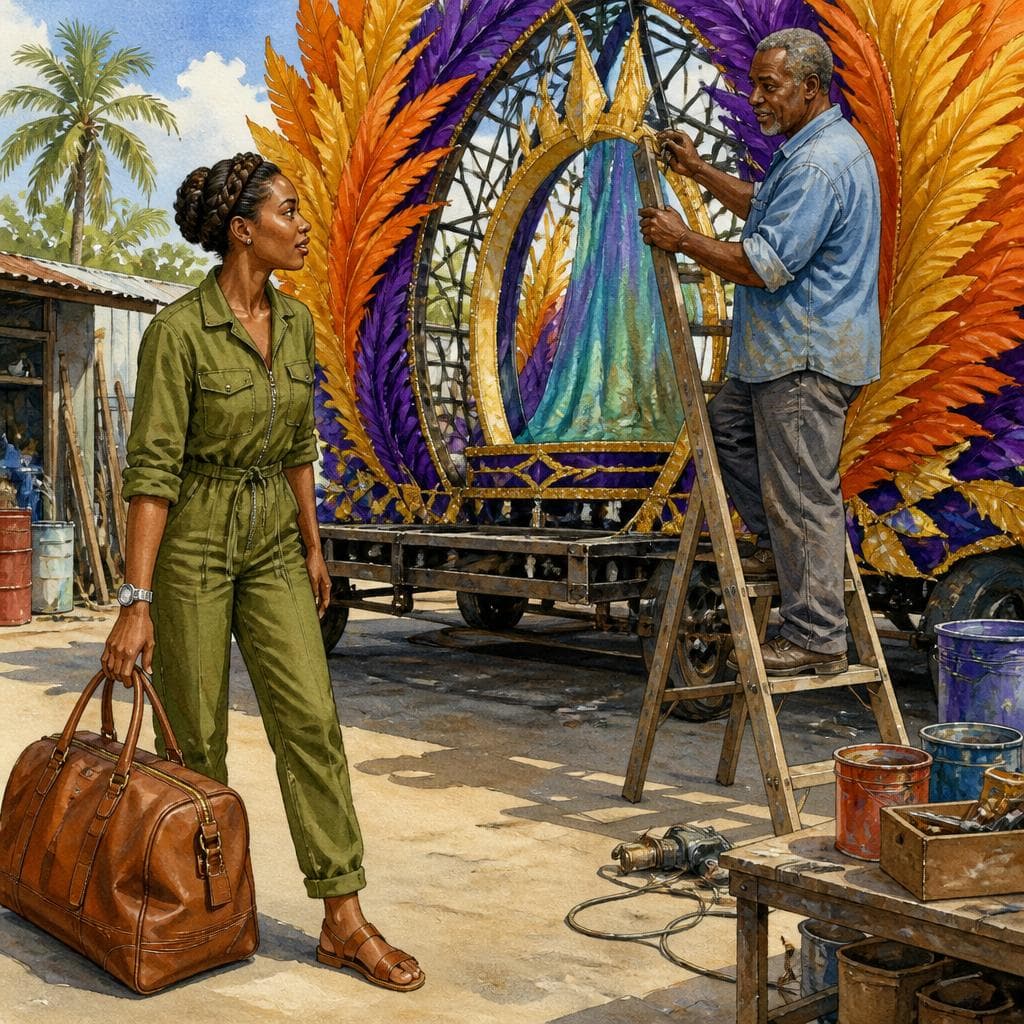
'You're doing it again,' she said, setting her bag down on the concrete.
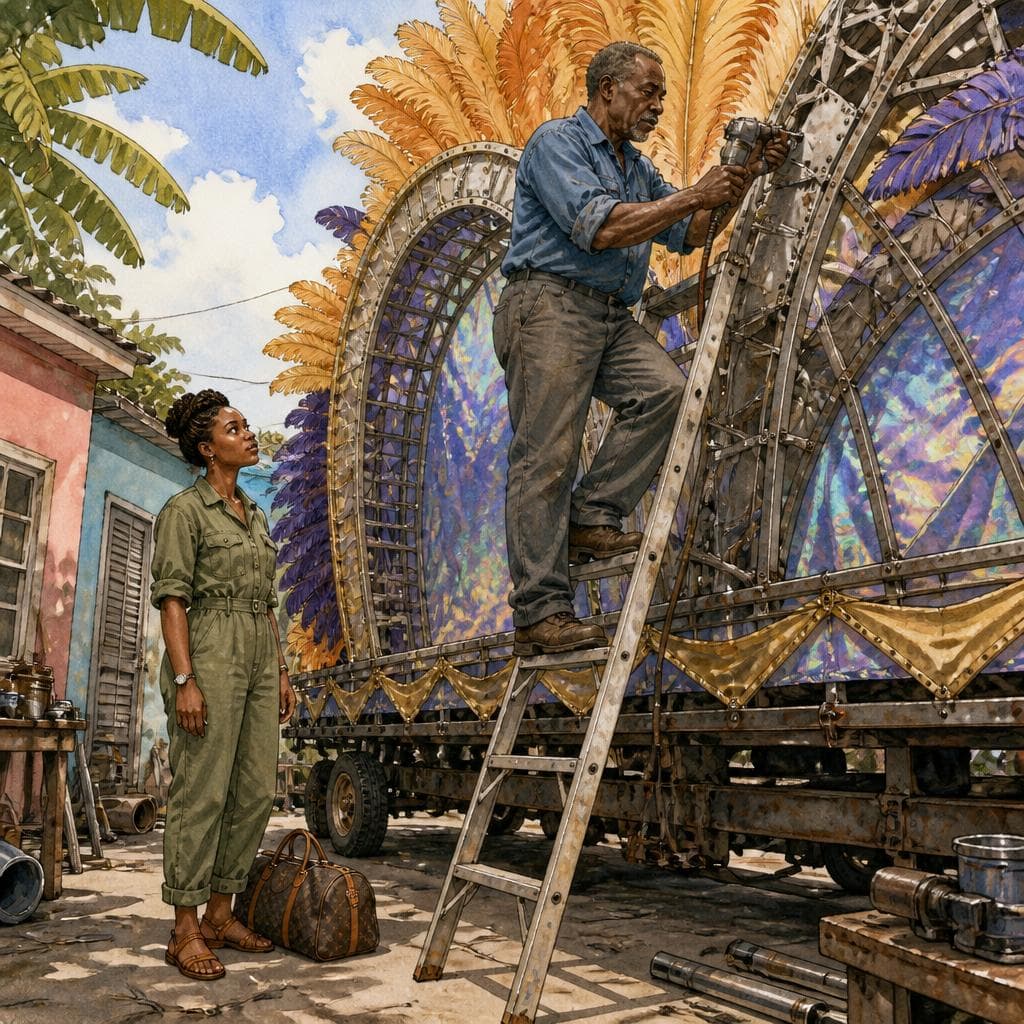
'Doing what?' He didn't look down.
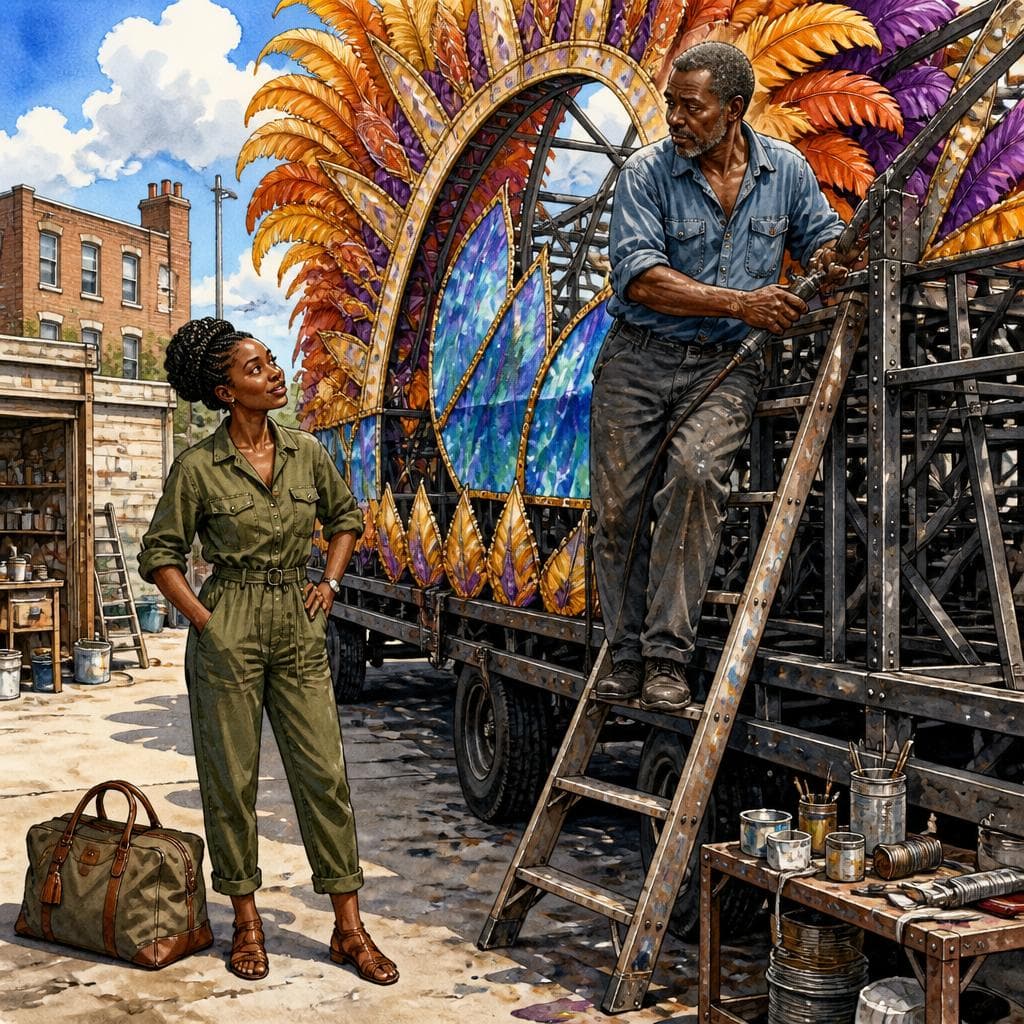
'You know what.'
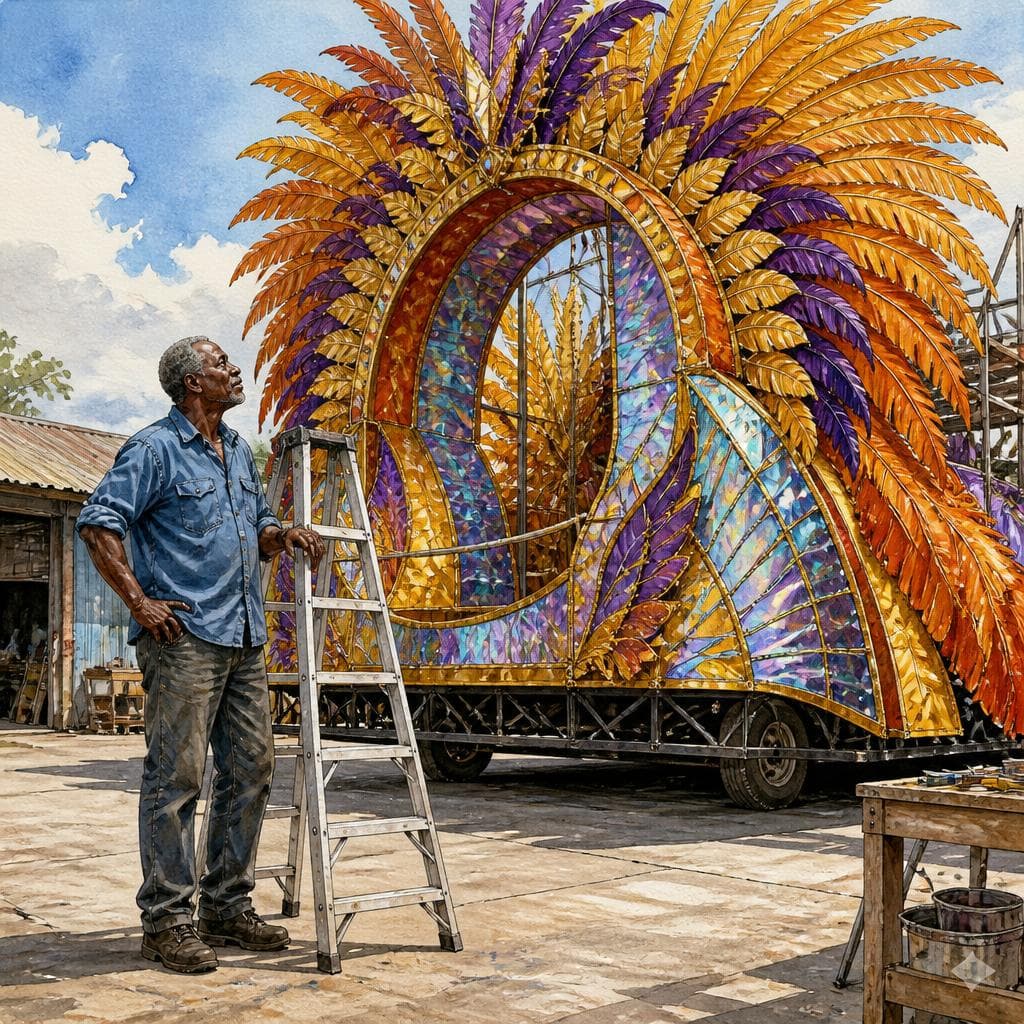
He climbed off the ladder slowly, the way men do when they want time to organise their thoughts. He looked at the float—genuinely looked at it, checking for the gap between his intention and the result.
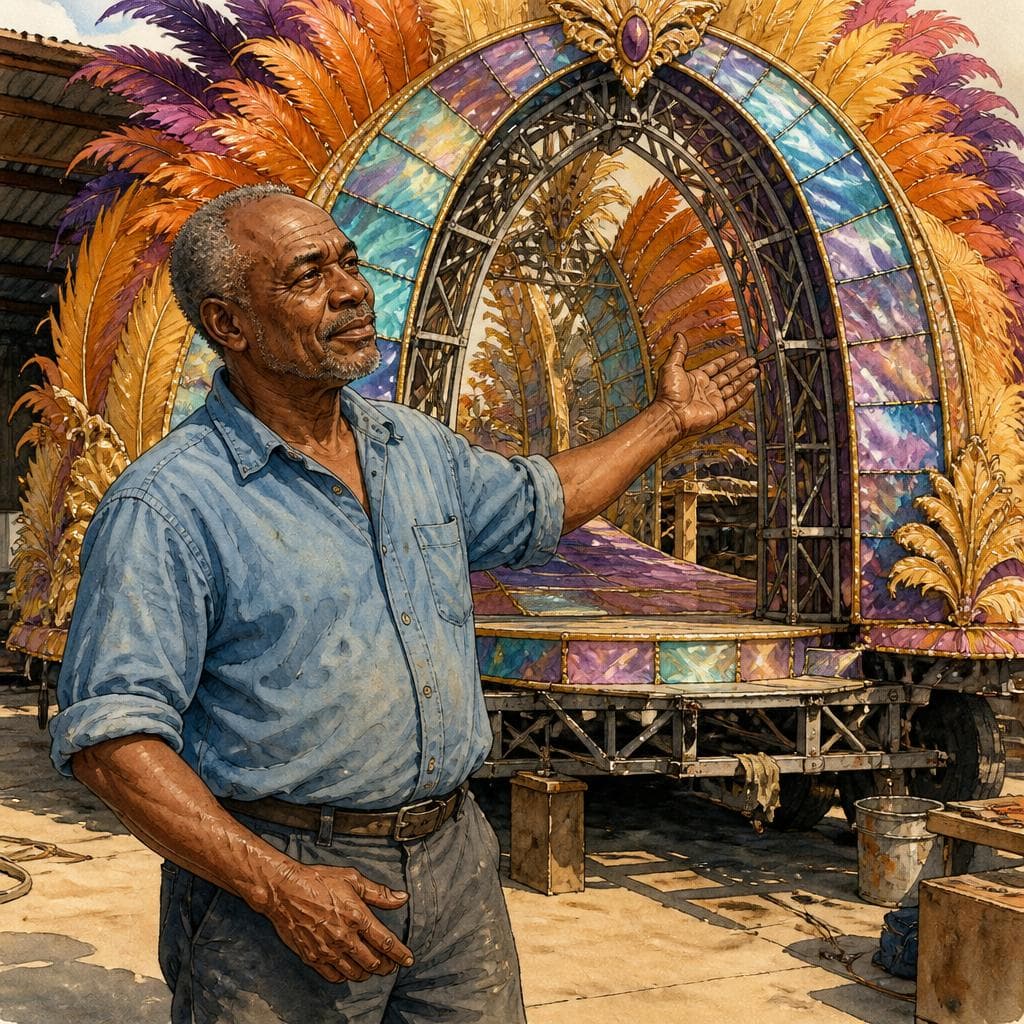
'It's the best one yet,' he said. 'The rigging on the centre arch—I changed the angle this year. It will catch the light differently when it moves.'
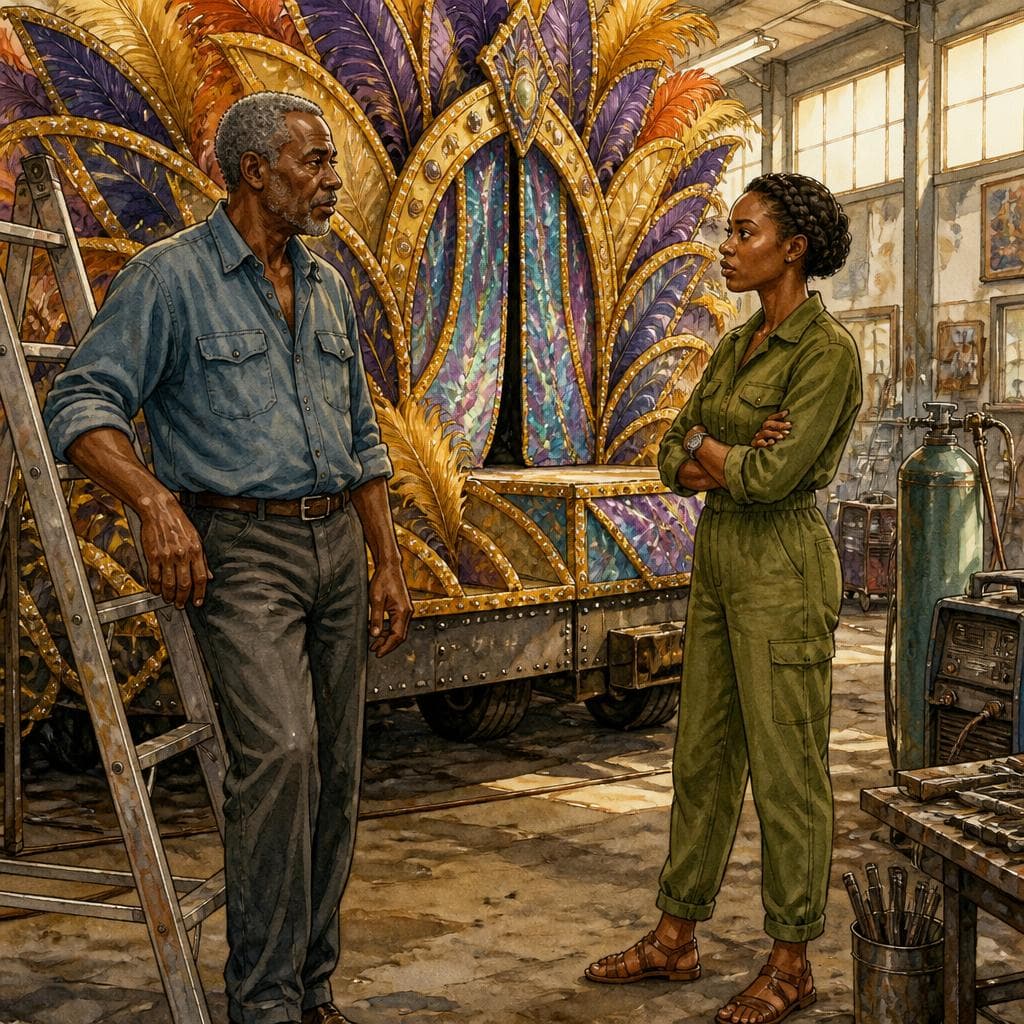
'When it moves,' Marcia repeated. 'Dad.'

He handed her a bottle of water from a cool-box. She took it. That, she thought, was twenty-five years of a particular kind of love—the kind that does not announce itself.
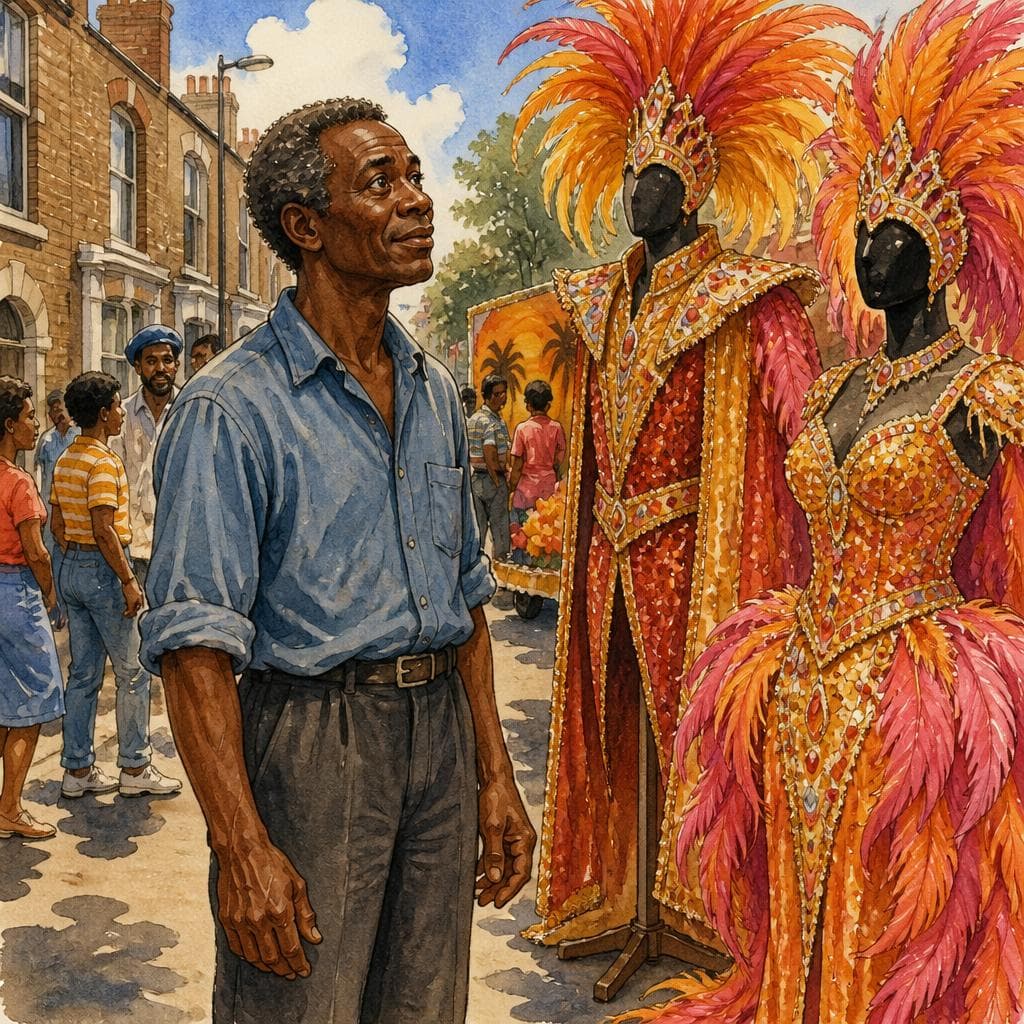
The Notting Hill Carnival had been Delroy's religion before it was Marcia's inheritance. He had come to London from Trinidad in 1979, seventeen years old, carrying almost nothing. He had found the Carnival in 1981, the year that the Brixton riots left a particular kind of bruise on the city—a bruise that the Carnival, that August, had pressed its thumb against and said: we are still here, and we are still beautiful.
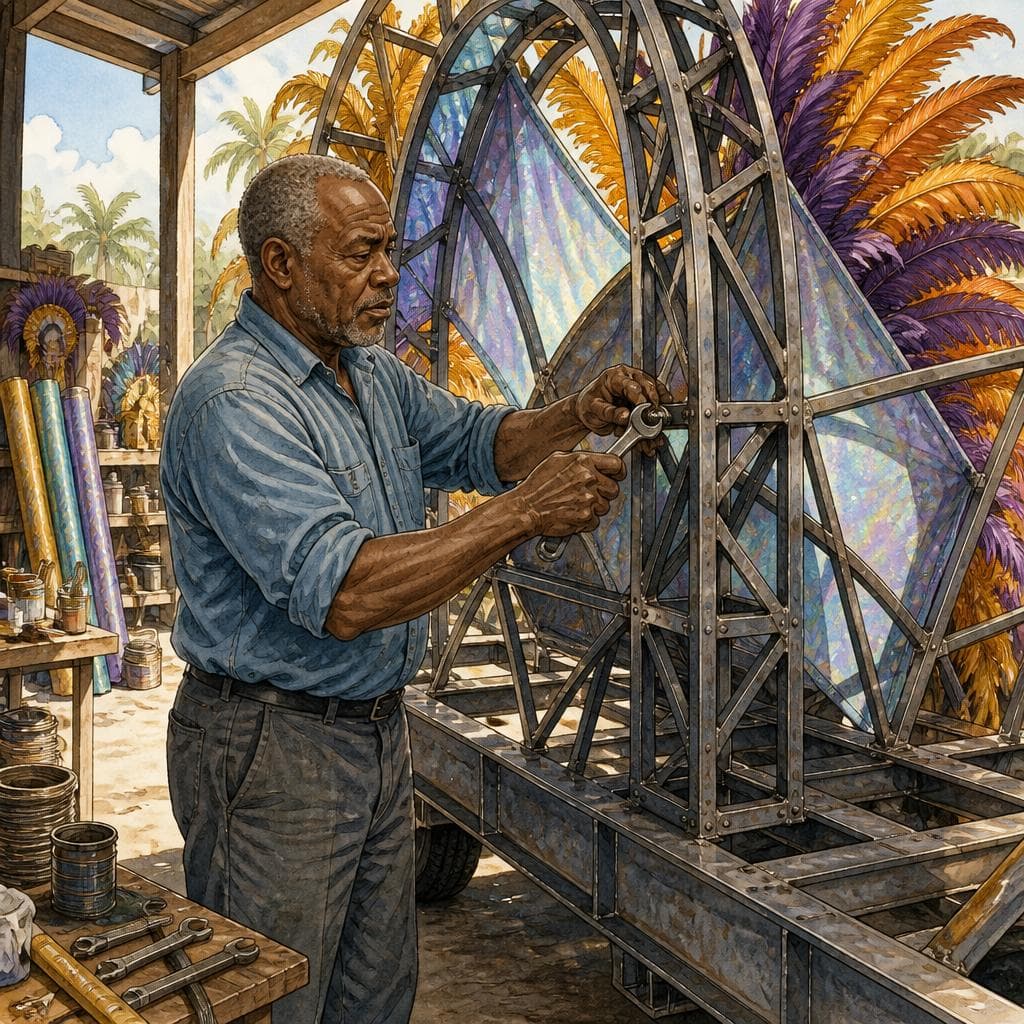
He had joined a mas band—a masquerade group—that year and had been building for them ever since. He had a gift for structure: for understanding how weight distributed itself, how something enormous could be made to feel, from a distance, like it was barely touching the ground.
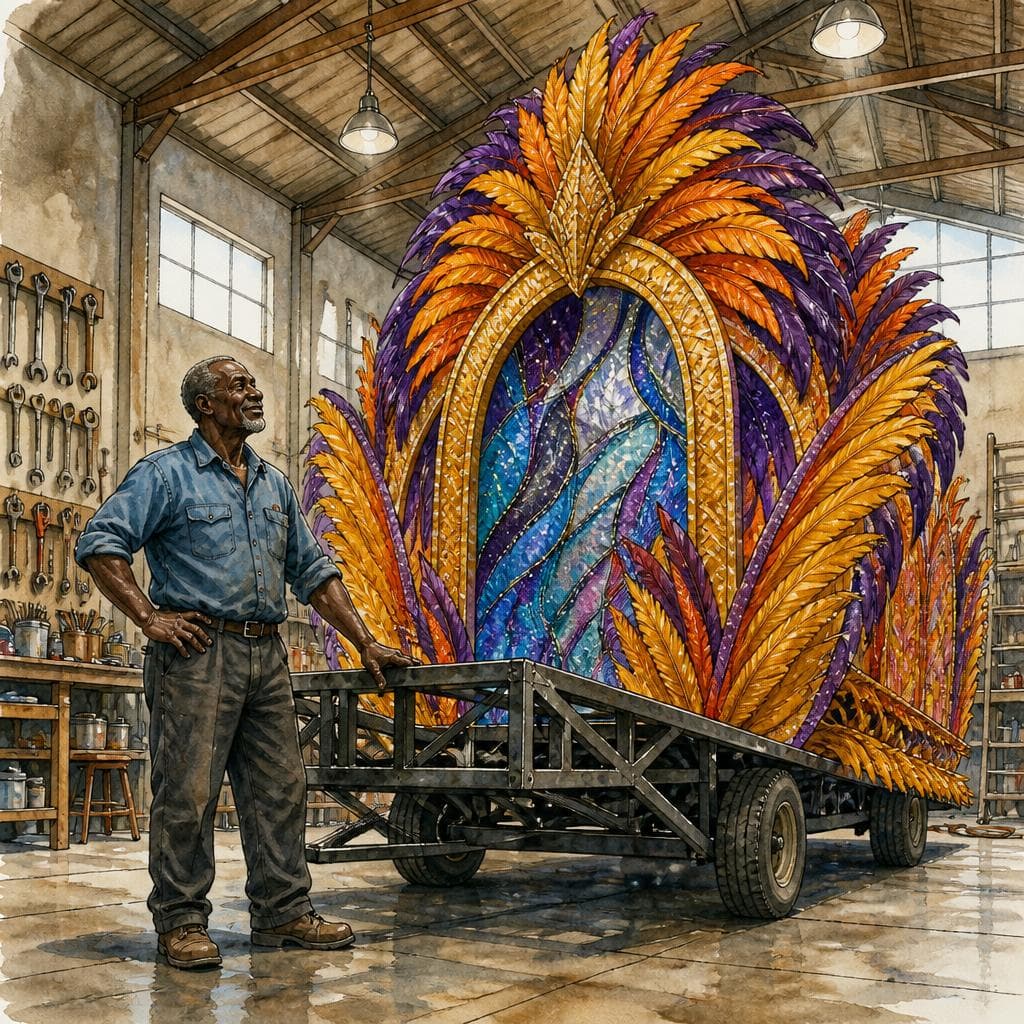
In 2013, he had built his first fully independent float for a small collective of friends. It was supposed to be his debut as a bandleader. However, a dispute with the route committee led to an official refusal. The exact reason was never clear to Marcia, but her father never applied to join the official route again.
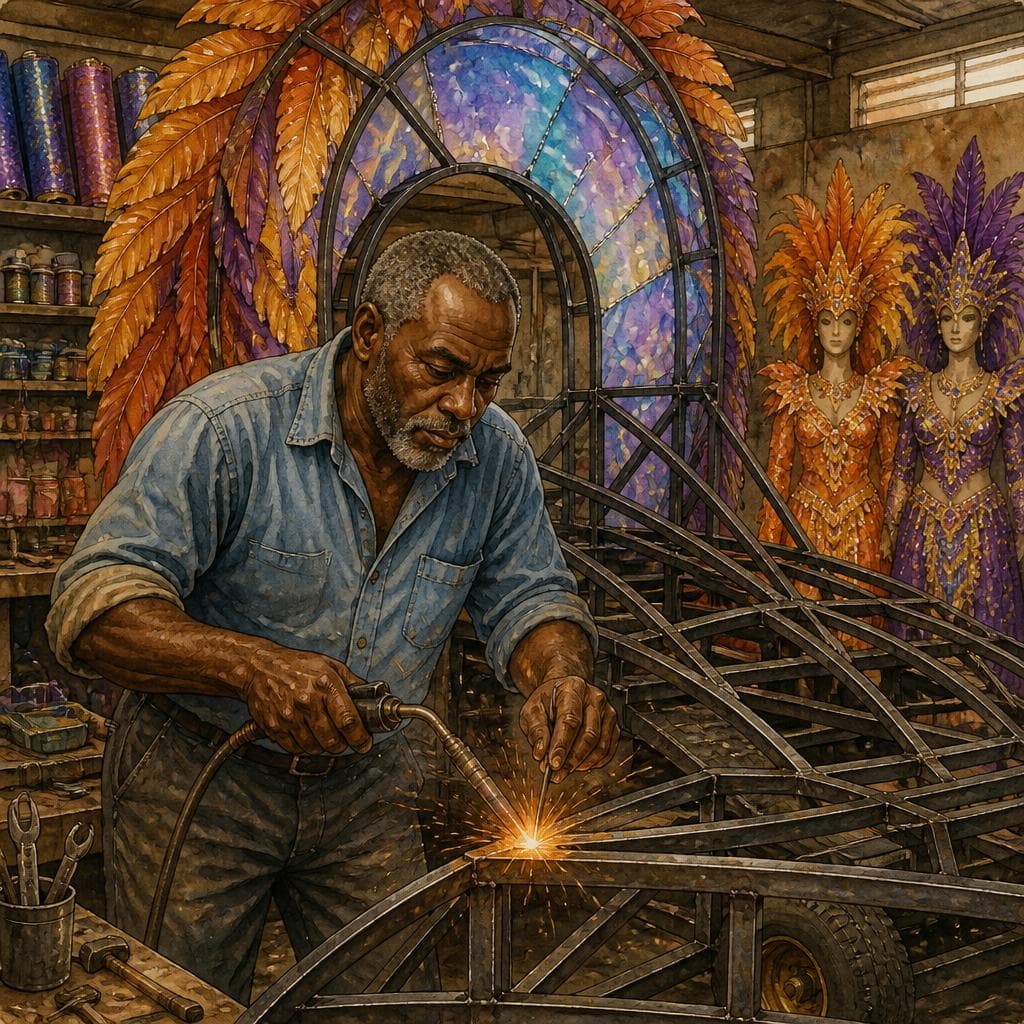
But he kept building.
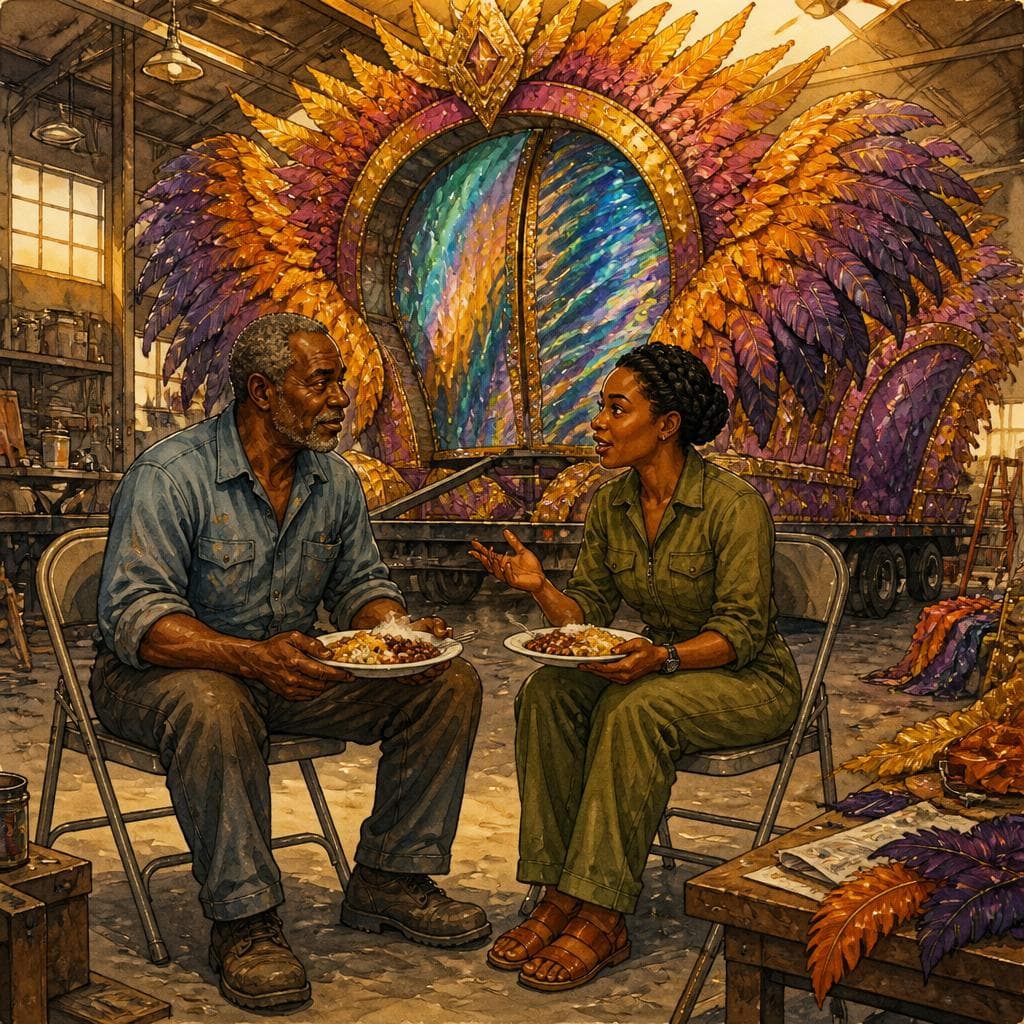
'I've been trying to understand it for years,' Marcia told him on Friday evening. They were eating rice and peas on folding chairs with the float looming above them like a feathered monument. 'I used to think you were punishing the committee, making something perfect and then refusing to hand it to them.'
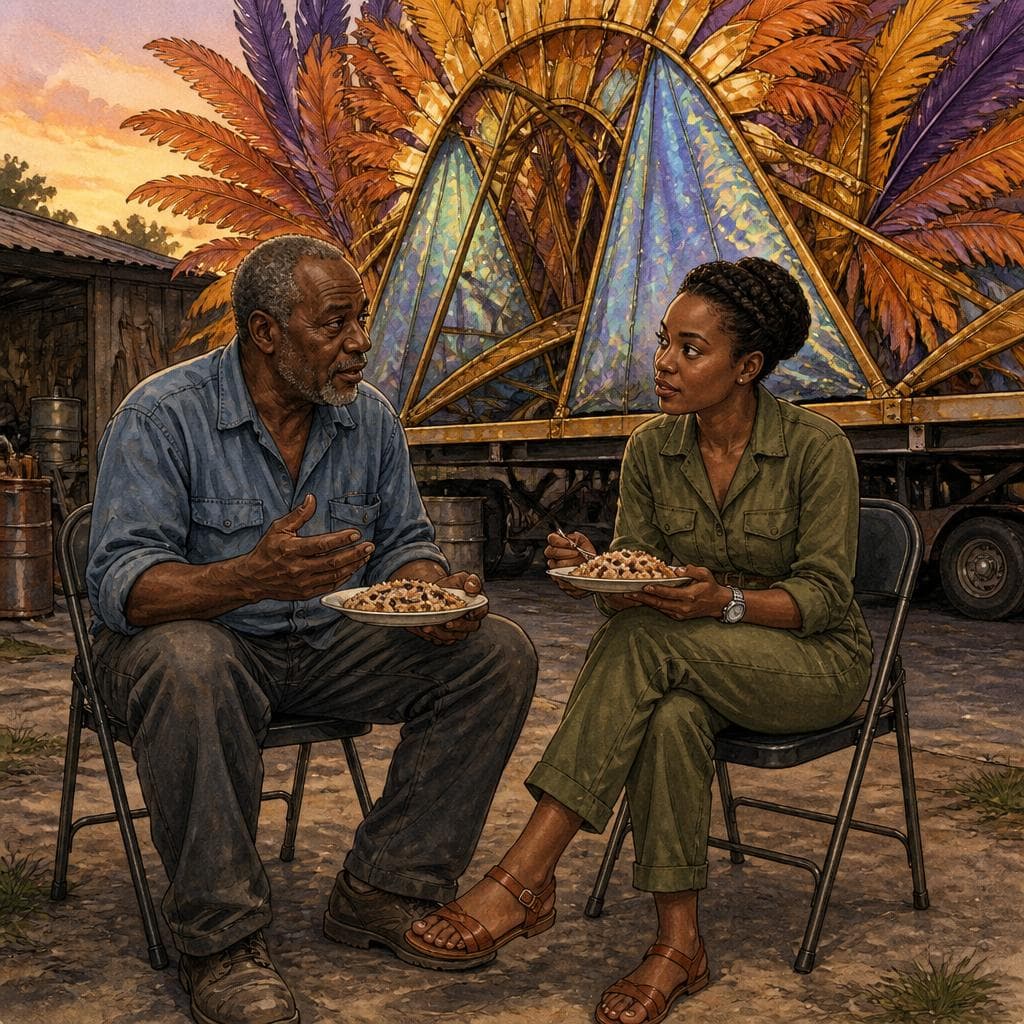
'I never applied again,' he said. 'So there is nothing to refuse.'

'So why build it?'
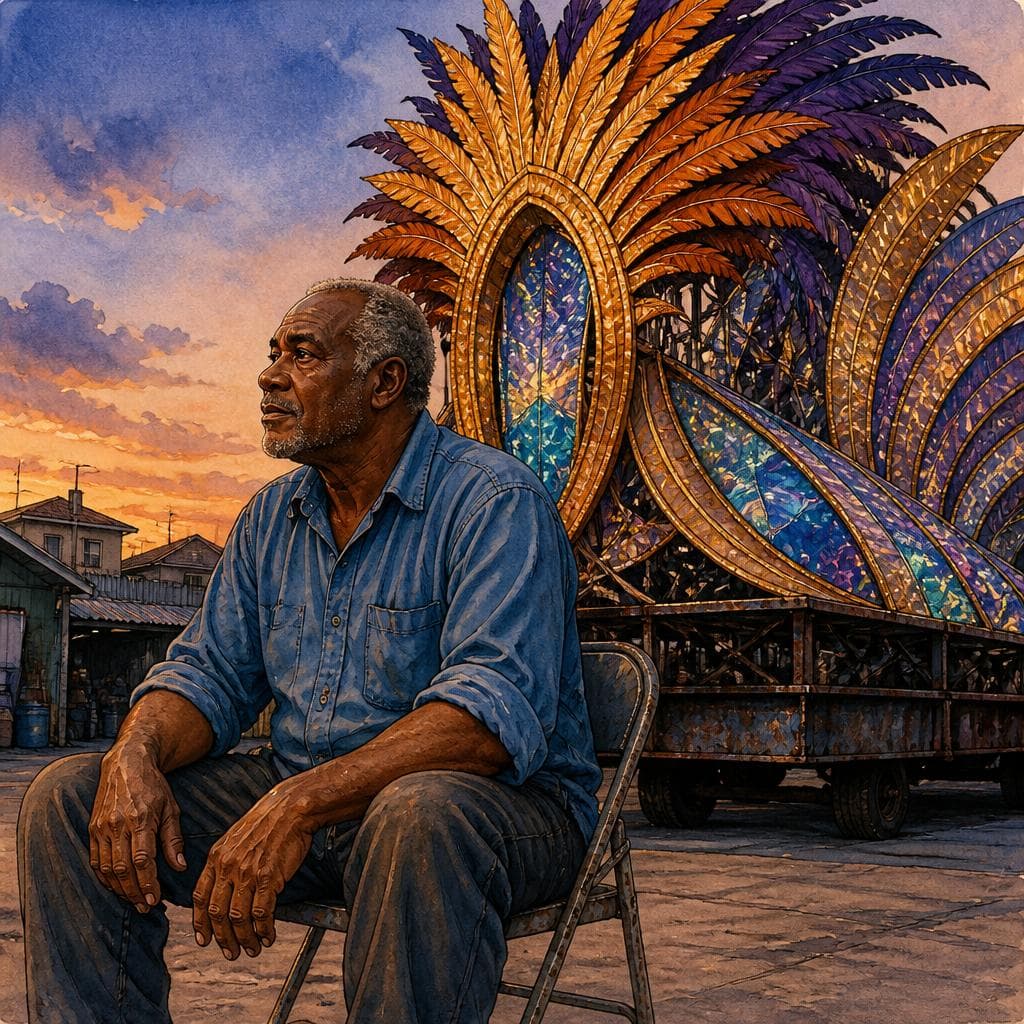
He was quiet for a long moment. Somewhere three streets away, a sound system was testing bass frequencies—the kind you feel in your chest before you hear them.
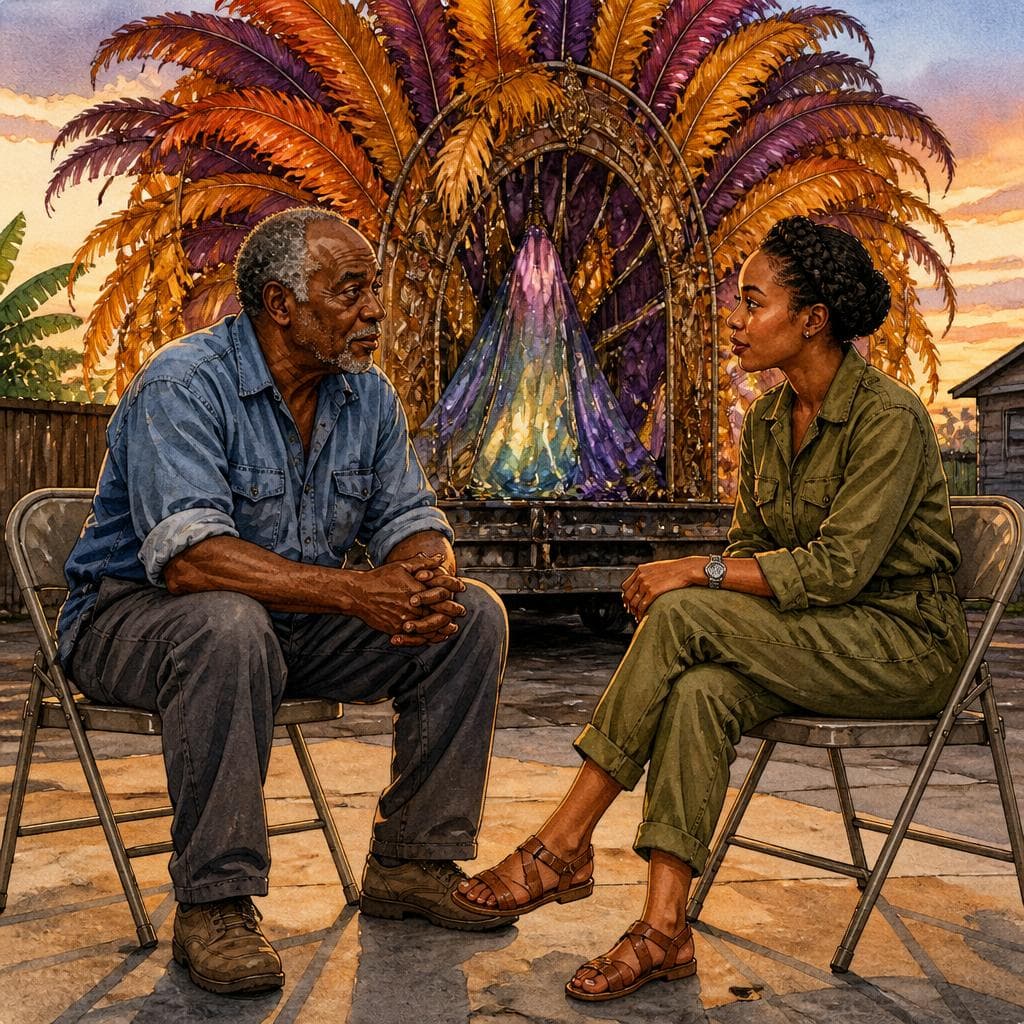
'Because the building is the thing,' he said finally. 'You think the Carnival is the day. But the Carnival is six months of women in community centres hand-sewing feathers. It is someone's uncle learning to weld so the chassis doesn't shake apart. It is a seventeen-year-old kid finding out he is good at something. The route is two miles. The building is everything before that.'

Marcia looked up at the float. The violet feathers caught the evening light and shifted like something breathing.

'And the float just... stays here.'
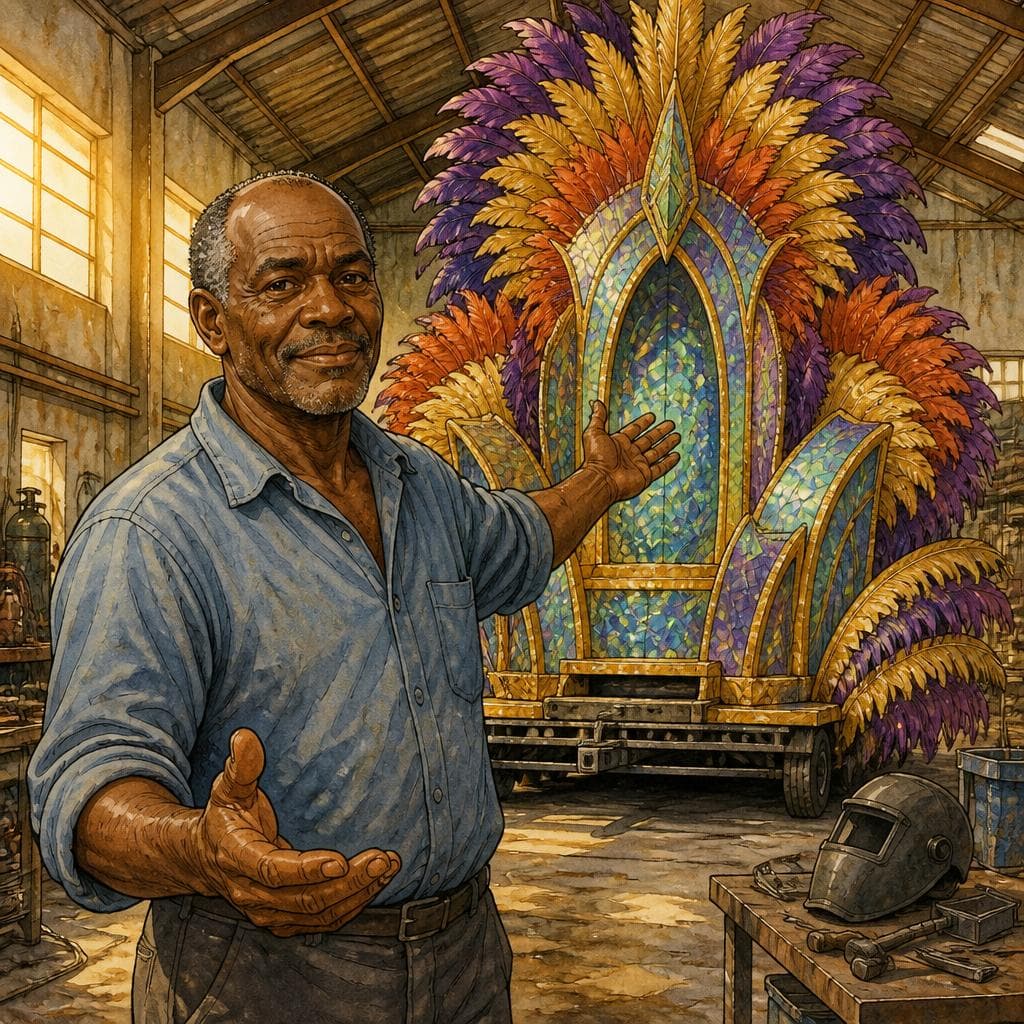
'Someone always comes to see it,' he said. 'The kids from the estate. Teachers bring their classes. Last year, a woman came all the way from Wolverhampton. She cried when she saw it. Told me it was the most Caribbean thing she had ever seen that wasn't in the Caribbean.'
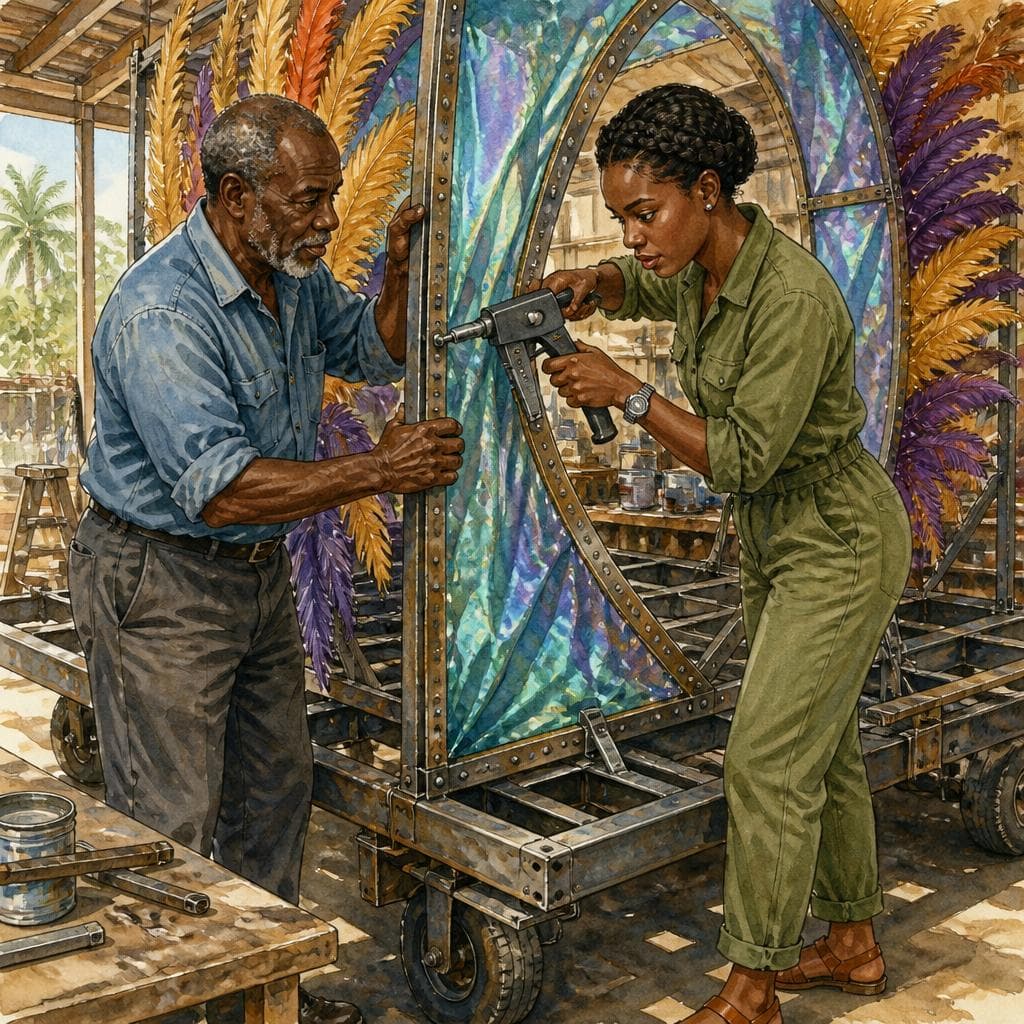
On Sunday, Marcia helped him attach the final panel—a cascade of iridescent fabric that represented the sea between Trinidad and England. She had not planned to help, but the rivet gun was in her hand before she had consciously decided to pick it up.

When they finished, the float was extraordinary. Standing in front of it in the fading light was a different kind of knowing.

'You should take it,' she said. 'Next year. Apply again.'
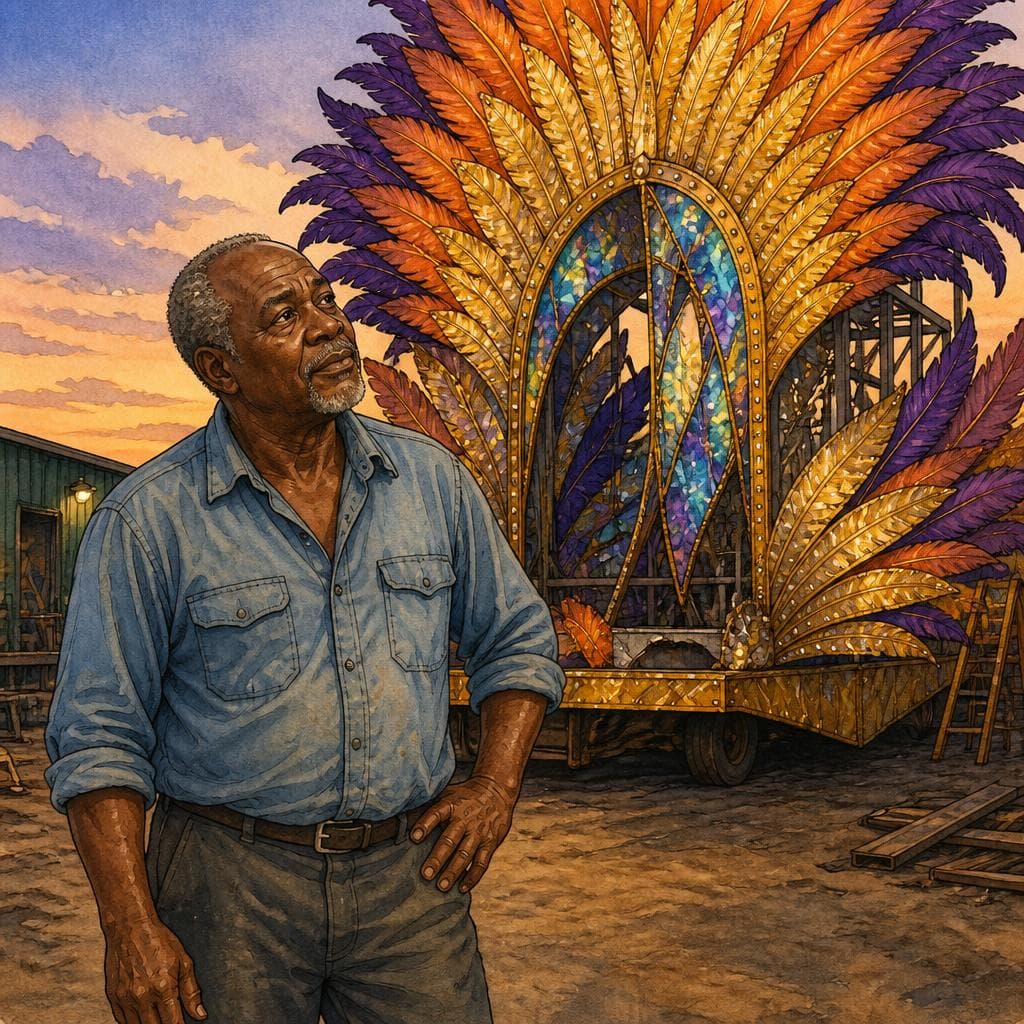
Her father tilted his head, as if considering a new idea.

'Maybe,' he said.

She knew he almost certainly would not. But she also noticed, for the first time, the small sign he had mounted on the yard gate—hand-painted and weathered: COME AND SEE. ALWAYS OPEN.
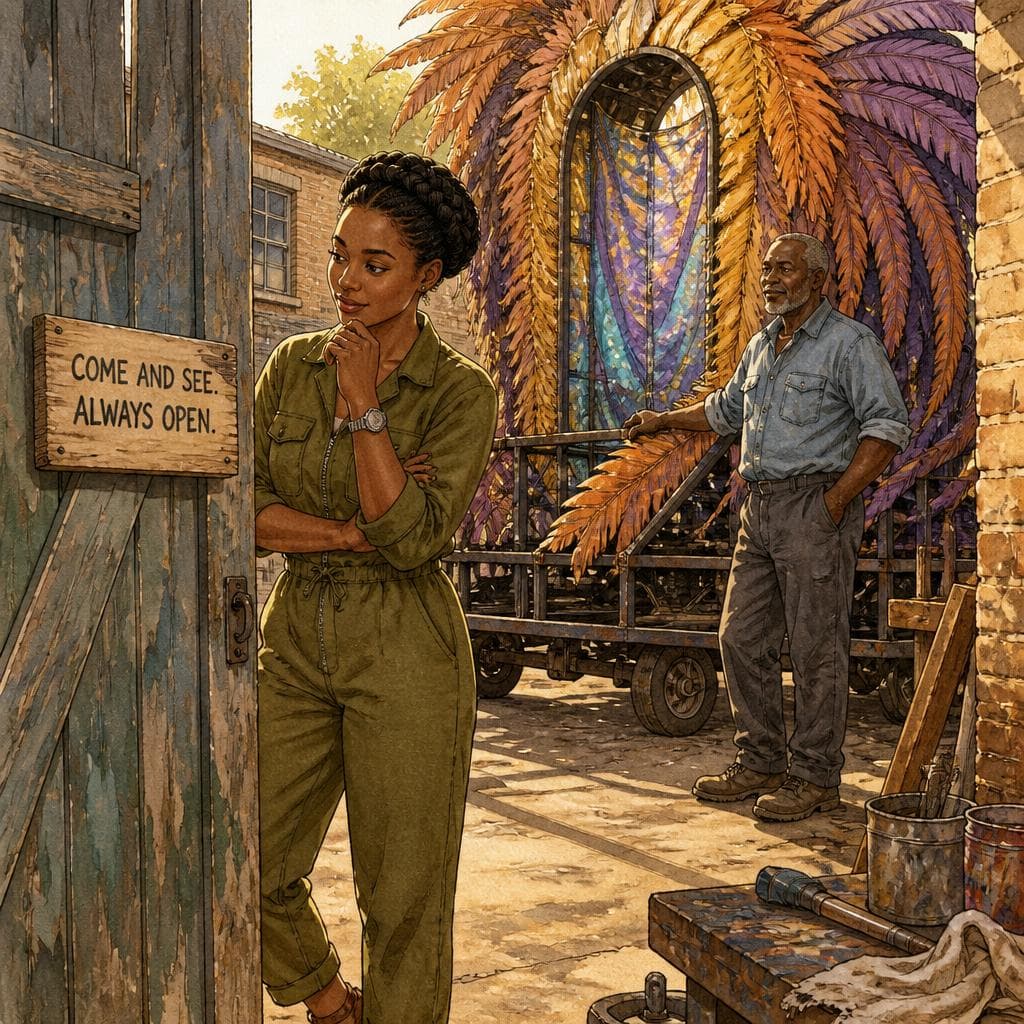
And she thought: perhaps, in the end, that was the route.