
Alto vs Largo
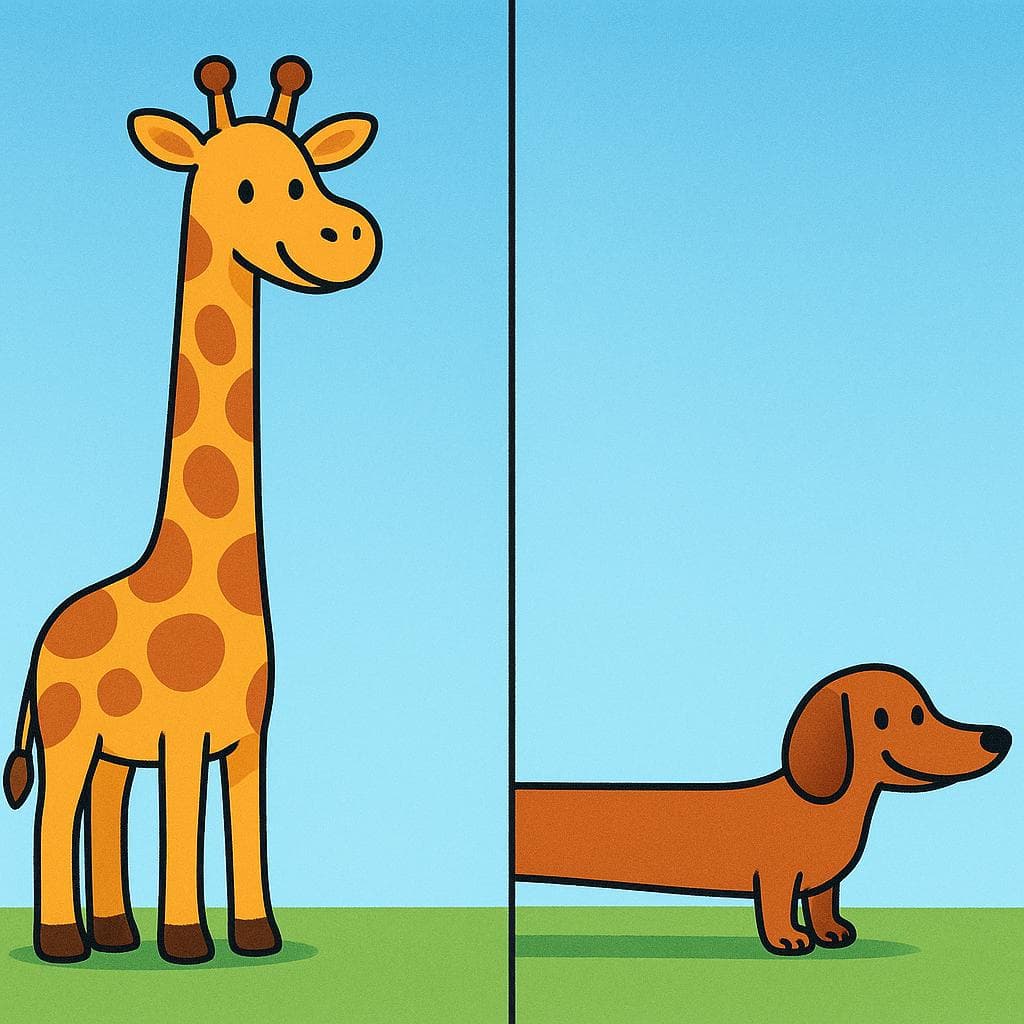
Alto = height (up/down). Largo = length (side-to-side).
alto
Tall, high (vertical measurement)
AHL-tohlargo
Long (horizontal measurement or duration)
LAR-gohQuick Rule
Alto = height (up/down). Largo = length (side-to-side).
Think: Alto for Altitude. Largo for Long.
- Hair is an exception: 'pelo largo' means long hair, not 'pelo alto'.
- 'Alto' can also mean 'loud' when talking about sound.
- The phrase 'a lo largo de' means 'along' or 'throughout'.
Comparison Table
| Context | alto | largo | Why? |
|---|---|---|---|
| Describing Objects | El edificio es alto. | El río es largo. | Alto measures vertical height (up-down), while largo measures horizontal length (side-to-side). |
| Describing Clothing | Usa tacones altos. | Lleva una falda larga. | Alto describes the height of the heels, while largo describes the length of the skirt. |
| Abstract Concepts | Habla en voz alta. | Fue una reunión larga. | Alto is used for volume ('loud'), while largo is used for duration ('long'). |
When to Use "alto / largo"
alto
Tall, high (vertical measurement)
AHL-toh
Height of people
Mi hermano es muy alto.
My brother is very tall.
Height of objects
Esa montaña es muy alta.
That mountain is very high.
Volume of sound
La música está muy alta.
The music is very loud.
Position or rank
Tiene un alto cargo en la empresa.
He has a high position in the company.
largo
Long (horizontal measurement or duration)
LAR-goh
Length of objects
Es una calle muy larga.
It's a very long street.
Length of hair or clothing
Me gusta tu vestido largo.
I like your long dress.
Duration of time
La película fue un poco larga.
The movie was a bit long.
Distance
Fue un viaje largo y agotador.
It was a long and tiring journey.
Contrast Examples
With "alto":
Construyeron un muro muy alto.
They built a very high wall.
With "largo":
Construyeron un muro muy largo.
They built a very long wall.
The Difference: 'Alto' tells you the wall's vertical dimension (it's hard to climb over). 'Largo' tells you its horizontal dimension (it stretches for a great distance).
With "alto":
El atleta hizo un salto alto.
The athlete did a high jump.
With "largo":
El atleta hizo un salto largo.
The athlete did a long jump.
The Difference: These refer to two different Olympic events. 'Salto alto' is about clearing a high bar, while 'salto largo' is about jumping the farthest distance horizontally.
Common Mistakes
Mi pelo es muy alto.
Mi pelo es muy largo.
This is a classic mistake for English speakers. Hair length is always described with 'largo'. 'Alto' is only for vertical height.
La calle es muy alta.
La calle es muy larga.
A street's dimension is its length, not its height. Use 'larga' for streets, rivers, and paths.
Fue una película muy alta.
Fue una película muy larga.
To talk about the duration of something, like a movie or a meeting, always use 'largo'. Using 'alta' would imply the movie's volume was loud.
Quick Practice
Quick Quiz: Alto vs Largo
Question 1 of 3
Which word correctly fills the blank? 'Mi hermana tiene el pelo muy ___.'
Related Grammar
Want to understand the grammar behind this pair? Explore these lessons for a deep dive:
Key Words



Tags
Build the instinct, not just the rule
Rules help you get it right; context makes it automatic. Read 200+ illustrated and narrated Spanish stories to see confusing pairs chosen correctly — over and over — until you stop thinking about it.
Frequently Asked Questions
Why can't I say 'pelo alto' for 'long hair'? It feels logical!
This is a classic 'false friend' between English and Spanish. While 'long' in English covers many things, Spanish splits the concept: 'largo' for length (hair, roads, movies) and 'alto' for height (people, buildings). It's a fundamental difference you just have to memorize.
Does 'alto' ever mean something other than 'tall'?
Yes! It's very commonly used to mean 'loud' when talking about sound. For example, 'música alta' is 'loud music' and 'hablar alto' is 'to speak loudly'. It can also mean 'high' in the sense of rank, like 'un alto ejecutivo' (a high-level executive).