
Alzar vs Levantar
Levantar is your everyday 'lift' or 'pick up'. Alzar is a more formal, upward 'raise' or 'erect'.
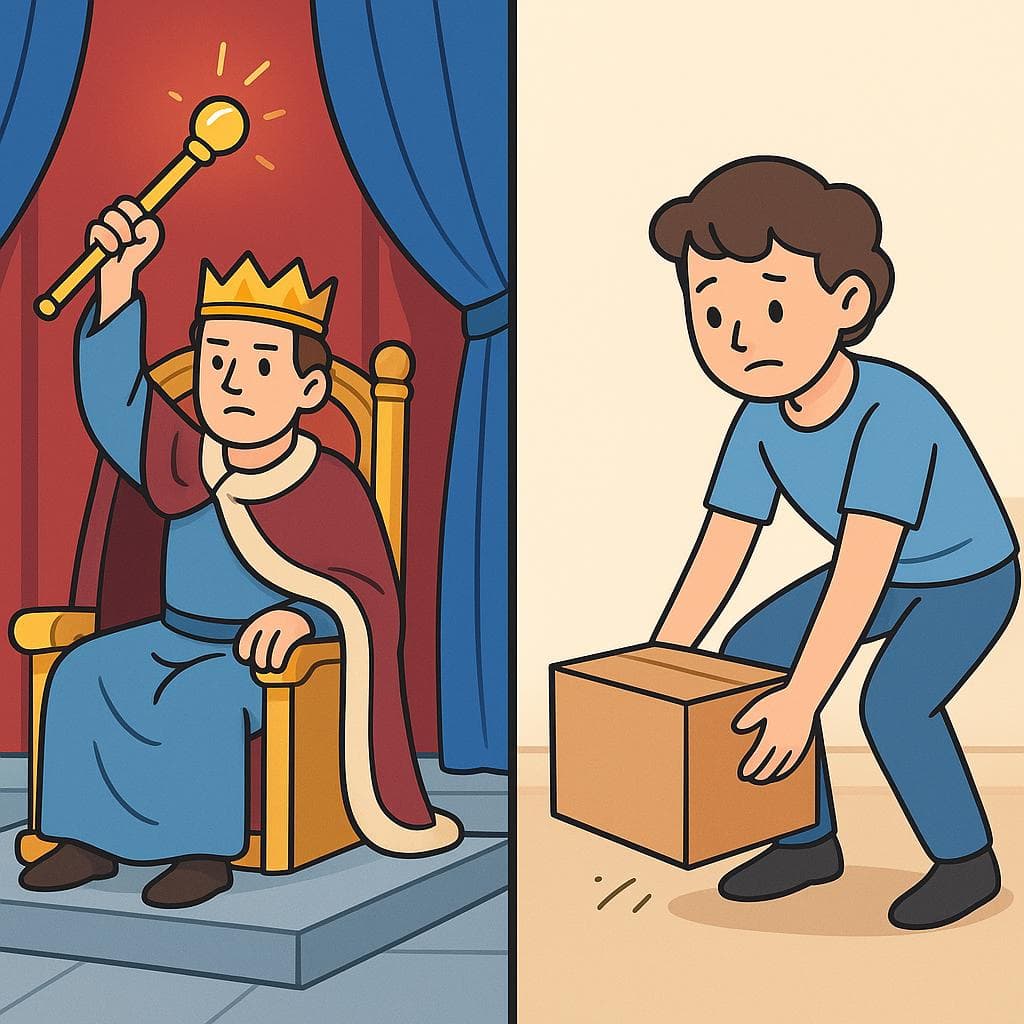
alzar
To raise, to lift up (often with more effort, formality, or in a vertical, upward motion).
al-SARlevantar
To lift, to pick up, to get up (the common, everyday verb for lifting).
leh-bahn-TARQuick Rule
Levantar is your everyday 'lift' or 'pick up'. Alzar is a more formal, upward 'raise' or 'erect'.
Think: Levantar = Luggage (you lift it). Alzar = Anthem (you raise your voice).
- Both can mean 'to get up', but 'levantarse' is used for daily routines while 'alzarse' means 'to rise up/rebel'.
- Both can be used for lifting weights, though 'levantar' is far more common in everyday speech.
Comparison Table
| Context | alzar | levantar | Why? |
|---|---|---|---|
| Picking up an object | Alzó la copa para brindar. | Levantó la taza de la mesa. | Alzar implies a deliberate, upward gesture (a toast). Levantar is the simple action of picking something up. |
| Building/Constructing | Alzaron una nueva torre. | Levantaron un muro. | Alzar sounds more formal and grand ('erect'). Levantar is more common for general construction ('put up/build'). |
| Raising your voice | Alzó la voz para ser escuchado. | Me levantó la voz con enojo. | 'Alzar la voz' is more neutral (speak louder). 'Levantar la voz' often implies anger or shouting. |
| Reflexive Use (Getting up) | El pueblo se alzó en armas. | Él se levantó de la silla. | 'Alzarse' means to 'rise up' or 'rebel'. 'Levantarse' is the physical act of getting up from a chair or bed. |
When to Use "alzar / levantar"
alzar
To raise, to lift up (often with more effort, formality, or in a vertical, upward motion).
al-SAR
Raise something upward (hands, glass)
Alza la mano si tienes una pregunta.
Raise your hand if you have a question.
Erect or build something (formal)
Alzaron un monumento en la plaza.
They erected a monument in the square.
Raise your voice (in song or protest)
Alzaron la voz contra la injusticia.
They raised their voices against the injustice.
To rise up or rebel (alzarse)
El pueblo se alzó contra el tirano.
The people rose up against the tyrant.
levantar
To lift, to pick up, to get up (the common, everyday verb for lifting).
leh-bahn-TAR
Pick something up off a surface
Levanta el libro de la mesa.
Pick up the book from the table.
Get up from bed or a chair (levantarse)
Me levanto a las siete cada mañana.
I get up at seven every morning.
Lift a weight or heavy object
No puedo levantar esta caja, es muy pesada.
I can't lift this box, it's too heavy.
Raise your voice (often in anger)
¡No me levantes la voz!
Don't raise your voice at me!
Contrast Examples
With "alzar":
El capitán alzó el trofeo con orgullo.
The captain raised the trophy with pride.
With "levantar":
El capitán levantó el trofeo del suelo.
The captain lifted the trophy from the ground.
The Difference: 'Alzar' emphasizes the triumphant, upward gesture of displaying the trophy. 'Levantar' focuses on the simple physical action of picking it up from a surface.
With "alzar":
Se alzó un imperio sobre esas ruinas.
An empire was raised/arose on those ruins.
With "levantar":
Levantaron una tienda de campaña.
They put up a tent.
The Difference: 'Alzar' is used for grand, almost metaphorical constructions (empires, monuments). 'Levantar' is for more practical, everyday building (a tent, a wall).
With "alzar":
El pueblo se alzó en armas.
The people rose up in arms.
With "levantar":
Él se levantó de la silla.
He got up from the chair.
The Difference: Reflexively, 'alzarse' means 'to rise up' or 'rebel'—a very strong, collective action. 'Levantarse' is the simple, physical act of getting up.
Common Mistakes
Me alzo de la cama a las 8.
Me levanto de la cama a las 8.
For the daily routine of getting out of bed, 'levantarse' is always the correct choice. 'Alzarse' sounds overly dramatic and means 'to rebel'.
Alza el lápiz que se cayó.
Levanta el lápiz que se cayó.
For simple, everyday actions like picking up a small object, 'levantar' is the natural verb. 'Alzar' is too formal and poetic for a pencil.
Quick Practice
Quick Quiz: Alzar vs Levantar
Question 1 of 3
Which verb would you use for picking up your keys from a table?
Related Grammar
Want to understand the grammar behind this pair? Explore these lessons for a deep dive:
Key Words



Tags
Build the instinct, not just the rule
Rules help you get it right; context makes it automatic. Read 200+ illustrated and narrated Spanish stories to see confusing pairs chosen correctly — over and over — until you stop thinking about it.
Frequently Asked Questions
Can I use 'alzar' and 'levantar' interchangeably for heavy objects?
Sometimes, but 'levantar' is much more common in everyday speech. If you're at the gym, you say 'voy a levantar pesas'. Using 'alzar' would sound a bit poetic or old-fashioned, though it's technically correct.
What about 'elevar'?
'Elevar' is another synonym which means 'to elevate' or 'to raise'. It's often used for more abstract things (elevate the debate) or technical contexts (elevate the temperature), but can also mean physically raising something, similar to 'alzar'.