
Asustar vs Asustarse
Asustar is what you DO to someone. Asustarse is what you FEEL.
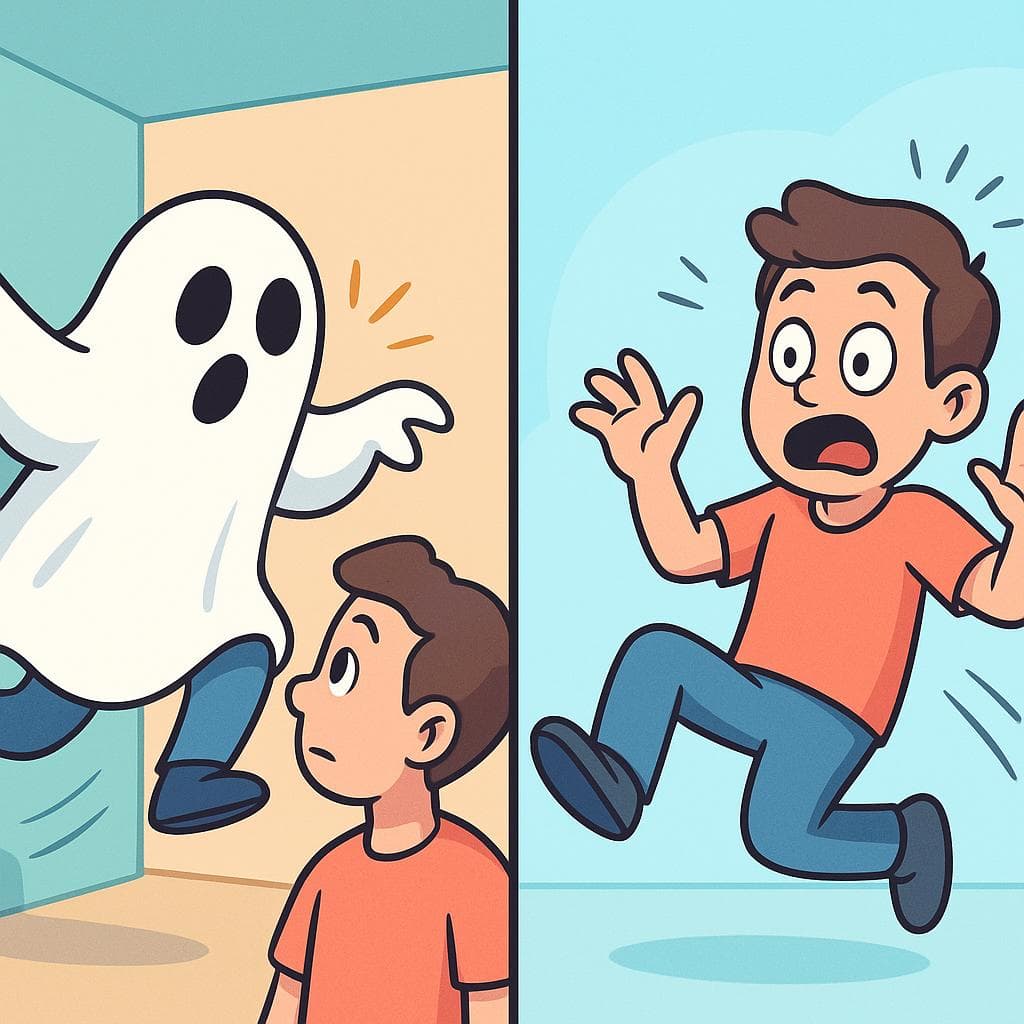
asustar
To scare, to frighten (someone or something). This is the action.
ah-soos-TARasustarse
To get scared, to become frightened. This is the reaction or feeling.
ah-soos-TAR-sehQuick Rule
Asustar is what you DO to someone. Asustarse is what you FEEL.
Think: AsustaR = to scaRe someone else. AsustarSE = to be scared yourSElf.
- This pattern isn't an exception, but a rule for many verbs: aburrir (to bore) vs. aburrirse (to get bored), enojar (to anger) vs. enojarse (to get angry).
Comparison Table
| Context | asustar | asustarse | Why? |
|---|---|---|---|
| Focus of the Sentence | El payaso asustó a los niños. | Los niños se asustaron con el payaso. | Asustar focuses on the agent causing the fear (the clown). Asustarse focuses on the person experiencing the fear (the children). |
| Action vs. Reaction | Él intentó asustar a su amigo. | Su amigo se asustó. | Asustar is the action of trying to scare. Asustarse is the resulting reaction of becoming scared. |
| Describing a Thing vs. a Person | Esa película de terror asusta. | Yo me asusto con esas películas. | Asustar can describe the quality of a thing (the movie is scary). Asustarse describes the feeling a person gets. |
When to Use "asustar / asustarse"
asustar
To scare, to frighten (someone or something). This is the action.
ah-soos-TAR
Scaring someone directly
Mi hermano mayor siempre intenta asustarme.
My older brother always tries to scare me.
When something causes fear
La película de terror asustó a todos en el cine.
The horror movie scared everyone in the theater.
To startle or surprise negatively
¡No grites así! Me vas a asustar.
Don't scream like that! You're going to startle me.
asustarse
To get scared, to become frightened. This is the reaction or feeling.
ah-soos-TAR-seh
Reacting to something scary
Me asusté mucho con el trueno anoche.
I got really scared by the thunder last night.
Describing a tendency to be fearful
Mi gato se asusta por cualquier ruido.
My cat gets scared by any noise.
Expressing the feeling of being scared
Los niños se asustaron cuando se fue la luz.
The children got scared when the power went out.
Contrast Examples
With "asustar":
El ruido asustó al bebé.
The noise scared the baby.
With "asustarse":
El bebé se asustó con el ruido.
The baby got scared by the noise.
The Difference: These are very close in meaning. 'Asustó' puts the focus on the noise as the actor. 'Se asustó' puts the focus on the baby's reaction and feeling.
With "asustar":
No me gusta que mi hermano me asuste.
I don't like it when my brother scares me.
With "asustarse":
No me gusta asustarme.
I don't like to get scared.
The Difference: The first sentence is about an action someone else does to you. The second is about the feeling you experience yourself.
Common Mistakes
Yo asusto cuando veo una araña.
Yo me asusto cuando veo una araña.
If you are the one feeling the fear, you need the reflexive pronoun 'me'. 'Yo asusto' means 'I scare (other people)', which is probably not what you mean!
El perro grande se asustó al cartero.
El perro grande asustó al cartero.
The dog is doing the scaring, not feeling it. Since the action is directed at someone else (the mail carrier), you use the non-reflexive form 'asustó'.
Quick Practice
Quick Quiz: Asustar vs Asustarse
Question 1 of 2
Which is correct? 'La explosión ___ a toda la ciudad.'
Related Grammar
Want to understand the grammar behind this pair? Explore these lessons for a deep dive:
Key Words

Tags
Build the instinct, not just the rule
Rules help you get it right; context makes it automatic. Read 200+ illustrated and narrated Spanish stories to see confusing pairs chosen correctly — over and over — until you stop thinking about it.
Frequently Asked Questions
Is this '-se' thing common with other verbs?
Yes, absolutely! This is a reflexive verb. Many Spanish verbs work this way, where the '-se' ending shows the action is happening to the person doing it. For example, 'enojar' is 'to anger someone', but 'enojarse' is 'to get angry'.
Can 'asustar' and 'asustarse' be used in the same sentence?
Yes, they can. For example: 'Mi hermano me asustó y yo me asusté mucho' (My brother scared me and I got very scared). This shows the cause (he scared me) and the effect (I got scared) perfectly.