
Enojar vs Enojarse
Enojar = to make someone else angry. Enojarse = to get angry yourself.

enojar
To make someone else angry; to cause annoyance or anger in another person.
eh-no-HARenojarse
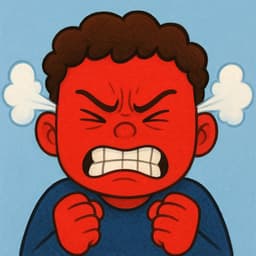
To get angry; to become angry. The action of feeling anger yourself.
eh-no-HAR-sehQuick Rule
Enojar = to make someone else angry. Enojarse = to get angry yourself.
Think: Enojarse has 'se' for 'self'. You get angry your'self'.
- This isn't an exception, but a pattern: many emotion verbs work this way (e.g., aburrir/aburrirse, preocupar/preocuparse).
Comparison Table
| Context | enojar | enojarse | Why? |
|---|---|---|---|
| Focus of the Action | Su comentario me enojó. | Me enojé por su comentario. | Enojar: The comment is the 'doer'. Enojarse: 'I' am the one doing the action of getting angry. |
| Action vs. Reaction | La injusticia enoja a la gente. | La gente se enoja por la injusticia. | 'Enojar' is the action that causes anger. 'Enojarse' is the reaction of becoming angry. |
| Sentence Structure | El mal servicio enoja a los clientes. | Los clientes se enojan con el servicio. | With 'enojar', the angry person is the object. With 'enojarse', the angry person is the subject. |
When to Use "enojar / enojarse"
enojar
To make someone else angry; to cause annoyance or anger in another person.
eh-no-HAR
Making someone angry
La noticia enojó a mi padre.
The news angered my father.
Describing something that is annoying
Esa actitud me enoja mucho.
That attitude really angers me.
Causing a negative reaction
El ruido constante enoja a los vecinos.
The constant noise annoys the neighbors.
enojarse
To get angry; to become angry. The action of feeling anger yourself.
eh-no-HAR-seh
Getting angry yourself
Me enojé cuando perdí las llaves.
I got angry when I lost the keys.
Expressing anger towards someone (using 'con')
Se enojó con su hermano.
He got angry with his brother.
Telling someone not to be angry
No te enojes, es solo una broma.
Don't get angry, it's just a joke.
Contrast Examples
With "enojar":
La música alta enoja a los vecinos.
The loud music angers the neighbors.
With "enojarse":
Los vecinos se enojan por la música alta.
The neighbors get angry because of the loud music.
The Difference: Both sentences describe the same event. 'Enojar' focuses on the music as the agent causing anger. 'Enojarse' focuses on the neighbors as the ones experiencing the emotion.
With "enojar":
Su impuntualidad me enoja.
His lateness angers me.
With "enojarse":
Me enojo con él por su impuntualidad.
I get angry with him for his lateness.
The Difference: Using 'enojar' makes 'lateness' the active thing doing the annoying. Using 'enojarse' makes 'I' the subject of the sentence who is performing the action of getting angry.
Common Mistakes
Yo enojo mucho.
Yo me enojo mucho.
To talk about your own feeling of getting angry, you need the reflexive form 'me enojo'. 'Yo enojo' means 'I make other people angry a lot', which is probably not what you mean!
La situación se enoja a la gente.
La situación enoja a la gente.
You can't use the reflexive 'se enoja' when you have a direct object ('a la gente'). The situation either 'angers people' (enoja a la gente) or 'people get angry' (la gente se enoja).
Quick Practice
Quick Quiz: Enojar vs Enojarse
Question 1 of 2
My brother played a prank on me and I got very angry. Which is correct?
Related Grammar
Want to understand the grammar behind this pair? Explore these lessons for a deep dive:
Key Words
Tags
Build the instinct, not just the rule
Rules help you get it right; context makes it automatic. Read 200+ illustrated and narrated Spanish stories to see confusing pairs chosen correctly — over and over — until you stop thinking about it.
Frequently Asked Questions
Is 'enojar' always about making someone angry?
Mostly, yes. It means to cause anger or annoyance. It's an action you do to someone or that something does to someone. For example, 'El tráfico me enoja' (Traffic angers me).
Why do I need the 'me', 'te', 'se' part for 'enojarse'?
That little word ('me', 'te', 'se', etc.) is a reflexive pronoun. It signals that the person doing the action is also the one receiving it. So, 'me enojo' literally means 'I anger myself'—which is just how Spanish expresses the idea of 'I get angry'.