
preocupar vs preocuparse
Preocupar = Something worries someone. Preocuparse = Someone worries about something.
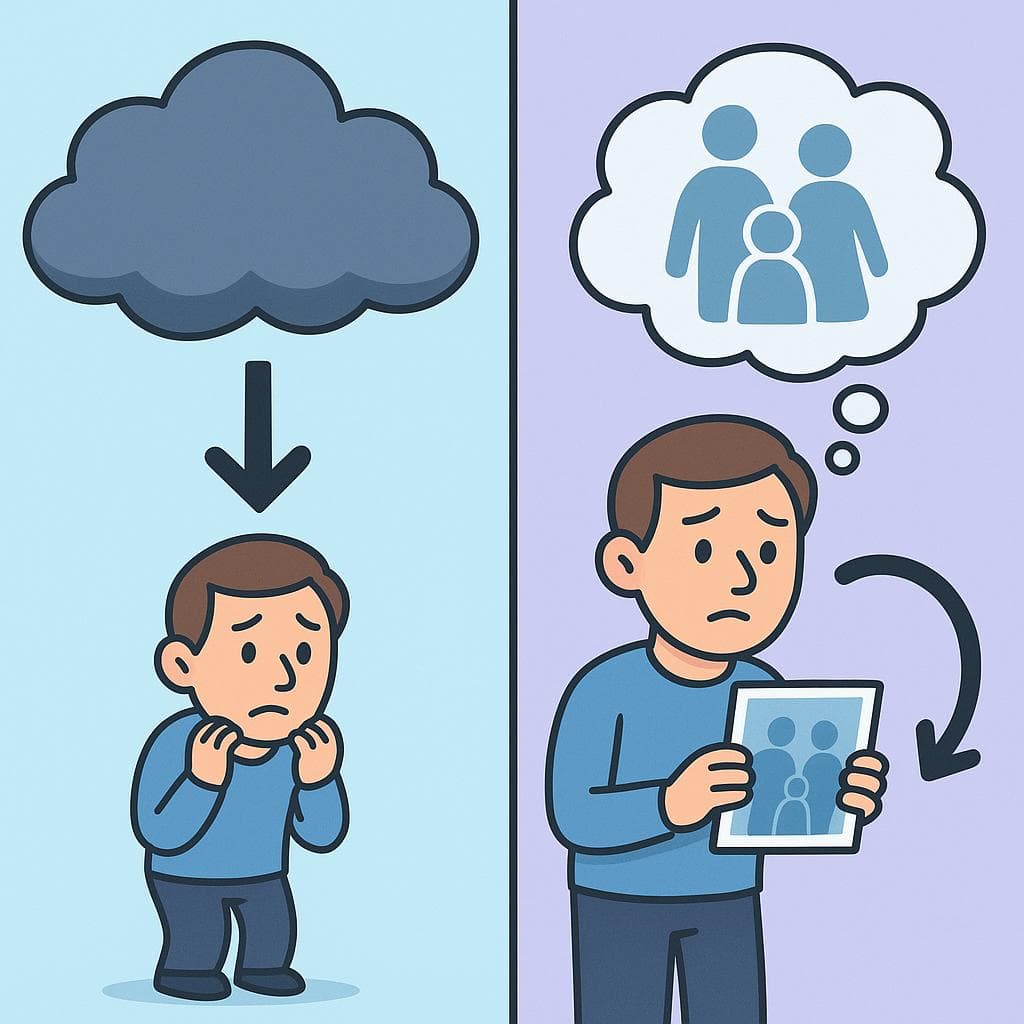
preocupar
To cause worry; to be a source of concern for someone else.
preh-oh-koo-PARpreocuparse
To worry (oneself) about something; to feel concern.
preh-oh-koo-PAR-sehQuick Rule
Preocupar = Something worries someone. Preocuparse = Someone worries about something.
Think: Preocupar has a 'cause' (something worries you). PreocuparSE has a 'self' (you worry yourself).
- The structure is different: 'La noticia me preocupa' vs. 'Me preocupo por la noticia'.
- 'Preocuparse' is far more common in everyday conversation when talking about your own feelings.
Comparison Table
| Context | preocupar | preocuparse | Why? |
|---|---|---|---|
| Expressing the same idea | El examen me preocupa. | Me preocupo por el examen. | Preocupar: The exam is the subject causing worry. Preocuparse: I am the subject feeling the worry. |
| Describing a person's impact | Su comportamiento preocupa a sus padres. | Él se preocupa por sus padres. | Preocupar: His behavior *causes* his parents to worry. Preocuparse: He *feels* worried about his parents. |
| Asking about worries | ¿Qué te preocupa? | ¿De qué te preocupas? | Preocupar: Asks about the *thing* causing worry. Preocuparse: Asks about the *subject* of one's worries. |
When to Use "preocupar / preocuparse"
preocupar
To cause worry; to be a source of concern for someone else.
preh-oh-koo-PAR
When something is the source of worry
La economía me preocupa.
The economy worries me.
To describe a situation as concerning
Esa situación preocupa a los expertos.
That situation worries the experts.
Asking what is bothering someone (like 'gustar')
¿Qué te preocupa?
What's worrying you?
preocuparse
To worry (oneself) about something; to feel concern.
preh-oh-koo-PAR-seh
When you are the one feeling worry
Me preocupo por ti.
I worry about you.
Telling someone not to worry (very common)
No te preocupes, todo saldrá bien.
Don't worry, everything will be fine.
Describing someone's tendency to worry
Mi madre se preocupa por todo.
My mother worries about everything.
Contrast Examples
With "preocupar":
Juan preocupa a su familia.
Juan worries his family. (He is the source of their worry.)
With "preocuparse":
Juan se preocupa por su familia.
Juan worries about his family. (He feels concern for them.)
The Difference: This is a huge meaning change. 'Preocupar' means he causes problems. 'Preocuparse por' means he is a caring person.
With "preocupar":
La situación política nos preocupa.
The political situation worries us. (Focus on the problem.)
With "preocuparse":
Nos preocupamos por la situación política.
We are worried about the political situation. (Focus on our feelings.)
The Difference: Both are correct and mean similar things, but 'preocupar' makes the situation the active agent, while 'preocuparse' focuses on the people who are feeling the worry. 'Preocuparse' is more common for expressing personal feelings.
Common Mistakes
Yo preocupo por el futuro.
Me preocupo por el futuro.
When you are the one feeling the worry, you must use the reflexive form 'preocuparse'. 'Yo preocupo' would mean 'I cause worry to others'.
No preocupes.
No te preocupes.
This is a command. For reflexive verbs, you must include the reflexive pronoun ('te' for 'tú'). 'No te preocupes' is one of the most common phrases in Spanish.
Quick Practice
Quick Quiz: preocupar vs preocuparse
Question 1 of 3
Which sentence means 'Don't worry'?
Related Grammar
Want to understand the grammar behind this pair? Explore these lessons for a deep dive:
Key Words


Tags
Build the instinct, not just the rule
Rules help you get it right; context makes it automatic. Read 200+ illustrated and narrated Spanish stories to see confusing pairs chosen correctly — over and over — until you stop thinking about it.
Frequently Asked Questions
Is 'preocupar' basically the same as 'gustar'?
Structurally, yes! 'Preocupar' works like 'gustar'. The thing that causes the worry is the subject of the sentence, and the person who is worried is the indirect object (me, te, le, nos, os, les). For example, 'Me gusta el libro' (The book pleases me) and 'Me preocupa el examen' (The exam worries me).
Can I say 'Estoy preocupado' instead of 'Me preocupo'?
Absolutely! 'Estoy preocupado/a' (I am worried) is very common and uses the verb 'estar' with the past participle of 'preocupar' as an adjective. It describes your current state. 'Me preocupo' describes the action of worrying. Both are often interchangeable in meaning.