
Bañar vs Bañarse
Bañar = to bathe someone/something else. Bañarse = to bathe yourself.
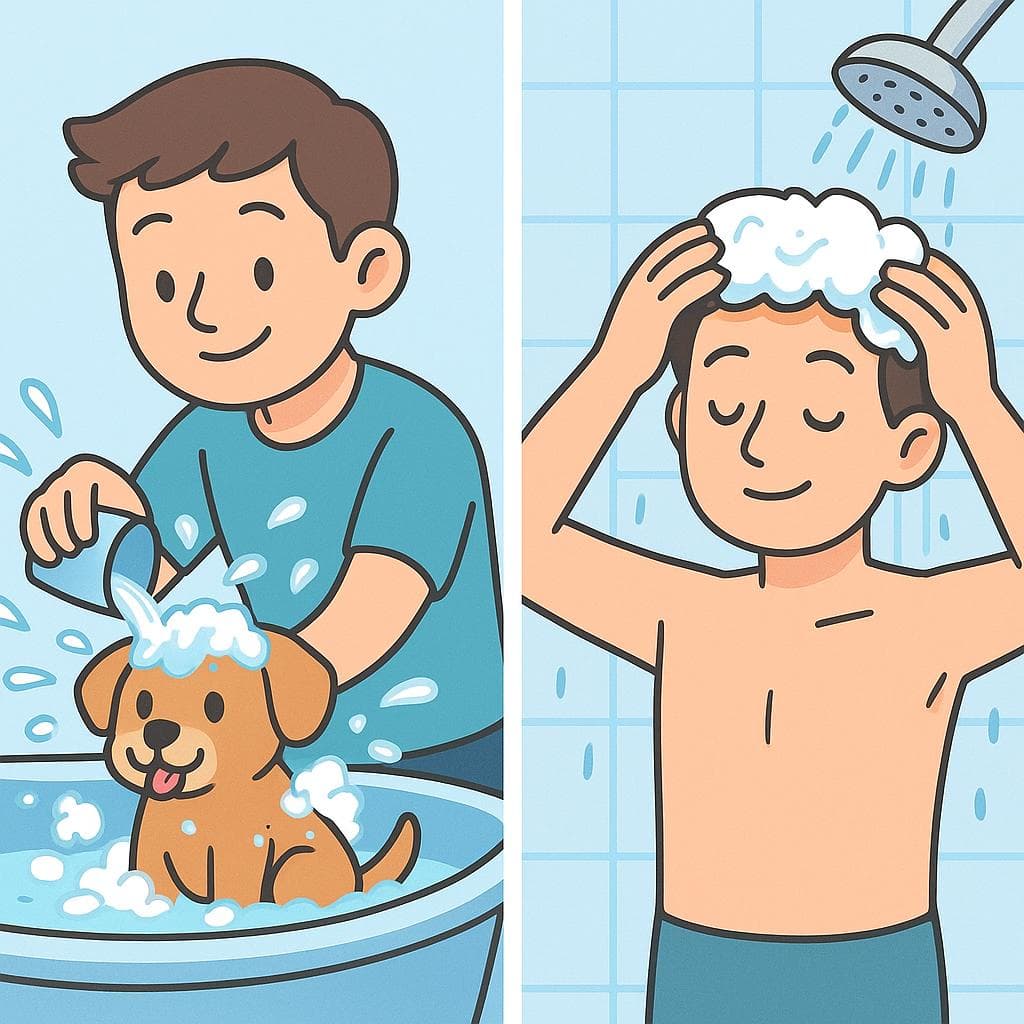
bañar
To bathe (someone or something else). The action is done TO an external object.
bah-NYARbañarse
To bathe (oneself) or to go for a swim. The action is done TO oneself.
bah-NYAR-sehQuick Rule
Bañar = to bathe someone/something else. Bañarse = to bathe yourself.
If it has 'se', it's for 'self'. The action reflects back on you.
- The pronoun can move: 'Me voy a bañar' and 'Voy a bañarme' both mean 'I'm going to take a bath'.
Comparison Table
| Context | bañar | bañarse | Why? |
|---|---|---|---|
| Who is being bathed? | Baño al perro. | Me baño. | 'Bañar' needs an object (the dog). 'Bañarse' means the subject (me) is the object. |
| Giving a command | ¡Baña al niño! | ¡Báñate! | Commanding someone to bathe another vs. commanding them to bathe themselves. |
| Infinitive form | Tengo que bañar al gato. | Tengo que bañarme. | 'Bañar' is the action you do to something else. 'Bañarme' is the action you do to yourself. |
When to Use "bañar / bañarse"
bañar
To bathe (someone or something else). The action is done TO an external object.
bah-NYAR
Bathing a pet
Yo baño a mi perro los sábados.
I bathe my dog on Saturdays.
Bathing a child
El padre baña a su bebé con cuidado.
The father bathes his baby carefully.
Figuratively (to cover)
La luz del sol baña la habitación.
The sunlight bathes the room.
bañarse
To bathe (oneself) or to go for a swim. The action is done TO oneself.
bah-NYAR-seh
Bathing yourself (daily routine)
Me baño todas las mañanas.
I take a bath/shower every morning.
Going for a swim
Nos gusta bañarnos en el mar.
We like to swim in the sea.
Asking about someone's routine
¿Ya te bañaste?
Have you bathed already?
Contrast Examples
With "bañar":
El veterinario va a bañar a mi gata.
The vet is going to bathe my cat.
With "bañarse":
Yo me voy a bañar ahora.
I am going to take a bath now.
The Difference: Bañar is an action performed on another being (the cat). Bañarse is a personal action you perform on yourself.
With "bañar":
Por favor, baña al perro antes de la cena.
Please, bathe the dog before dinner.
With "bañarse":
Por favor, báñate antes de la cena.
Please, take a bath/shower before dinner.
The Difference: The presence or absence of the reflexive pronoun 'te' completely changes who is getting clean.
Common Mistakes
Yo baño en la mañana.
Yo me baño en la mañana.
When you are bathing yourself, you must use the reflexive form. 'Yo baño' is incomplete; it makes someone ask '...who do you bathe?'
Voy a bañar en la piscina.
Voy a bañarme en la piscina.
Even when it means 'to go for a swim', you need the reflexive pronoun ('me') because you are the one getting in the water.
Quick Practice
Quick Quiz: Bañar vs Bañarse
Question 1 of 2
Which is correct for 'I'm going to bathe the dog'?
Related Grammar
Want to understand the grammar behind this pair? Explore these lessons for a deep dive:
Key Words
Tags
Build the instinct, not just the rule
Rules help you get it right; context makes it automatic. Read 200+ illustrated and narrated Spanish stories to see confusing pairs chosen correctly — over and over — until you stop thinking about it.
Frequently Asked Questions
Is 'bañarse' the same as 'ducharse'?
They are very similar! 'Bañarse' is a general term for washing your whole body, either in a bathtub or a shower. 'Ducharse' specifically means 'to take a shower'. In everyday conversation, many people use 'bañarse' even when they mean taking a shower.
Can I say 'Voy a bañar' instead of 'Voy a bañarme'?
Not if you mean you are bathing yourself. Saying 'Voy a bañar' is an incomplete sentence. It leaves the listener wondering, 'Who or what are you going to bathe?'. You must include the reflexive pronoun ('me') to show the action is for yourself: 'Voy a bañarme'.