
Beber vs Beberse
Beber = the general act of drinking. Beberse = drinking it all up.
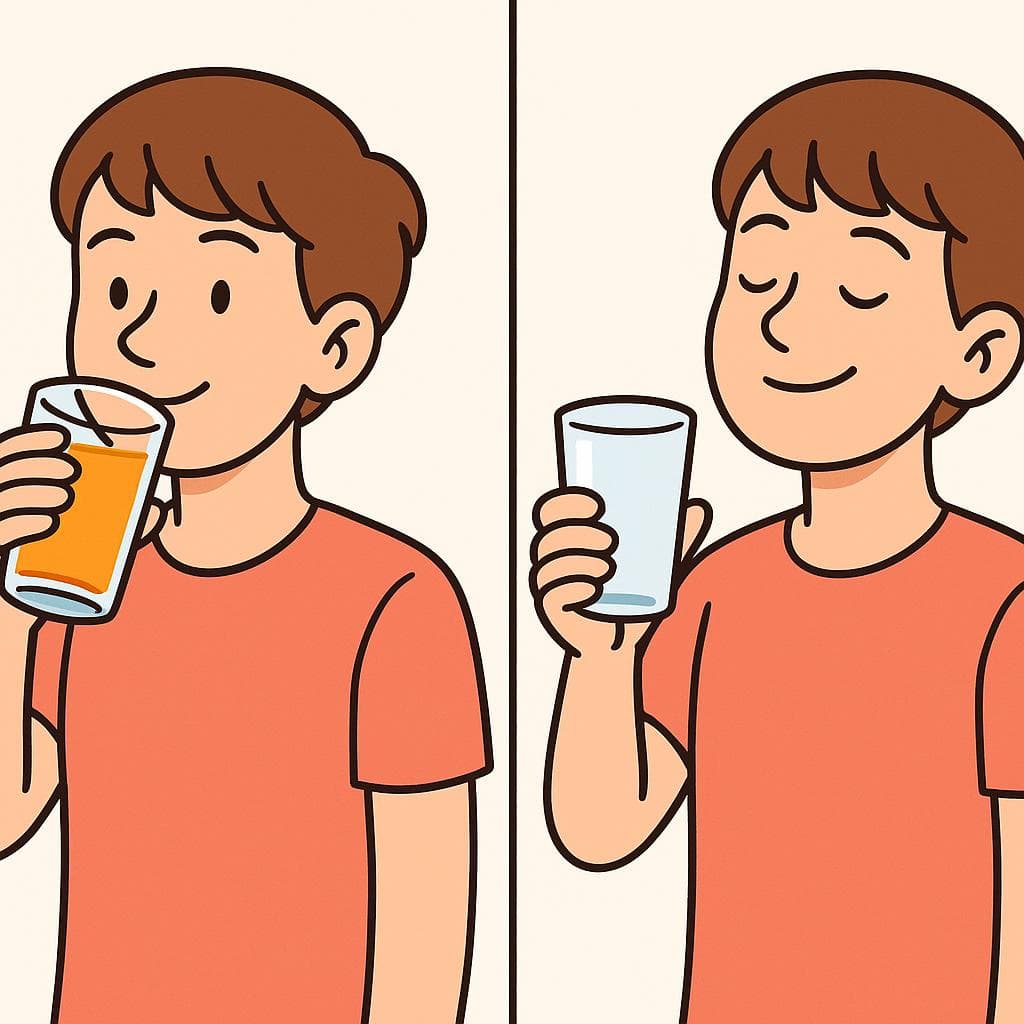
beber
To drink (the general action, often with an unspecified amount)
beh-BEHRbeberse
To drink up, to finish a drink (emphasizes completion or consumption of a specific quantity)
beh-BEHR-sehQuick Rule
Beber = the general act of drinking. Beberse = drinking it all up.
Add the 'se' when you see the bottom of the glass.
- You can't use 'beberse' without a specific object. You can say 'Bebo mucho' (I drink a lot), but not 'Me bebo mucho'.
Comparison Table
| Context | beber | beberse | Why? |
|---|---|---|---|
| Amount | Bebió vino. | Se bebió una copa de vino. | Beber for an unspecified amount, beberse for a specific, completed quantity. |
| Focus of the Action | Estaba bebiendo un refresco. | Se bebió el refresco en un minuto. | Beber focuses on the process. Beberse focuses on the result (the drink is gone). |
| Giving a Command | Bebe más agua. | ¡Bébete la medicina! | Beber is for general advice. Beberse is a command to finish a specific item. |
When to Use "beber / beberse"
beber
To drink (the general action, often with an unspecified amount)
beh-BEHR
General action of drinking
Me gusta beber agua por la mañana.
I like to drink water in the morning.
Drinking an unspecified amount
En la boda, la gente bebió champán.
At the wedding, people drank champagne.
Referring to habits
Él no bebe alcohol.
He doesn't drink alcohol.
beberse
To drink up, to finish a drink (emphasizes completion or consumption of a specific quantity)
beh-BEHR-seh
Finishing a specific drink
Se bebió toda la botella de agua.
He drank up the whole bottle of water.
Consuming a full, specific serving
Me bebí el café y me fui a trabajar.
I drank my coffee and went to work.
To add emphasis or intensity
¡Bébete el jugo, que se calienta!
Drink up your juice, it's getting warm!
Contrast Examples
With "beber":
Anoche bebí dos cervezas.
Last night I drank two beers. (A simple statement of fact.)
With "beberse":
¡Anoche me bebí dos cervezas en cinco minutos!
Last night I drank up two beers in five minutes! (Emphasizes the speed or feat of consumption.)
The Difference: 'Beber' just states what happened. 'Beberse' adds a little story, implying you consumed them completely and with some intensity.
With "beber":
El niño no quería beber la medicina.
The child didn't want to drink the medicine. (He was resistant to the act.)
With "beberse":
Al final, el niño se bebió toda la medicina.
In the end, the child drank up all the medicine. (He finished every last drop.)
The Difference: 'Beber' describes the general action, while 'beberse' highlights the successful completion of the task.
Common Mistakes
Me bebo mucho en las fiestas.
Bebo mucho en las fiestas.
When talking about drinking as a general habit without a specific object you finish, use 'beber'. 'Beberse' requires a 'what' (e.g., 'me bebo dos cervezas').
Bebí toda la leche.
Me bebí toda la leche.
While 'bebí' isn't strictly wrong, 'me bebí' is much more natural and common when you want to emphasize that you finished the *entire* thing.
Quick Practice
Quick Quiz: Beber vs Beberse
Question 1 of 2
To say 'I drank up the whole soda', which is more natural? '___ todo el refresco.'
Related Grammar
Want to understand the grammar behind this pair? Explore these lessons for a deep dive:
Key Words

Tags
Build the instinct, not just the rule
Rules help you get it right; context makes it automatic. Read 200+ illustrated and narrated Spanish stories to see confusing pairs chosen correctly — over and over — until you stop thinking about it.
Frequently Asked Questions
Does this same rule apply to the verb 'comer' (to eat)?
Yes, exactly! 'Comer' is the general act of eating, while 'comerse' means 'to eat up'. You'd say 'Como paella' (I eat paella) but 'Me comí toda la paella' (I ate up all the paella).
Is 'beberse' a reflexive verb?
It looks like one, and it's part of a larger group called 'pronominal verbs'. While true reflexive verbs mean you do the action to yourself (like 'lavarse' - to wash oneself), 'beberse' is used to add emphasis or show completion. You aren't 'drinking yourself', you're just 'drinking something up'.