
Decidir vs Decidirse
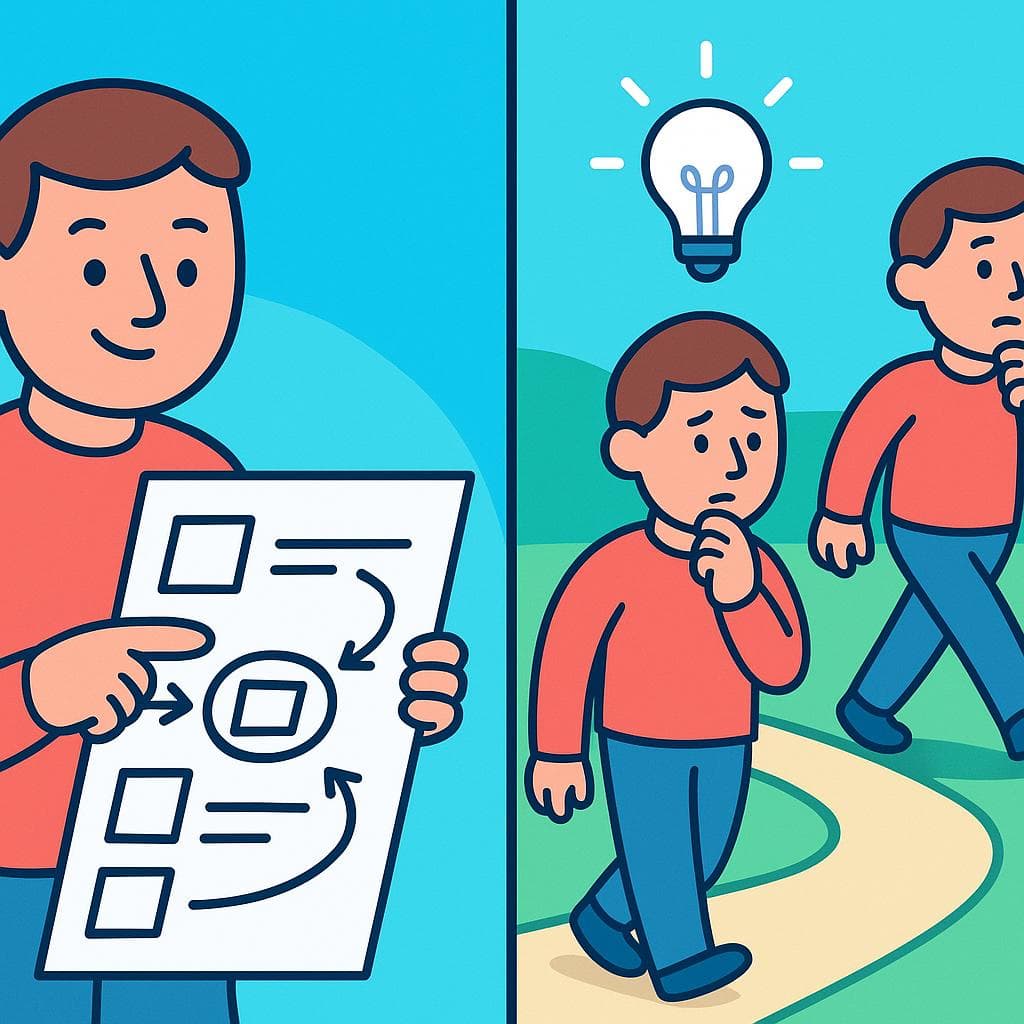
Decidir = WHAT you decide. Decidirse = to MAKE UP your mind.
decidir
To decide, to determine, to resolve. Focuses on the outcome or the thing being decided.
deh-see-DEERdecidirse
To make up one's mind, to finally choose, to opt for. Focuses on the internal process of resolving indecision.
deh-see-DEER-sehQuick Rule
Decidir = WHAT you decide. Decidirse = to MAKE UP your mind.
Decidir has a direct target (a plan, a date). DecidirSE is about yourSELF finally choosing.
- Decidirse is often followed by 'a' + verb ('me decidí a empezar') or 'por' + noun ('me decidí por el azul').
- In many contexts they are similar, but 'decidirse' always adds a feeling of overcoming hesitation or making a final choice.
Comparison Table
| Context | decidir | decidirse | Why? |
|---|---|---|---|
| Choosing a career | Decidió estudiar medicina. | Se decidió por la medicina. | Decidir + verb focuses on the action. Decidirse por + noun focuses on choosing one field from many options. |
| Making a plan | Decidimos ir al cine. | Todavía no nos decidimos. | Decidir states the outcome. Decidirse describes the internal state of being decided (or undecided). |
| Buying something | Decidí qué vestido comprar. | Me decidí por el vestido azul. | Decidir answers 'what' to do. Decidirse por points to the final selection. |
When to Use "decidir / decidirse"
decidir
To decide, to determine, to resolve. Focuses on the outcome or the thing being decided.
deh-see-DEER
Deciding WHAT to do (followed by an infinitive)
Decidí estudiar español.
I decided to study Spanish.
Deciding a specific thing (followed by a noun)
Tenemos que decidir la fecha de la boda.
We have to decide the wedding date.
Making a judgment or ruling
El árbitro decidió el final del partido.
The referee decided the end of the match.
decidirse
To make up one's mind, to finally choose, to opt for. Focuses on the internal process of resolving indecision.
deh-see-DEER-seh
Finally choosing ONE option (with 'por')
Al final, me decidí por el coche rojo.
In the end, I decided on/opted for the red car.
Making the leap to do something (with 'a')
¿Cuándo te vas a decidir a llamarlo?
When are you going to make up your mind to call him?
Expressing that a decision has been made
Ya me decidí. ¡Voy a hacerlo!
I've made up my mind. I'm going to do it!
Contrast Examples
With "decidir":
Decidimos el destino de las vacaciones.
We decided the vacation destination.
With "decidirse":
Nos decidimos por Italia.
We decided on Italy. (We chose Italy from the options.)
The Difference: Decidir is about the act of making a decision. Decidirse por emphasizes the final choice you landed on.
With "decidir":
Decidió dejar de fumar.
He decided to quit smoking.
With "decidirse":
Por fin se decidió a dejar de fumar.
He finally made up his mind to quit smoking.
The Difference: Decidir states the fact. Decidirse a adds a sense of overcoming hesitation or making a firm, final resolution to do it.
With "decidir":
Tienes que decidir algo.
You have to decide something.
With "decidirse":
¡Decídete ya!
Make up your mind already!
The Difference: Decidir needs an object (something to decide). Decidirse is about the internal state of being undecided and is often used as a command to resolve that state.
Common Mistakes
Decidí por el azul.
Me decidí por el azul.
When you're choosing one option 'from' a list using 'por', you need the reflexive 'me decidí' to show you made up your mind and picked one.
Me decidí a estudiar.
Decidí estudiar.
While 'me decidí a estudiar' is grammatically possible, it implies you overcame a huge hesitation. For a simple statement of fact, 'decidí estudiar' is much more common.
Quick Practice
Quick Quiz: Decidir vs Decidirse
Question 1 of 3
Which sentence means 'I decided on the red one'?
Related Grammar
Want to understand the grammar behind this pair? Explore these lessons for a deep dive:
Key Words

Tags
Build the instinct, not just the rule
Rules help you get it right; context makes it automatic. Read 200+ illustrated and narrated Spanish stories to see confusing pairs chosen correctly — over and over — until you stop thinking about it.
Frequently Asked Questions
Can I just always use 'decidir' to be safe?
You can often be understood, but you'll sound unnatural. In cases like '¡Decídete ya!' (Make up your mind!) or 'Me decidí por el pollo' (I'll have the chicken), using 'decidir' would be incorrect. Learning 'decidirse' is essential for sounding fluent.
Is 'decidirse' a common reflexive verb pattern?
Yes! Many Spanish verbs can add a reflexive pronoun ('-se') to change their meaning slightly. This often adds a sense of completion, personal involvement, or a change of state. Other examples include 'ir' (to go) vs. 'irse' (to leave) and 'dormir' (to sleep) vs. 'dormirse' (to fall asleep).