
Empezar vs Comenzar
They're 95% interchangeable. Use 'empezar' for everyday talk and 'comenzar' for a slightly more formal or official feel.
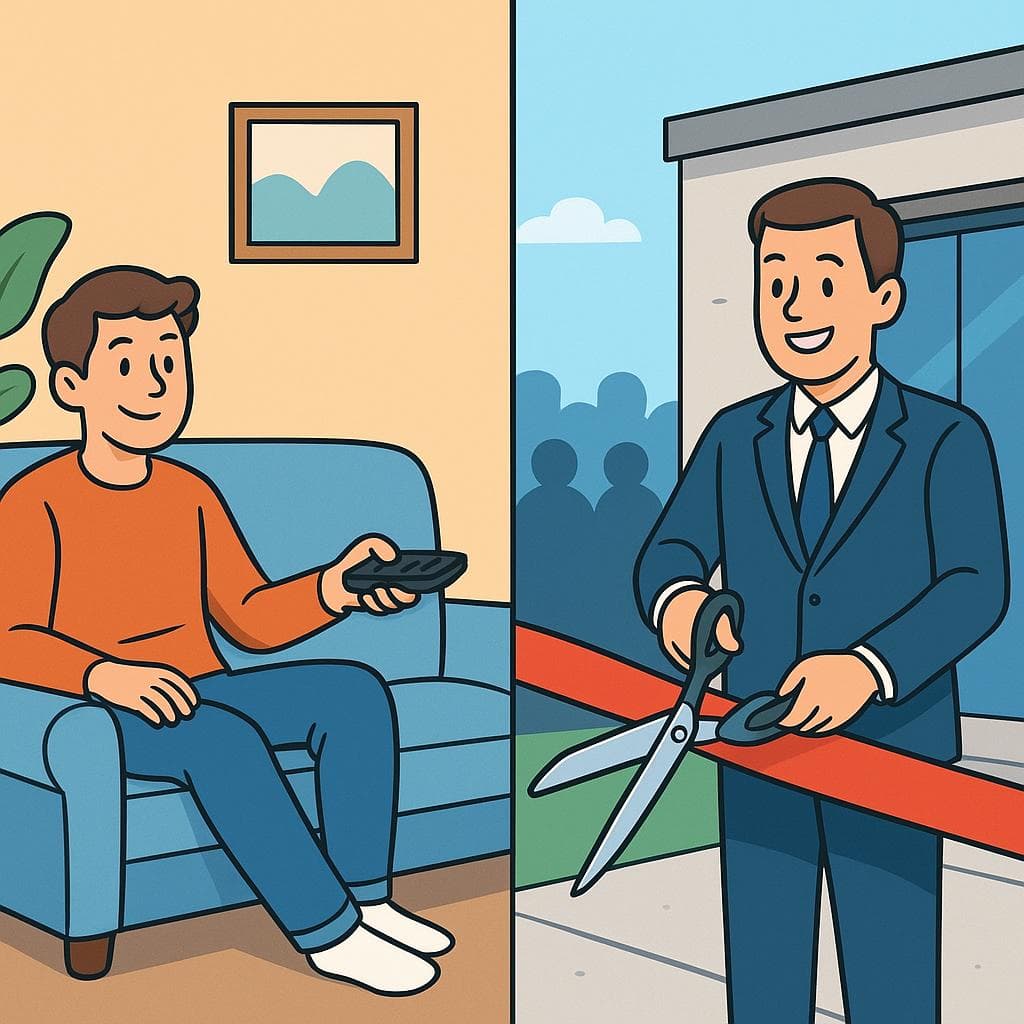
empezar
To start, to begin (general, everyday use)
em-peh-SARcomenzar
To begin, to commence (slightly more formal or literary)
koh-men-SARQuick Rule
They're 95% interchangeable. Use 'empezar' for everyday talk and 'comenzar' for a slightly more formal or official feel.
Think: Empezar = Everyday. Comenzar = Ceremonial (or Classy).
- Both are followed by 'a + infinitive' (empezar a correr, comenzar a leer).
- To say you 'start by doing something', 'empezar por' is much more common than 'comenzar por'.
Comparison Table
| Context | empezar | comenzar | Why? |
|---|---|---|---|
| Everyday Action | La clase empieza a las 9. | La clase comienza a las 9. | Both are correct. 'Empieza' is more common in spoken, everyday Spanish. |
| Formal Event | La ceremonia de graduación empieza pronto. | La ceremonia de graduación comienza pronto. | 'Comienza' sounds slightly more formal and fitting for an official ceremony. |
| Starting a Task | Tengo que empezar la tarea. | Tengo que comenzar la tarea. | Both are fine, but 'empezar' is the more natural, default choice for daily tasks. |
| Written/Official Notice | El plazo para aplicar empieza el lunes. | El plazo para aplicar comienza el lunes. | In official writing or announcements, 'comienza' is often preferred for its formal tone. |
When to Use "empezar / comenzar"
empezar
To start, to begin (general, everyday use)
em-peh-SAR
Starting an action
Voy a empezar a estudiar para el examen.
I'm going to start studying for the exam.
Starting a thing (a noun)
Empecé un nuevo trabajo la semana pasada.
I started a new job last week.
Asking about start times casually
¿A qué hora empieza la película?
What time does the movie start?
Starting from a certain point
Vamos a empezar por el principio.
Let's start from the beginning.
comenzar
To begin, to commence (slightly more formal or literary)
koh-men-SAR
Starting an action (more formal)
El autor comienza a narrar la historia.
The author begins to narrate the story.
Starting a thing (in official contexts)
La empresa comenzará la construcción en mayo.
The company will commence construction in May.
Formal announcements
El evento comenzará en breve.
The event will commence shortly.
Literary or written language
Así comienza un nuevo capítulo en su vida.
Thus begins a new chapter in her life.
Contrast Examples
With "empezar":
¿Ya empezó la peli?
Did the movie start already?
With "comenzar":
La proyección comenzará puntualmente a las 20:00h.
The screening will commence punctually at 8:00 PM.
The Difference: The meaning is the same ('start'), but the tone is completely different. 'Empezar' is casual and conversational, while 'comenzar' is formal and official, perfect for an announcement.
With "empezar":
Bueno, equipo, vamos a empezar el nuevo proyecto.
Okay, team, let's start the new project.
With "comenzar":
Damos comienzo oficial al Proyecto Fénix.
We officially commence Project Phoenix.
The Difference: 'Empezar' is what a manager says in a daily meeting. 'Comenzar' (especially as 'dar comienzo a') is what the CEO says at a formal launch event.
Common Mistakes
Overthinking the difference.
Just pick one! Usually 'empezar'.
The biggest mistake is worrying too much. They are synonyms. If you're not sure, 'empezar' is almost always a safe and natural choice.
Using 'comenzar' for very casual things.
Voy a empezar a ver la serie.
Saying 'voy a comenzar a ver la serie' isn't grammatically wrong, but it sounds a bit too dramatic or formal for a casual activity. 'Empezar' fits better.
Quick Practice
Quick Quiz: Empezar vs Comenzar
Question 1 of 3
For a casual chat with a friend, which is more natural? '¿A qué hora ___ la fiesta?'
Related Grammar
Want to understand the grammar behind this pair? Explore these lessons for a deep dive:
Key Words




Tags
Build the instinct, not just the rule
Rules help you get it right; context makes it automatic. Read 200+ illustrated and narrated Spanish stories to see confusing pairs chosen correctly — over and over — until you stop thinking about it.
Frequently Asked Questions
Am I wrong if I use 'comenzar' in a casual conversation?
No, you're not wrong at all! People will understand you perfectly. It might just sound a little more formal than necessary, like saying 'commence' instead of 'start' in English. When in doubt, 'empezar' is always a safe bet.
Are there any other verbs for 'to start'?
Yes! Another common one is 'iniciar', which is often used for starting processes, especially with technology (iniciar sesión = to log in) or in business (iniciar un negocio = to start a business). It's also quite formal, similar to 'comenzar'.
Do 'empezar' and 'comenzar' conjugate the same way?
Yes, they follow the exact same pattern! Both are stem-changing verbs (e -> ie) in the present tense (empiezo, empiezas...; comienzo, comienzas...) and have a spelling change (z -> c) in the preterite 'yo' form (empecé, comencé).