
En vs A (location)
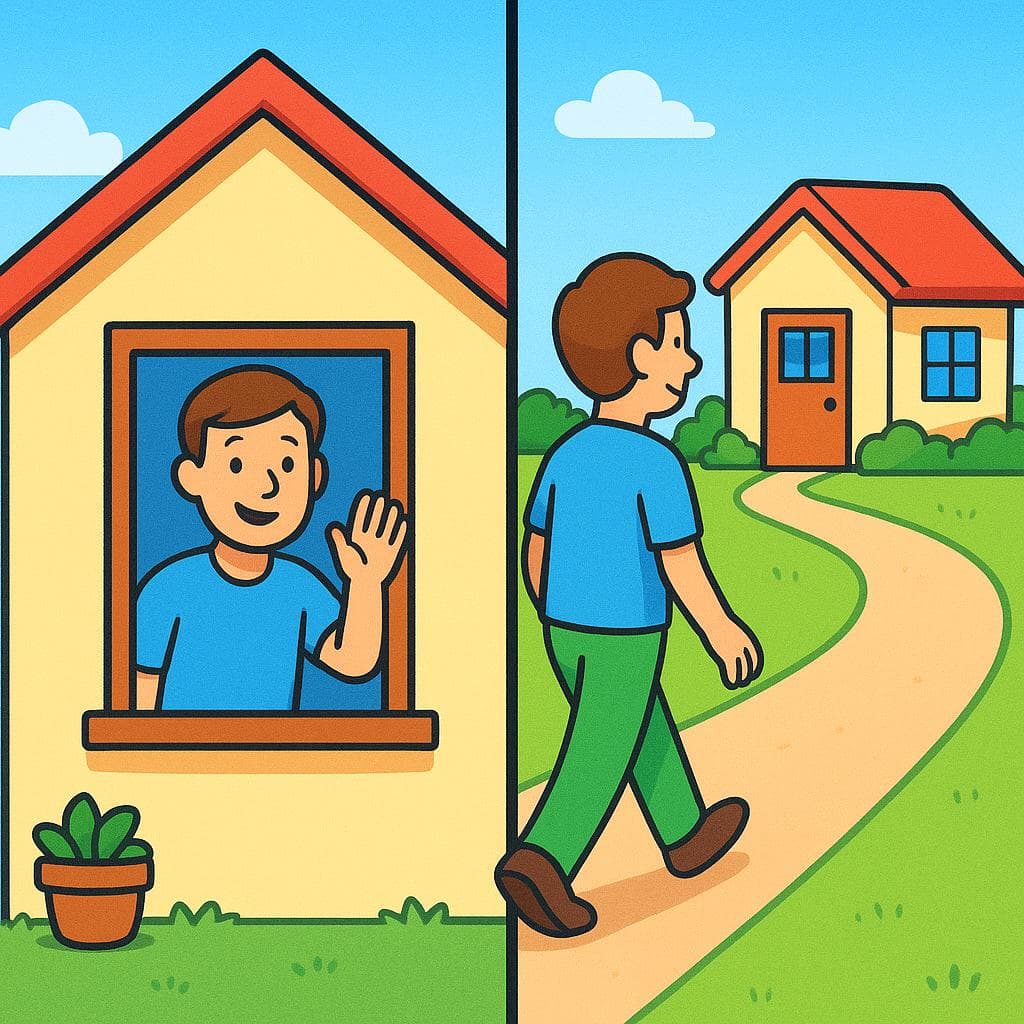
En = inside or on (a static location). A = towards or to (a destination).
en
In, at, on (used for static location)
EHNa
To, towards (used for movement and destination)
AHQuick Rule
En = inside or on (a static location). A = towards or to (a destination).
Think: 'En' is for being INside. 'A' is for Arriving.
- Use 'a' for sitting 'at the table': Sentarse a la mesa.
- Use 'a' for being 'in the sun' or 'in the shade': Estar al sol / a la sombra.
Comparison Table
| Context | en | a | Why? |
|---|---|---|---|
| Static vs. Motion | Estoy en el cine. | Voy al cine. | En for being there, A for going there. |
| Asking Questions | ¿Dónde estás? | ¿A dónde vas? | Use 'en' with 'dónde' (where). Use 'a' with 'adónde' (where to). |
| Position on a Surface | El vaso está en la mesa. | Puse el vaso a un lado. | En means 'on top of'. A can mean 'to the side of'. |
| At the Table | Hay flores en la mesa. | Siéntate a la mesa. | En for objects on the table. A for the action of sitting at the table to eat. |
When to Use "en / a"
en
In, at, on (used for static location)
EHN
Being inside a place
Estoy en casa.
I'm at home.
Being on a surface
El libro está en la mesa.
The book is on the table.
General location
Trabajo en una oficina.
I work in an office.
Mode of transportation
Viajo en tren.
I travel by train.
a
To, towards (used for movement and destination)
AH
Movement towards a destination
Voy a la playa.
I'm going to the beach.
Entering a place
Entramos a la tienda.
We are entering the store.
Approaching something
El perro corrió a la puerta.
The dog ran to the door.
At the edge of something
Se sentó a la orilla del mar.
He sat at the seashore.
Contrast Examples
With "en":
Estoy en la oficina.
I am in the office.
With "a":
Voy a la oficina.
I am going to the office.
The Difference: 'En' tells you where you are right now (your current location). 'A' tells you where you are going (your destination).
With "en":
Nos vemos en el parque.
Let's meet in the park.
With "a":
Caminamos al parque.
We are walking to the park.
The Difference: 'En' sets the location where an action will happen. 'A' indicates the direction of movement.
Common Mistakes
Voy en la tienda.
Voy a la tienda.
When you're talking about movement towards a destination, always use 'a', not 'en'.
Estoy a mi casa.
Estoy en mi casa.
To describe your current, static location (where you are right now), use 'en'.
El libro está a la mesa.
El libro está en la mesa.
For something physically on top of a surface, use 'en'. 'A la mesa' is mostly reserved for the action of sitting down to eat.
Quick Practice
Quick Quiz: En vs A (location)
Question 1 of 2
Which is correct? 'Mis llaves están ___ la mesa.'
Related Grammar
Want to understand the grammar behind this pair? Explore these lessons for a deep dive:
Key Words





Tags
Build the instinct, not just the rule
Rules help you get it right; context makes it automatic. Read 200+ illustrated and narrated Spanish stories to see confusing pairs chosen correctly — over and over — until you stop thinking about it.
Frequently Asked Questions
Why do you say '¿A dónde vas?' but '¿Dónde estás?'
'A dónde' specifically asks 'To where?' because it's about a destination, and it's paired with a verb of motion like 'ir' (to go). 'Dónde' just asks 'Where?' for a static location, used with verbs like 'estar' (to be).
Is 'en' always 'in' and 'a' always 'to'?
That's a great starting point! 'En' can also mean 'on' (en la mesa) or 'at' (en la fiesta). 'A' is almost always used for movement toward a place. The best simple rule is: 'en' = static location, 'a' = motion towards a location.