
Eso vs Ese
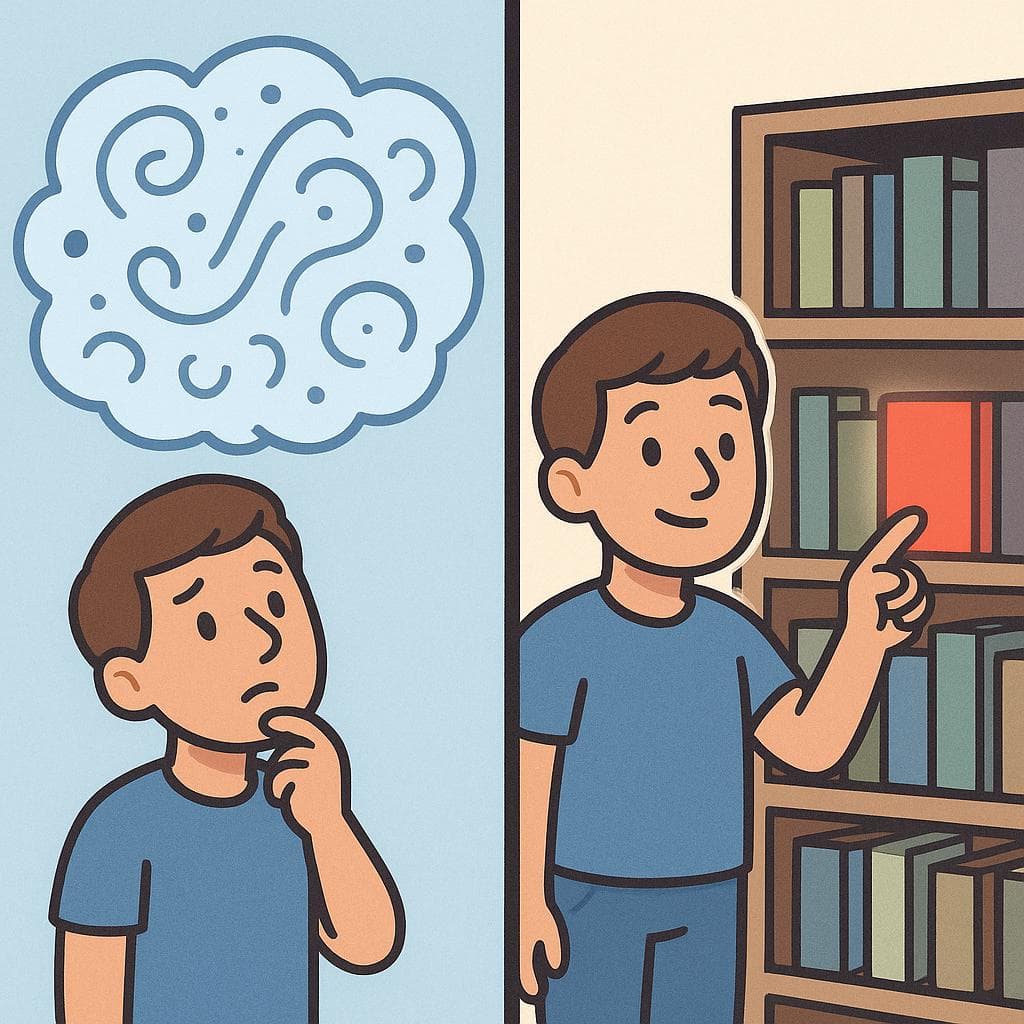
Ese describes a *thing* (`ese libro`). Eso *is* the thing (`¿Qué es eso?`).
eso
That (as a standalone thing); that (abstract idea or unknown object)
EH-soese
That (describing a specific masculine noun)
EH-sehQuick Rule
Ese describes a *thing* (`ese libro`). Eso *is* the thing (`¿Qué es eso?`).
Ese needs a noun-friend right next to it. Eso can stand alone.
- Eso is used for abstract ideas or situations, like in 'Por eso...' (That's why...).
Comparison Table
| Context | eso | ese | Why? |
|---|---|---|---|
| Pointing at an object | ¿Qué es eso? | Quiero ese libro. | Eso stands alone when you don't know the object. Ese needs a noun to describe. |
| Referring to a situation | Eso es increíble. | Ese momento fue increíble. | Eso refers to the whole idea. Ese describes the specific 'momento'. |
| Cause and Effect | Por eso estoy aquí. | Por ese motivo estoy aquí. | Eso is used in the common phrase 'por eso' (that's why). Ese needs a noun like 'motivo' (reason). |
| Responding to a statement | No creo eso. | No creo ese rumor. | Eso refers to 'that' as an idea. Ese specifies 'that rumor'. |
When to Use "eso / ese"
eso
That (as a standalone thing); that (abstract idea or unknown object)
EH-so
Referring to an unknown object
¿Qué es eso?
What is that?
Referring to a general idea or situation
Eso no es justo.
That's not fair.
Responding to something someone said
No me digas eso.
Don't tell me that.
Used in the phrase 'Por eso'
Llegué tarde, por eso me lo perdí.
I was late, that's why I missed it.
ese
That (describing a specific masculine noun)
EH-seh
Pointing out a specific masculine noun
Quiero ese libro.
I want that book.
Referring to a masculine noun just mentioned
Hablamos del problema. Ese problema es grave.
We talked about the problem. That problem is serious.
Describing a masculine noun at a distance
Mira ese pájaro en el árbol.
Look at that bird in the tree.
Distinguishing from another item
No este coche, prefiero ese.
Not this car, I prefer that one.
Contrast Examples
With "eso":
Disculpe, ¿cuánto cuesta eso?
Excuse me, how much does that cost?
With "ese":
Disculpe, ¿cuánto cuesta ese cuadro?
Excuse me, how much does that painting cost?
The Difference: Use 'eso' when you're just pointing at 'that thing' without naming it. Use 'ese' when you are specifying which noun you mean ('that painting', 'that shirt').
With "eso":
Lo del accidente fue terrible. No puedo dejar de pensar en eso.
The thing with the accident was terrible. I can't stop thinking about that.
With "ese":
El accidente fue terrible. No puedo dejar de pensar en ese día.
The accident was terrible. I can't stop thinking about that day.
The Difference: 'Eso' refers to the entire abstract situation. 'Ese' points to a specific, concrete noun ('día').
Common Mistakes
Quiero eso libro.
Quiero ese libro.
When a noun ('libro') comes right after, you must use the adjective 'ese' to describe it. 'Eso' can't go before a noun.
¿Qué es ese?
¿Qué es eso?
When you don't know what something is at all, use the neutral pronoun 'eso'. '¿Qué es ese?' asks 'What is that one?', implying you already know it's a masculine object from a group.
Quick Practice
Quick Quiz: Eso vs Ese
Question 1 of 3
Which is correct? 'Me gusta ___ coche rojo.'
Related Grammar
Want to understand the grammar behind this pair? Explore these lessons for a deep dive:
Key Words




Tags
Build the instinct, not just the rule
Rules help you get it right; context makes it automatic. Read 200+ illustrated and narrated Spanish stories to see confusing pairs chosen correctly — over and over — until you stop thinking about it.
Frequently Asked Questions
What about 'esa' and 'esos'?
Great question! They follow the same rule as 'ese'. 'Esa' is the feminine version used before feminine nouns ('esa casa'), and 'esos'/'esas' are the plural versions ('esos libros', 'esas casas'). 'Eso' is special because it's neutral and doesn't change for gender or number.
Can I ever use 'ese' by itself?
Yes, but it's technically a pronoun ('ése'). For example, '¿Qué coche quieres? Quiero ése.' (Which car do you want? I want that one.) In modern Spanish, the accent is often dropped, so it looks identical to the adjective. The key is that it replaces a noun that was just mentioned.