
Huir vs Escapar
Huir is fleeing *from* something. Escapar is getting *out of* something.
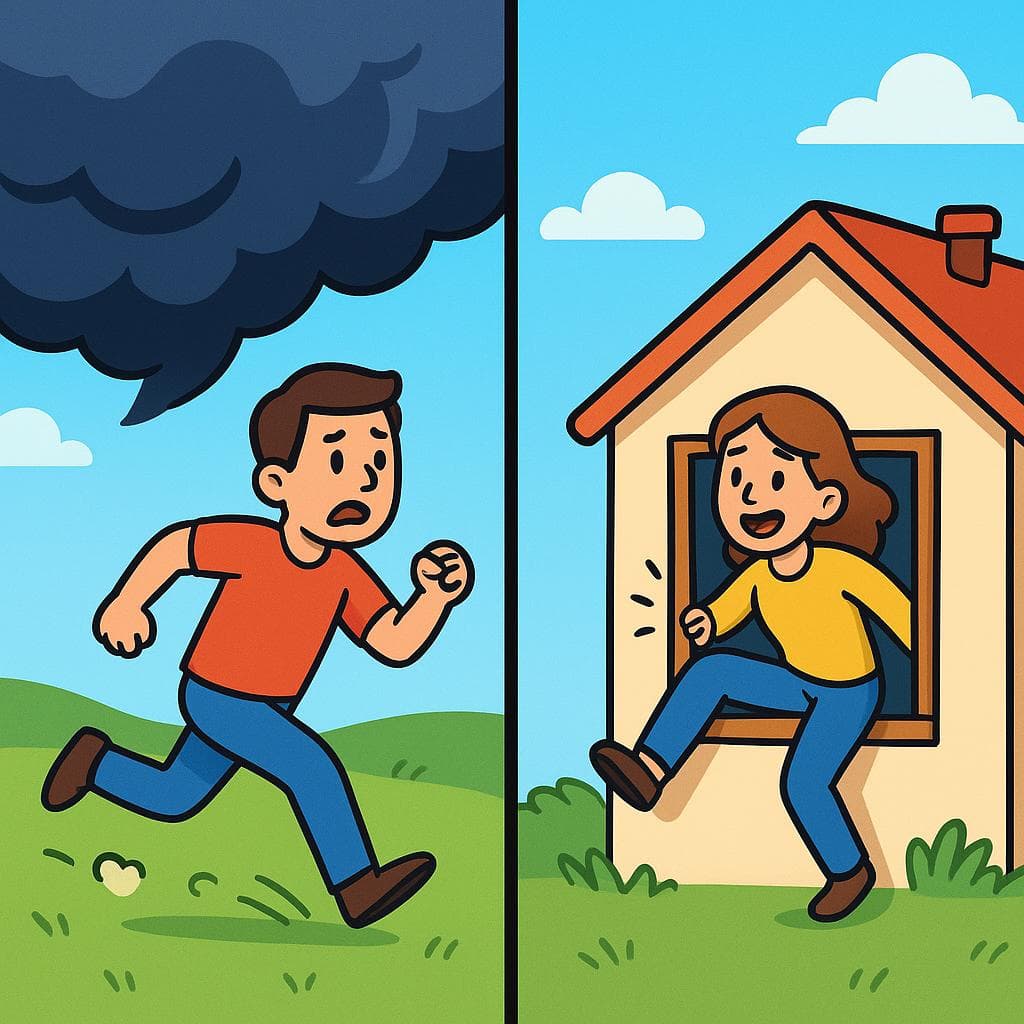
huir
To flee or run away, usually from a general danger, a threat, or an unpleasant situation. The focus is on the act of getting away.
oo-EERescapar
To escape or break free from a specific place of confinement, a trap, or a situation you're already in. The focus is on the success of getting out.
ehs-kah-PARQuick Rule
Huir is fleeing *from* something. Escapar is getting *out of* something.
Think: Huir = Hurry away. Escapar = Escape a trap.
- Both can sometimes be used for 'fleeing from the police', but 'huir' focuses on the chase, while 'escapar' can imply they successfully got away.
Comparison Table
| Context | huir | escapar | Why? |
|---|---|---|---|
| Leaving a Place | Huyeron de la ciudad en guerra. | Escaparon de la prisión. | Huir is for fleeing a general dangerous area. Escapar is for breaking out of a specific place of confinement. |
| Getting Away from People | El ladrón huyó de los guardias. | El rehén escapó de sus captores. | Huir focuses on the chase or act of running. Escapar focuses on breaking free from being held or controlled. |
| Abstract Situations | Intenta huir de la tristeza. | Nadie puede escapar de su destino. | Huir is for trying to avoid a feeling or problem. Escapar is for getting away from something inevitable or binding. |
| Unintentional Release | (Not used for this) | Se me escapó una risa. | Only escapar(se) is used when something slips out unintentionally, like a laugh, a comment, or a secret. |
When to Use "huir / escapar"
huir
To flee or run away, usually from a general danger, a threat, or an unpleasant situation. The focus is on the act of getting away.
oo-EER
Fleeing from a general danger
Los ciervos huyeron del incendio forestal.
The deer fled from the forest fire.
Avoiding a person or group
El sospechoso huyó de la policía.
The suspect fled from the police.
Running away from abstract things
Ella siempre huye de sus problemas.
She always runs away from her problems.
Shunning or avoiding something
Él huye del compromiso y las responsabilidades.
He shuns commitment and responsibilities.
escapar
To escape or break free from a specific place of confinement, a trap, or a situation you're already in. The focus is on the success of getting out.
ehs-kah-PAR
Breaking out of physical confinement
El prisionero escapó de la cárcel.
The prisoner escaped from jail.
Getting out of a specific situation
Por fin escapamos de la reunión tan aburrida.
We finally escaped from the really boring meeting.
When something gets away from you (often reflexive)
¡Cuidado, que no se te escape el perro!
Be careful, don't let the dog get away from you!
When a detail slips your mind (reflexive)
Se me escapó su nombre, no lo recuerdo.
His name escaped me, I can't remember it.
Contrast Examples
With "huir":
El ladrón huyó con el dinero.
The thief fled with the money. (Focuses on the act of running away).
With "escapar":
El ladrón escapó por una ventana trasera.
The thief escaped through a back window. (Focuses on how he got out of the building).
The Difference: Huir describes the general action of fleeing the scene. Escapar specifies the method of breaking out of the contained space (the bank).
With "huir":
Cuando empezamos a hablar de dinero, él huyó.
When we started talking about money, he fled. (He avoided the topic and left).
With "escapar":
Logré escapar de la conversación cambiando de tema.
I managed to escape the conversation by changing the subject. (I was already in it and found a way out).
The Difference: Huir suggests avoiding or running from a situation before you're trapped in it. Escapar implies you were already in the middle of it and successfully got out.
Common Mistakes
El león huyó de la jaula.
El león escapó de la jaula.
A cage is a specific confinement. Use 'escapar' for breaking out of something. 'Huir' would describe the lion running across the savanna afterwards.
Quiero escapar del ruido de la ciudad.
Quiero huir del ruido de la ciudad.
The city's noise is a general, unpleasant situation, not a physical trap. 'Huir' is the natural choice for fleeing from this kind of environment.
Quick Practice
Quick Quiz: Huir vs Escapar
Question 1 of 3
The bird ___ from its cage. Which verb fits best?
Related Grammar
Want to understand the grammar behind this pair? Explore these lessons for a deep dive:
Key Words



Tags
Build the instinct, not just the rule
Rules help you get it right; context makes it automatic. Read 200+ illustrated and narrated Spanish stories to see confusing pairs chosen correctly — over and over — until you stop thinking about it.
Frequently Asked Questions
Can 'huir' and 'escapar' ever be interchangeable?
Sometimes, but it's rare. In the context of fleeing from the police, you might hear both. However, 'huir de la policía' emphasizes the chase, while 'escapar de la policía' suggests they successfully got away. For almost all other situations, the distinction between fleeing a general danger (huir) and breaking out of confinement (escapar) holds true.
What does the 'se' in 'escaparse' mean?
'Escaparse' is the reflexive form. It often adds a sense of something happening unintentionally or by itself. For example, 'El globo se escapó' (The balloon got away), or 'Se me escapó un secreto' (A secret slipped out).