
Meter vs Meterse
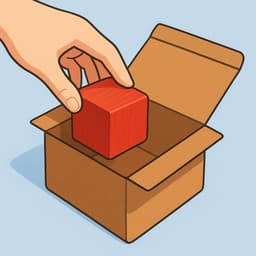
Meter = to put something IN. Meterse = to get yourself INTO something.

meter
To put something inside of something else; to insert.
meh-TEHRmeterse
To get oneself into a place or situation; to meddle or interfere.
meh-TEHR-sehQuick Rule
Meter = to put something IN. Meterse = to get yourself INTO something.
Think: `meter` is for your keys (putting them in your pocket). `meterse` is for yourself (getting into a car, a problem, or someone's business).
- The phrase 'meterse con alguien' specifically means 'to mess with' or 'to pick on someone'.
Comparison Table
| Context | meter | meterse | Why? |
|---|---|---|---|
| Physical action | Mete la ropa en la lavadora. | Métete en la ducha. | Meter = acting on an object (the clothes). Meterse = acting on yourself (getting in the shower). |
| Getting into trouble | Él me metió en este lío. | Me metí en un lío por llegar tarde. | Meter = someone else got you into trouble. Meterse = you got yourself into trouble. |
| Conversation | Metió una broma para relajar el ambiente. | Se metió en la conversación sin permiso. | Meter = inserting something (a joke). Meterse = inserting yourself (butting in). |
When to Use "meter / meterse"
meter
To put something inside of something else; to insert.
meh-TEHR
Putting an object somewhere
Metí las llaves en el cajón.
I put the keys in the drawer.
Scoring a goal (in sports)
El delantero metió un golazo.
The forward scored an amazing goal.
Getting someone into a situation
Su amigo lo metió en ese negocio.
His friend got him into that business.
meterse
To get oneself into a place or situation; to meddle or interfere.
meh-TEHR-seh
Getting into a physical space
Me metí en la cama porque tenía frío.
I got into bed because I was cold.
Interfering or meddling ('meterse en')
No te metas en mis asuntos.
Don't meddle in my business.
Picking on someone ('meterse con')
Deja de meterte con tu hermano.
Stop messing with your brother.
Joining an activity
Se metió a clases de baile.
She signed up for dance classes.
Contrast Examples
With "meter":
Voy a meter las maletas en el coche.
I'm going to put the suitcases in the car.
With "meterse":
Voy a meterme en el coche.
I'm going to get in the car.
The Difference: `Meter` is what you do to an object (the suitcases). `Meterse` is what you do to yourself (getting your body inside).
With "meter":
Tu mala planificación nos metió en problemas.
Your bad planning got us into trouble.
With "meterse":
Me metí en problemas por no estudiar.
I got myself into trouble for not studying.
The Difference: `Meter` implies an external force put you in the situation. `Meterse` implies you are responsible for getting yourself into it.
With "meter":
El capitán lo metió en el equipo.
The captain put him on the team.
With "meterse":
Se metió en el equipo con mucho esfuerzo.
He got himself onto the team with a lot of effort.
The Difference: `Meter` suggests someone else made the decision to include you. `Meterse` highlights your own action of joining or getting in.
Common Mistakes
Yo meto en la piscina.
Yo me meto en la piscina.
When you are the one entering the pool, you need the reflexive form 'meterse'. 'Meter en la piscina' would mean you are putting something else (like a ball) into the pool.
No me metas con él.
No te metas con él.
The phrase 'to mess with' is 'meterse con'. If you're telling someone 'Don't mess with him', the reflexive pronoun has to match the person you're talking to ('tú'), so you use 'te'.
Quick Practice
Quick Quiz: Meter vs Meterse
Question 1 of 3
Which is correct? 'Voy a ___ en la piscina.'
Related Grammar
Want to understand the grammar behind this pair? Explore these lessons for a deep dive:
Key Words

Tags
Build the instinct, not just the rule
Rules help you get it right; context makes it automatic. Read 200+ illustrated and narrated Spanish stories to see confusing pairs chosen correctly — over and over — until you stop thinking about it.
Frequently Asked Questions
So 'meterse' is just a reflexive verb? What does that mean?
Exactly! A reflexive verb is one where the person doing the action is also receiving the action. With 'meterse', you are 'putting yourself' somewhere. That's why you need the little reflexive pronouns (me, te, se, nos, os, se) that match the subject.
Is 'meterse en' always about meddling or interfering?
Not always, but it's a very common use. It can also be neutral, like 'Me metí a un curso de fotografía' (I got into a photography course). The context tells you if it means 'to butt in' or simply 'to get into/join'.