
Molestar vs Fastidiar
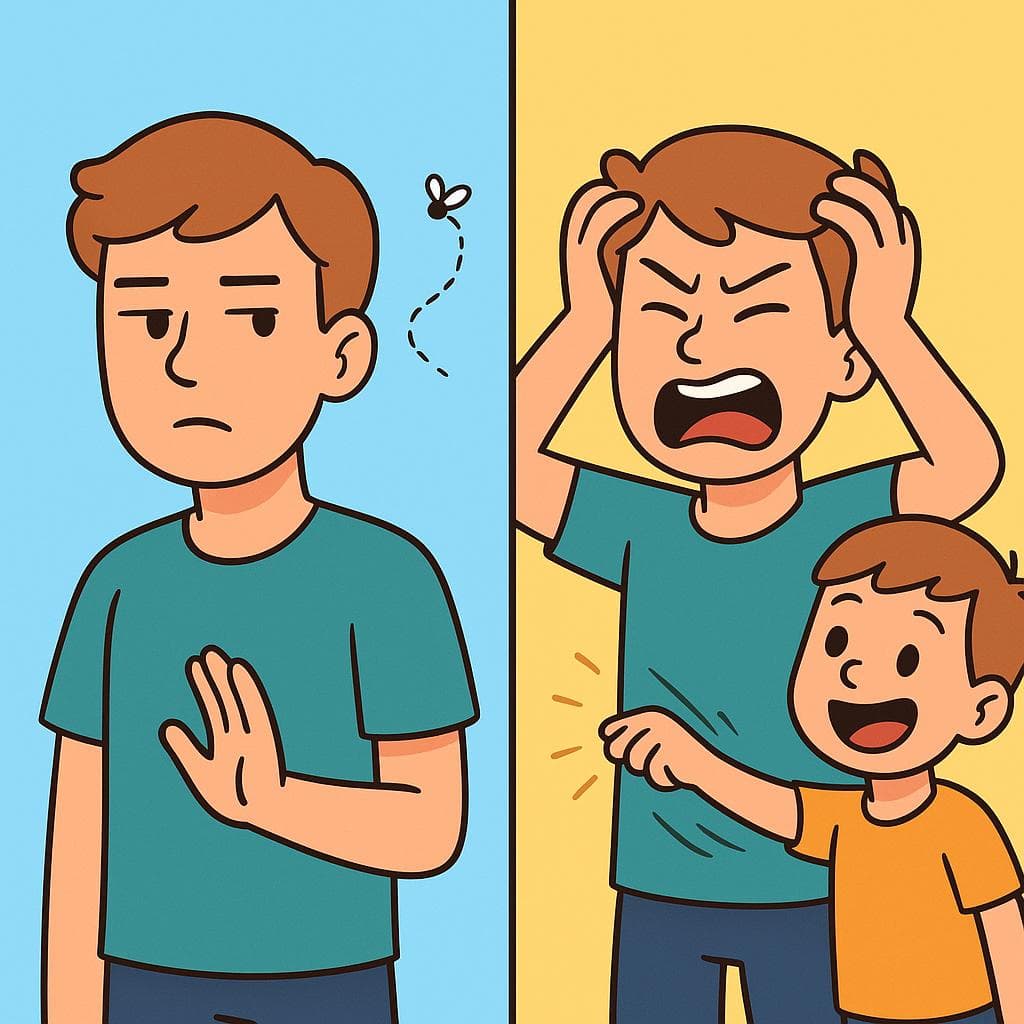
Molestar = to bother (mildly). Fastidiar = to really annoy or ruin.
molestar
To bother, annoy, or disturb in a general or mild way; also for physical discomfort.
moh-lehs-TARfastidiar
To annoy intensely, exasperate, get on someone's nerves, or to ruin/spoil something.
fahs-tee-DYARQuick Rule
Molestar = to bother (mildly). Fastidiar = to really annoy or ruin.
Molestar is a mild mosquito bite. Fastidiar is a frustrating traffic jam.
- In some regions and contexts, 'fastidiar' can be used more casually and with less intensity, but the 'stronger' meaning is a safe bet.
Comparison Table
| Context | molestar | fastidiar | Why? |
|---|---|---|---|
| Level of Annoyance | Me molesta el humo. | ¡Me fastidia tu actitud! | Molestar is for a general bother. Fastidiar expresses stronger frustration or anger. |
| Impact on Plans | Perdón por molestar tan tarde. | Perder el tren me fastidió la noche. | Molestar is for interrupting a person. Fastidiar is for ruining an event or plan. |
| Describing an Action | El bebé está llorando, me molesta. | El bebé no para de llorar, ¡qué fastidio! | Molestar describes the simple act of being bothered. Fastidiar (or 'qué fastidio') implies you've reached your limit of patience. |
When to Use "molestar / fastidiar"
molestar
To bother, annoy, or disturb in a general or mild way; also for physical discomfort.
moh-lehs-TAR
Light annoyance
El ruido de la calle me molesta un poco.
The street noise bothers me a little.
Physical discomfort
Me molesta la luz brillante en los ojos.
The bright light bothers my eyes.
Politely asking not to be disturbed
Disculpa que te moleste, ¿tienes un minuto?
Sorry to bother you, do you have a minute?
fastidiar
To annoy intensely, exasperate, get on someone's nerves, or to ruin/spoil something.
fahs-tee-DYAR
Strong annoyance or exasperation
¡Deja de silbar! Me estás fastidiando.
Stop whistling! You're really getting on my nerves.
To ruin or spoil something (plans, objects)
La lluvia nos fastidió el día de playa.
The rain ruined our beach day.
Persistent teasing or bugging
Mi hermano siempre me fastidia con la misma broma.
My brother always bugs me with the same joke.
Contrast Examples
With "molestar":
Por favor, no hagas ruido. Me molesta para concentrarme.
Please, don't make noise. It bothers me when I'm trying to concentrate.
With "fastidiar":
¡Llevas una hora haciendo ruido! Ya, ¡deja de fastidiar!
You've been making noise for an hour! Enough, stop being so annoying!
The Difference: Molestar is a calm statement of being bothered. Fastidiar expresses a loss of patience and a higher degree of frustration.
With "molestar":
Me molesta tener que trabajar el sábado.
It bothers me that I have to work on Saturday.
With "fastidiar":
Tener que cancelar mis vacaciones me fastidió todo el mes.
Having to cancel my vacation ruined my whole month.
The Difference: Molestar expresses dislike or inconvenience. Fastidiar implies that the event spoiled or ruined a larger experience.
Common Mistakes
Me fastidia un poco el zapato.
Me molesta un poco el zapato.
'Fastidiar' is too strong for a minor physical discomfort. Use 'molestar' when something physically bothers you, like a shoe that's a bit tight.
La mancha de vino molestó mi camisa.
La mancha de vino fastidió mi camisa.
When something is spoiled or ruined, 'fastidiar' is the correct verb. 'Molestar' doesn't carry this meaning of 'ruining'.
Quick Practice
Quick Quiz: Molestar vs Fastidiar
Question 1 of 3
Your little brother keeps hiding your keys as a joke, and you're losing your patience. '¡Deja de ___!'
Related Grammar
Want to understand the grammar behind this pair? Explore these lessons for a deep dive:
Key Words


Tags
Build the instinct, not just the rule
Rules help you get it right; context makes it automatic. Read 200+ illustrated and narrated Spanish stories to see confusing pairs chosen correctly — over and over — until you stop thinking about it.
Frequently Asked Questions
Can 'molestar' ever be strong?
Yes, context is everything. If you say it with a very angry tone, '¡No me molestes!' can be very strong. However, 'fastidiar' starts from a stronger baseline of annoyance.
Are there other words for 'to annoy' in Spanish?
Absolutely! A few common ones are 'irritar' (to irritate), 'sacar de quicio' (to drive someone crazy, very strong), and 'dar la lata' (to be a pest, more colloquial).