
Ocupar vs Ocuparse
Ocupar = to take up space. Ocuparse = to take care of something.
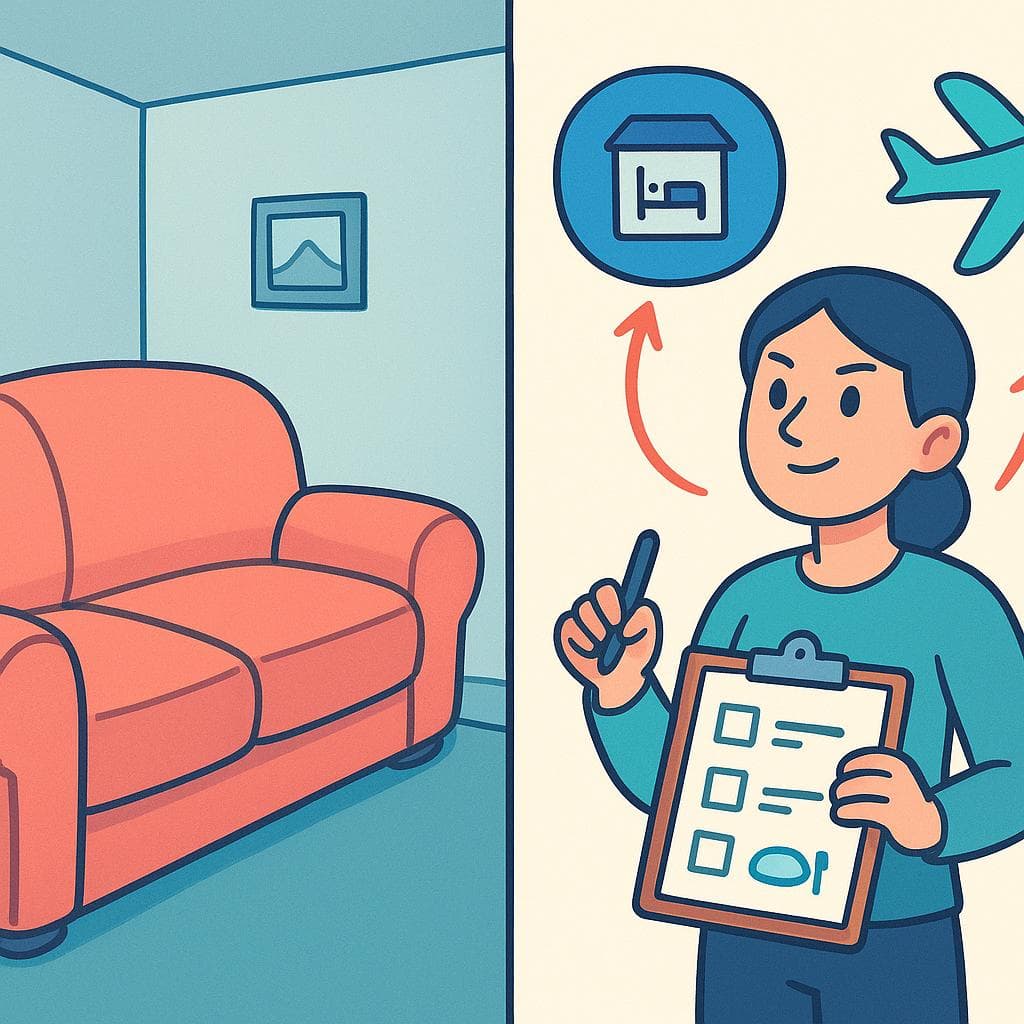
ocupar
To take up space, to fill, to occupy (a place or position).
oh-koo-PARocuparse
To take care of, to handle, to deal with, to be in charge of.
oh-koo-PAR-sehQuick Rule
Ocupar = to take up space. Ocuparse = to take care of something.
Think: Ocupar a chair (physical space). Ocuparse de un problema (mental space/responsibility).
- In formal contexts, 'ocupar un puesto' means 'to hold a job/position', which is a type of responsibility, but it's not reflexive.
Comparison Table
| Context | ocupar | ocuparse | Why? |
|---|---|---|---|
| A Project | El proyecto ocupa todo mi tiempo. | Me ocupo del proyecto. | Ocupar describes what the project *takes* (your time). Ocuparse describes what *you do* (you manage it). |
| A Room | Ese sofá ocupa demasiado espacio. | Nos ocupamos de decorar la sala. | Ocupar is about the sofa's physical size. Ocuparse is about the task of decorating. |
| A Problem | El problema ocupa mis pensamientos. | Nosotros nos ocupamos del problema. | Ocupar describes what the problem does to you (fills your thoughts). Ocuparse describes what you do to the problem (handle it). |
When to Use "ocupar / ocuparse"
ocupar
To take up space, to fill, to occupy (a place or position).
oh-koo-PAR
Taking up physical space
La cama nueva ocupa casi toda la habitación.
The new bed takes up almost the entire room.
Holding a job or official position
Actualmente ocupa el cargo de directora financiera.
She currently holds the position of financial director.
Filling time
Este proyecto ocupa la mayor parte de mi día.
This project takes up most of my day.
ocuparse
To take care of, to handle, to deal with, to be in charge of.
oh-koo-PAR-seh
Taking responsibility for a task (always with 'de')
No te preocupes, yo me ocupo de la cena.
Don't worry, I'll take care of dinner.
Dealing with a person or problem (always with 'de')
El servicio al cliente se ocupará de su queja.
Customer service will handle your complaint.
To be busy with something (always with 'de')
Ahora no puedo, me estoy ocupando de un asunto urgente.
I can't right now, I'm dealing with an urgent matter.
Contrast Examples
With "ocupar":
Mi trabajo ocupa 10 horas de mi día.
My job takes up 10 hours of my day.
With "ocuparse":
Yo me ocupo de la logística en mi trabajo.
I handle the logistics in my job.
The Difference: `Ocupar` focuses on the resource being used (time). `Ocuparse` focuses on the responsibility or task being performed.
With "ocupar":
Las maletas ocupan todo el maletero.
The suitcases are taking up the whole trunk.
With "ocuparse":
¿Quién se ocupa de las maletas?
Who is taking care of the suitcases? (Who is responsible for them?)
The Difference: `Ocupar` describes the physical state of the suitcases in the trunk. `Ocuparse` asks about who has the responsibility for them.
Common Mistakes
Yo ocupo de los niños.
Yo me ocupo de los niños.
When you mean 'to take care of' or 'be in charge of' something, you must use the reflexive form `ocuparse de`. 'Yo ocupo' would mean 'I take up space'.
La mesa se ocupa mucho espacio.
La mesa ocupa mucho espacio.
For taking up physical space, use the non-reflexive verb `ocupar`. The reflexive form is for tasks and responsibilities, which a table can't have.
Quick Practice
Quick Quiz: Ocupar vs Ocuparse
Question 1 of 2
Choose the correct verb: 'No te preocupes por la reserva, yo ___ de eso.'
Related Grammar
Want to understand the grammar behind this pair? Explore these lessons for a deep dive:
Key Words


Tags
Build the instinct, not just the rule
Rules help you get it right; context makes it automatic. Read 200+ illustrated and narrated Spanish stories to see confusing pairs chosen correctly — over and over — until you stop thinking about it.
Frequently Asked Questions
Why is 'ocuparse' almost always followed by 'de'?
Think of `ocuparse de` as a set phrase meaning 'to busy oneself WITH' or 'to take care OF' something. The preposition 'de' is required to connect the verb to the task or object you are handling.
Can I just use 'estar ocupado' instead of 'ocuparse'?
Often, yes! 'Estoy ocupado con el informe' is very similar to 'Me ocupo del informe'. However, `ocuparse` emphasizes taking responsibility or actively handling the task, while `estar ocupado` simply describes your state of being busy.