
Otro vs Demás
Otro = 'another' one. Demás = 'the rest' of the group.
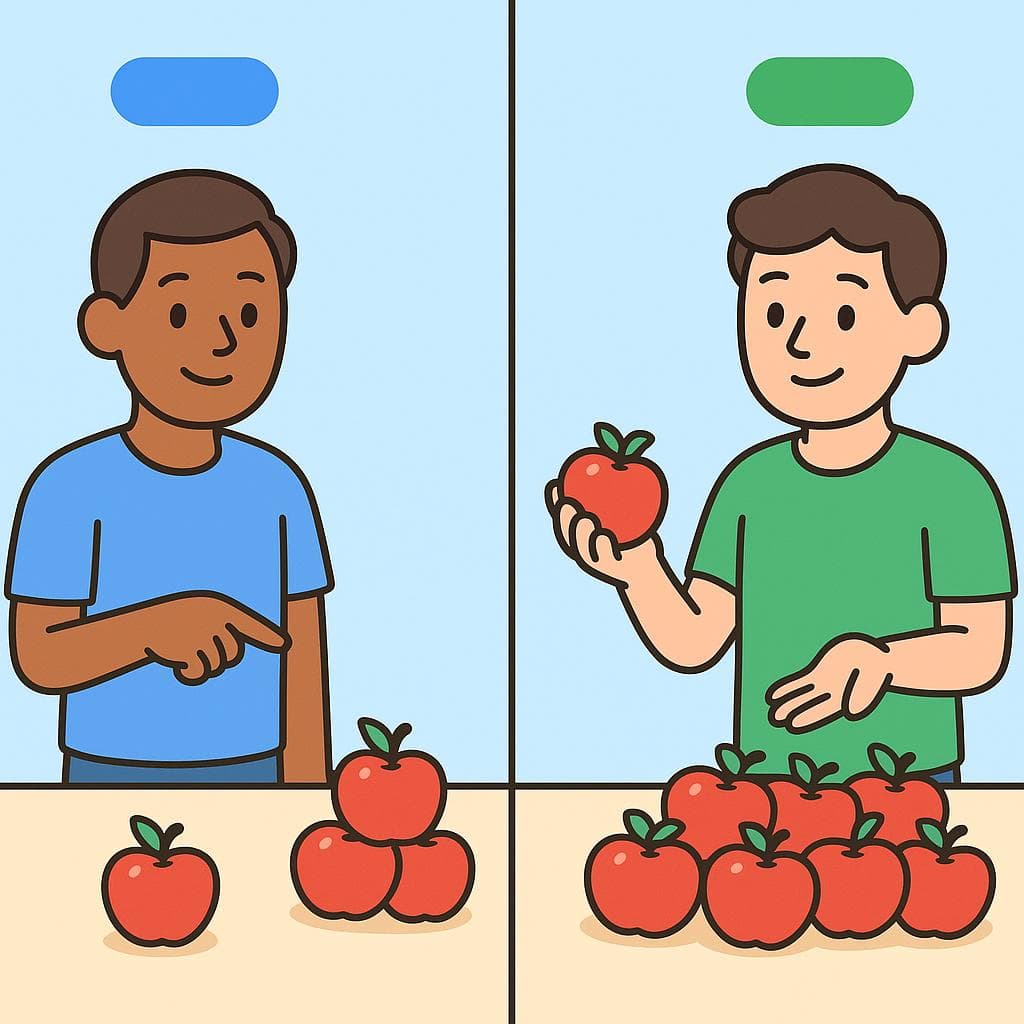
otro
Another, other. Used to talk about an additional or different person or thing.
OH-trohdemás
The rest, the others. Refers to the remaining people or things in a specific, known group.
deh-MAHSQuick Rule
Otro = 'another' one. Demás = 'the rest' of the group.
Think: 'Otro' adds one. 'Demás' defines the remainder.
- In the phrase 'el otro día' (the other day), 'otro' doesn't mean 'another'.
- The phrase 'y demás' can mean 'and so on' or 'et cetera'.
Comparison Table
| Context | otro | demás | Why? |
|---|---|---|---|
| In a group of people | Uno se fue y otro llegó. | Uno se fue y los demás se quedaron. | Otro adds a new, individual person. Demás refers to the remaining people from the original group. |
| Choosing from items | No quiero esta manzana, dame otra. | Come esta manzana y guarda las demás. | Otro asks for one different item. Demás refers to all the remaining items in the set. |
| Referring to tasks | Terminé un informe, ahora hago otro. | Terminé el informe, lo demás no es urgente. | Otro specifies one more task. Demás groups all remaining tasks together. |
When to Use "otro / demás"
otro
Another, other. Used to talk about an additional or different person or thing.
OH-troh
An additional one
¿Quieres otro café?
Do you want another coffee?
A different one
Esta camisa no me gusta, muéstrame otra.
I don't like this shirt, show me another (a different) one.
Other things (plural)
Tengo otros planes para el fin de semana.
I have other plans for the weekend.
demás
The rest, the others. Refers to the remaining people or things in a specific, known group.
deh-MAHS
The rest of the people
Yo me quedo, pero los demás se van.
I'm staying, but the others are leaving.
The rest of the things
Puedes comerte esta galleta y guardar las demás.
You can eat this cookie and save the rest.
And so on / etc.
Hablamos de películas, libros y demás.
We talked about movies, books, and so on.
Contrast Examples
With "otro":
Llegó María con otra amiga.
María arrived with another friend. (An additional person.)
With "demás":
Llegó María, pero los demás están atrasados.
María arrived, but the others (the rest of the expected group) are late.
The Difference: Otro adds one more person to the count. Los demás refers to everyone else who was expected to be there.
With "otro":
Solucioné el problema principal, pero ahora tengo otro.
I solved the main problem, but now I have another one.
With "demás":
Solucioné el problema principal; lo demás puede esperar.
I solved the main problem; the rest can wait.
The Difference: Otro introduces a new, singular problem. Lo demás groups all the other, less important problems together.
Common Mistakes
Quiero un otro vaso de agua.
Quiero otro vaso de agua.
This is the #1 mistake! In Spanish, 'otro' already means 'an-other'. Never use 'un' or 'una' with it.
Me gusta este libro, pero no me gustan los demás.
Me gusta este libro, pero no me gustan los otros.
When making a direct contrast between specific items ('this one vs the other ones'), 'los otros' is often more natural than 'los demás'. Use 'los demás' for 'the rest' as a collective group.
Quick Practice
Quick Quiz: Otro vs Demás
Question 1 of 2
This coffee is cold. Can you bring me ___?
Related Grammar
Want to understand the grammar behind this pair? Explore these lessons for a deep dive:
Key Words

Tags
Build the instinct, not just the rule
Rules help you get it right; context makes it automatic. Read 200+ illustrated and narrated Spanish stories to see confusing pairs chosen correctly — over and over — until you stop thinking about it.
Frequently Asked Questions
Can I say 'los otros' instead of 'los demás'?
Sometimes, yes. They can be interchangeable, but there's a slight difference. 'Los demás' feels more like 'the rest' of a known group. 'Los otros' is more like 'the other ones' and is often used for direct comparison (e.g., 'Algunos son rojos, los otros son azules'). When in doubt, use 'los demás' for 'the rest'.
Why can't I say 'un otro'? It feels natural coming from English.
It's a very common trap for English speakers! The word 'otro' itself already contains the idea of 'an' or 'one'. Think of it as 'otro' = 'an + other'. Adding 'un' is like saying 'an another', which is redundant in Spanish.