
Parecer vs Parecerse
Parecer = to seem (an opinion). Parecerse = to look like (a comparison).
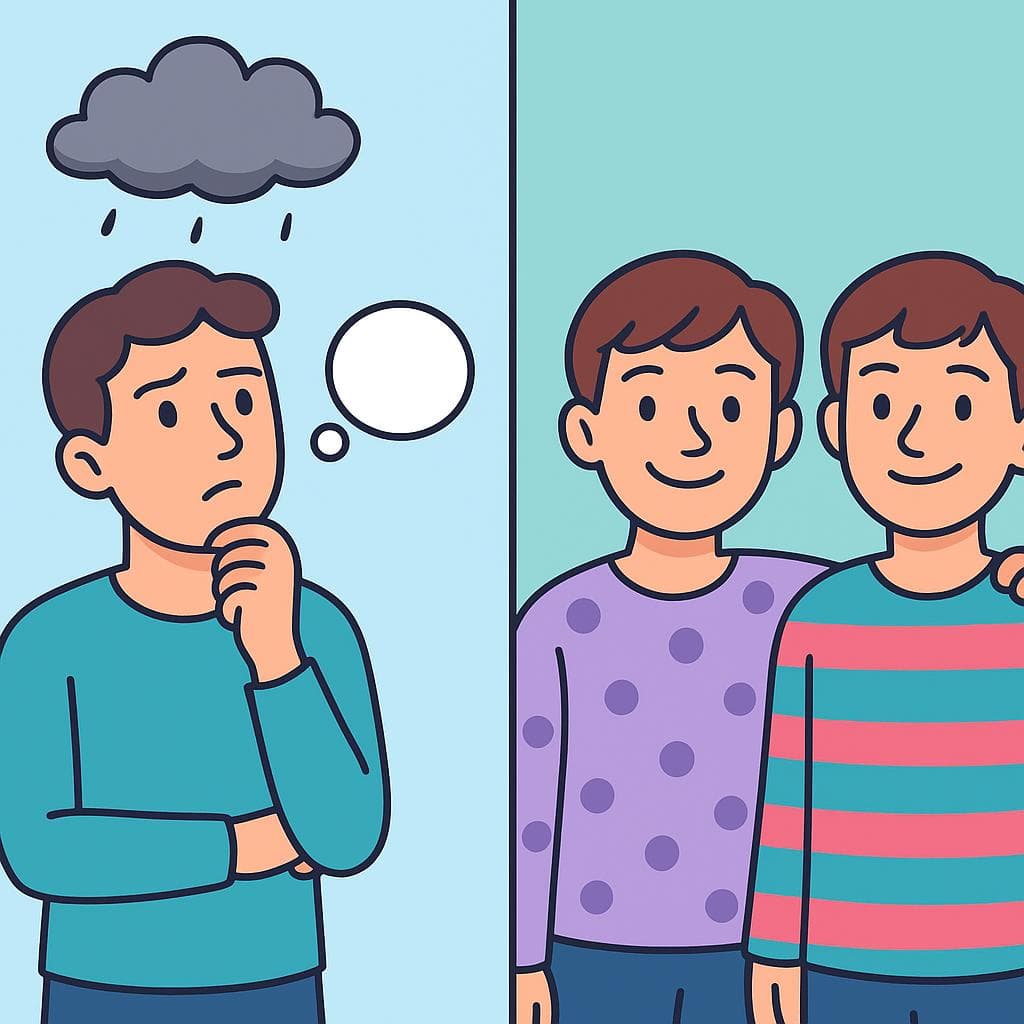
parecer
To seem, to appear, to look (used for giving an opinion or impression)
pah-reh-SEHRparecerse
To look like, to resemble (used for physical or characteristic similarity)
pah-reh-SEHR-sehQuick Rule
Parecer = to seem (an opinion). Parecerse = to look like (a comparison).
Think: Parecer has an Opinion. ParecerSE has a Sibling (for physical resemblance).
- Parecerse is almost always followed by the preposition 'a' when you mention who or what is being resembled.
Comparison Table
| Context | parecer | parecerse | Why? |
|---|---|---|---|
| Expressing an opinion | Parece una buena idea. | (Not used for this) | To give your impression or opinion about something, always use 'parecer'. |
| Describing a state | Ella parece triste. | (Not used for this) | To say someone seems or appears to be in a certain state (sad, happy, tired), use 'parecer'. |
| Comparing people | Parece un actor. | Se parece a un actor famoso. | 'Parecer' suggests a general type ('He has the look of an actor'). 'Parecerse a' suggests a specific resemblance ('He looks like a specific actor'). |
| General vs. Specific similarity | Esto parece oro. | Esto se parece al oro. | 'Parecer' means it gives the impression of being gold. 'Parecerse a' means it has similar properties to gold, making a direct comparison. |
When to Use "parecer / parecerse"
parecer
To seem, to appear, to look (used for giving an opinion or impression)
pah-reh-SEHR
Giving an opinion
Me parece que va a llover.
It seems to me that it's going to rain.
Describing an impression of a state
Él parece cansado.
He seems/looks tired.
Asking for an opinion
¿Qué te parece la idea?
What do you think of the idea?
parecerse
To look like, to resemble (used for physical or characteristic similarity)
pah-reh-SEHR-seh
Physical resemblance
Te pareces a tu madre.
You look like your mother.
Similarity in character or behavior
En eso, nos parecemos mucho.
In that regard, we are very much alike.
Comparing two things
Este pueblo se parece al mío.
This town is similar to/resembles mine.
Contrast Examples
With "parecer":
Él parece doctor.
He seems like a doctor. (He has a doctor's demeanor.)
With "parecerse":
Él se parece a mi doctor.
He looks like my doctor. (He physically resembles him.)
The Difference: 'Parecer' describes the general impression someone gives. 'Parecerse a' describes a direct physical comparison to a specific person.
With "parecer":
Esto parece un problema.
This seems like a problem. (This has the characteristics of a problem.)
With "parecerse":
Este problema se parece al que tuvimos ayer.
This problem is similar to the one we had yesterday.
The Difference: Use 'parecer' to state your opinion of what something is. Use 'parecerse a' to compare it directly to something else.
With "parecer":
Ana parece preocupada.
Ana seems worried. (This is the impression she gives right now.)
With "parecerse":
Ana se parece a su tía cuando está preocupada.
Ana looks like her aunt when she's worried. (A comparison of their worried expressions.)
The Difference: 'Parecer' describes a temporary state or mood you perceive. 'Parecerse a' compares a physical appearance or trait to someone else's.
Common Mistakes
Tú pareces a tu hermano.
Tú te pareces a tu hermano.
When comparing two people for resemblance, you must use the reflexive form 'parecerse a'. The verb needs the 'te' to work correctly.
Se parece que es tarde.
Parece que es tarde.
To say 'it seems that...', you only use 'parece'. The reflexive form isn't used for general observations or opinions.
Me parezco con mi papá.
Me parezco a mi papá.
The verb 'parecerse' always uses the preposition 'a' for comparisons, never 'con'.
Quick Practice
Quick Quiz: Parecer vs Parecerse
Question 1 of 3
Which is correct to say 'You and I are a lot alike'?
Related Grammar
Want to understand the grammar behind this pair? Explore these lessons for a deep dive:
Key Words

Tags
Build the instinct, not just the rule
Rules help you get it right; context makes it automatic. Read 200+ illustrated and narrated Spanish stories to see confusing pairs chosen correctly — over and over — until you stop thinking about it.
Frequently Asked Questions
Why does adding 'se' change the meaning so much?
In Spanish, adding a reflexive pronoun like 'se', 'me', or 'te' can often change a verb's meaning. It can make the action reciprocal ('we look at each other') or shift the meaning entirely. With 'parecerse', it changes the verb from 'giving an appearance' to 'having a similar appearance to' something else.
Do I always need the preposition 'a' after 'parecerse'?
You need 'a' whenever you explicitly state who or what is being resembled. For example, 'Me parezco A mi padre.' If you just say two people are alike in general, you don't need it: 'Nos parecemos mucho.' (We are very alike).