
Quedar vs Quedarse
Quedar = to be left/remain. Quedarse = to stay/keep.
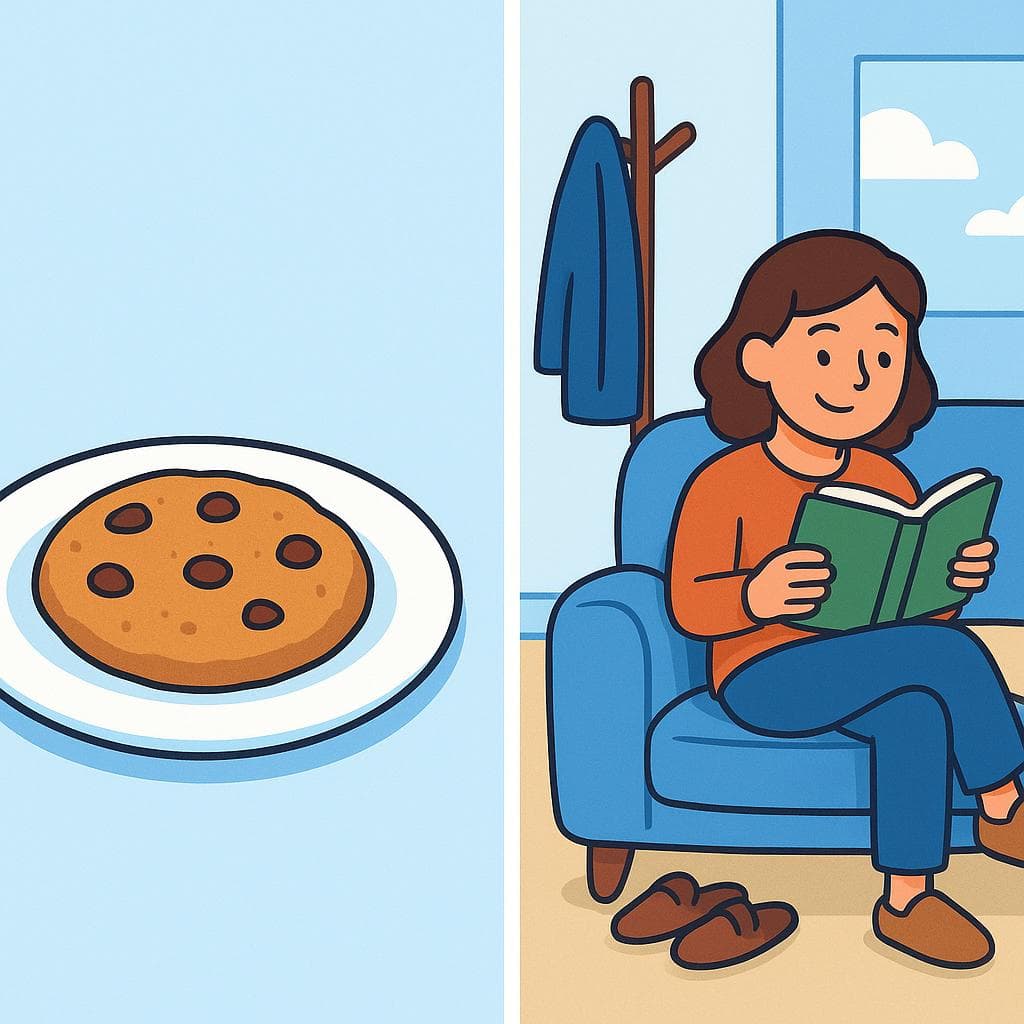
quedar
To be left, to remain; also to fit (clothing), to be located, or to arrange to meet.
keh-DARquedarse
To stay in a place; also to keep something or to describe a resulting state/emotion.
keh-DAR-sehQuick Rule
Quedar = to be left/remain. Quedarse = to stay/keep.
Think: Quedar is about what's LEFT behind. QuedarSE is about yourSELF staying.
- Quedar also means 'to arrange to meet' (Quedamos a las 8) or how clothes 'fit' (Te queda bien).
- Quedarse sin algo means 'to run out of something' (Me quedé sin batería).
Comparison Table
| Context | quedar | quedarse | Why? |
|---|---|---|---|
| At a store | Solo queda la talla M. | Me quedo con esta. | Quedar for what's left in stock. Quedarse for what you decide to take/keep. |
| Talking about plans | Quedamos para cenar. | Me quedo en la fiesta. | Quedar for arranging a meeting. Quedarse for remaining at a location. |
| Location | El bar queda en la esquina. | Me quedo aquí esperándote. | Quedar for a place's fixed location. Quedarse for a person's decision to stay put. |
| Result of an action | El suelo quedó limpio. | Él se quedó dormido. | Quedar for the final state of an object. Quedarse for the final state of a person. |
When to Use "quedar / quedarse"
quedar
To be left, to remain; also to fit (clothing), to be located, or to arrange to meet.
keh-DAR
Something remaining
Solo queda una porción de tarta.
Only one slice of cake is left.
How clothing fits or looks
Esa chaqueta te queda perfecta.
That jacket fits you perfectly.
Arranging to meet
Quedamos en el café a las cinco.
We're meeting at the café at five.
Location of a place
El museo queda cerca de aquí.
The museum is located near here.
quedarse
To stay in a place; also to keep something or to describe a resulting state/emotion.
keh-DAR-seh
Staying in a place
Esta noche me quedo en casa.
Tonight I'm staying home.
Keeping something
¿Te gusta mi bolígrafo? Puedes quedártelo.
Do you like my pen? You can keep it.
Resulting state or emotion
Me quedé sorprendido con la noticia.
I was (left) surprised by the news.
Running out of something
Nos quedamos sin gasolina.
We ran out of gas.
Contrast Examples
With "quedar":
Solo queda la azul.
Only the blue one is left.
With "quedarse":
Me quedo con la azul.
I'll take/keep the blue one.
The Difference: Quedar describes the store's inventory (what remains). Quedarse expresses your decision to purchase or take something.
With "quedar":
Quedamos en el parque a las 3.
We're meeting at the park at 3.
With "quedarse":
Nos quedamos en el parque hasta las 3.
We're staying at the park until 3.
The Difference: Quedar sets up the appointment. Quedarse describes the action of remaining in that place for a period of time.
With "quedar":
La casa quedó hecha un desastre.
The house was left a mess.
With "quedarse":
Él se quedó sin palabras.
He was left speechless.
The Difference: Quedar describes the resulting physical state of a place or thing. Quedarse describes the resulting personal state or emotion of a person.
Common Mistakes
Quedo en casa hoy.
Me quedo en casa hoy.
When you talk about staying somewhere, you need the reflexive form 'quedarse'. 'Quedo' by itself usually means 'I am meeting'.
Me quedo bien los pantalones.
Me quedan bien los pantalones.
To talk about how clothes fit or look on you, use 'quedar'. 'Quedarse con' means to keep something.
Quick Practice
Quick Quiz: Quedar vs Quedarse
Question 1 of 3
Which is correct to say you are meeting friends? '___ con mis amigos a las 8.'
Related Grammar
Want to understand the grammar behind this pair? Explore these lessons for a deep dive:
Key Words


Tags
Build the instinct, not just the rule
Rules help you get it right; context makes it automatic. Read 200+ illustrated and narrated Spanish stories to see confusing pairs chosen correctly — over and over — until you stop thinking about it.
Frequently Asked Questions
Why is 'quedarse' reflexive? It doesn't seem like I'm doing an action to myself.
That's a great question! Not all reflexive verbs mean you're doing something to yourself (like 'lavarse' - to wash oneself). Many, like 'quedarse', are called 'pronominal verbs'. The little 'se' just changes the verb's meaning, in this case from 'to be left' to 'to stay'. Think of it as a completely different verb that just happens to look similar.
Can I use 'estar' to say where something is located instead of 'quedar'?
Yes, absolutely! Both 'El museo está en el centro' and 'El museo queda en el centro' are correct for saying 'The museum is in the center'. 'Quedar' is just a very common and natural alternative to 'estar' for fixed locations.