
Pasar vs Suceder
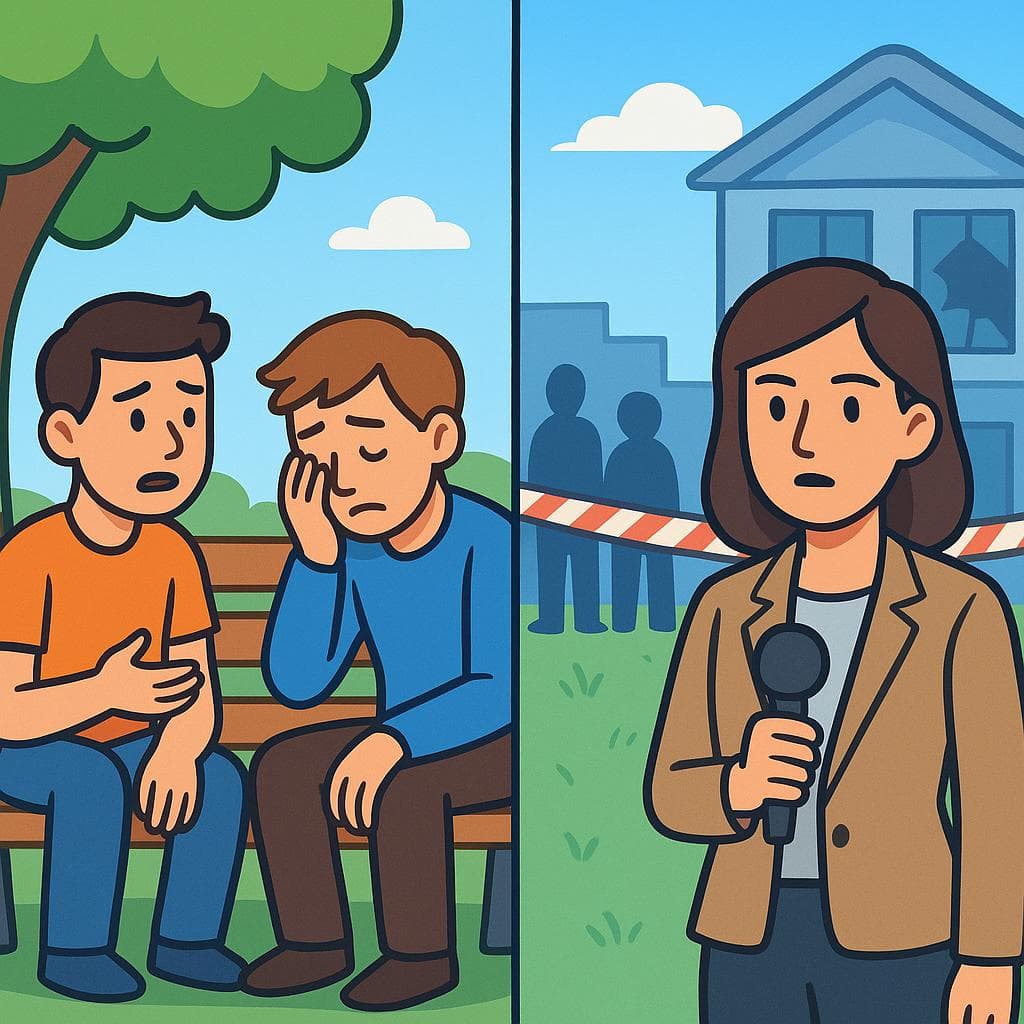
Pasar is for casual 'what's happening?'. Suceder is for specific, often formal, 'what occurred?'.
pasar
To happen, occur (general, casual); also to pass, spend time, go through
pah-SARsuceder
To happen, to occur (specific, notable, or formal event)
soo-seh-DEHRQuick Rule
Pasar is for casual 'what's happening?'. Suceder is for specific, often formal, 'what occurred?'.
Think: 'Pasar' is like something casually passing by. 'Suceder' is for a significant succeeding event.
- In many contexts, they are interchangeable, but 'pasar' is always the more common, casual choice.
- Only 'pasar' can mean 'to spend time' or 'to pass'. 'Suceder' never has these meanings.
Comparison Table
| Context | pasar | suceder | Why? |
|---|---|---|---|
| Asking 'What happened?' | ¿Qué pasó? | ¿Qué sucedió? | 'Pasó' is the everyday, default choice. 'Sucedió' sounds more formal or dramatic, like in a news report or a novel. |
| Describing an event | Eso pasa todos los días. | El evento sucedió como estaba planeado. | Use 'pasar' for common, everyday occurrences. Use 'suceder' for planned, significant, or formal events. |
| Unexpected situations | Me pasó algo muy extraño. | Sucedió una tragedia. | Both work, but 'suceder' often adds a layer of gravity or formality, making it common for serious news. |
| Fixed expressions | Pase lo que pase... | (No common equivalent) | 'Pasar' is used in many common idioms like 'Whatever happens...' where 'suceder' cannot be substituted. |
When to Use "pasar / suceder"
pasar
To happen, occur (general, casual); also to pass, spend time, go through
pah-SAR
General happenings & asking 'what's wrong?'
¿Qué pasa? ¿Por qué no entras?
What's happening? Why don't you come in?
Describing an event (neutral/casual)
Me pasó algo increíble hoy.
Something incredible happened to me today.
Spending time
Pasé el fin de semana en las montañas.
I spent the weekend in the mountains.
Passing by or through
Pásame la sal, por favor.
Pass me the salt, please.
suceder
To happen, to occur (specific, notable, or formal event)
soo-seh-DEHR
Specific, notable events
El accidente sucedió a las tres de la tarde.
The accident occurred at three in the afternoon.
Formal or narrative contexts (like news)
Le voy a contar exactamente lo que sucedió.
I'm going to tell you exactly what occurred.
Unexpected or significant occurrences
Nunca creí que algo así pudiera suceder.
I never thought something like that could happen.
To succeed or follow (less common)
El príncipe sucedió al rey en el trono.
The prince succeeded the king on the throne.
Contrast Examples
With "pasar":
¿Qué pasa?
What's happening? / What's up? / What's wrong?
With "suceder":
¿Qué sucede?
What is occurring? / What is the matter?
The Difference: '¿Qué pasa?' is the all-purpose, everyday question. '¿Qué sucede?' is more formal and serious. You'd hear it from a detective at a crime scene, not from a friend asking why you're quiet.
With "pasar":
Lo que pasó fue que se me olvidaron las llaves.
What happened was that I forgot my keys.
With "suceder":
El robo sucedió durante la noche.
The robbery occurred during the night.
The Difference: 'Pasar' is perfect for personal, straightforward storytelling. 'Suceder' is often used for more objective, factual reporting of an event, like in a news story or official report.
Common Mistakes
Sucedí mis vacaciones en México.
Pasé mis vacaciones en México.
Only 'pasar' can mean 'to spend time'. 'Suceder' only means 'to happen' or 'to succeed'.
Cuando mi amigo llegó, le pregunté, '¿Qué te sucede?'
Cuando mi amigo llegó, le pregunté, '¿Qué te pasa?'
While technically correct, '¿Qué te sucede?' is very formal and dramatic. In a casual conversation, '¿Qué te pasa?' is the natural way to ask 'What's wrong?' or 'What's up?'.
Quick Practice
Quick Quiz: Pasar vs Suceder
Question 1 of 3
Which verb would a news anchor most likely use to report on a major accident?
Related Grammar
Want to understand the grammar behind this pair? Explore these lessons for a deep dive:
Key Words



Tags
Build the instinct, not just the rule
Rules help you get it right; context makes it automatic. Read 200+ illustrated and narrated Spanish stories to see confusing pairs chosen correctly — over and over — until you stop thinking about it.
Frequently Asked Questions
Are 'pasar' and 'suceder' ever perfectly interchangeable?
Yes, in many situations, especially in casual speech, you can use 'pasar' where 'suceder' would also be correct. For example, you could say 'El accidente pasó a las tres' and be perfectly understood. The main difference is the tone: 'pasar' is more neutral and common, while 'suceder' adds a touch of formality or significance.
What about the verb 'ocurrir'?
'Ocurrir' is another verb for 'to happen' and it fits right in between 'pasar' and 'suceder'. It's more formal than 'pasar' but often less dramatic or report-like than 'suceder'. A good way to think of it is: Pasar (casual) -> Ocurrir (neutral) -> Suceder (formal/significant).