
Posible vs Probable
Posible = It *can* happen. Probable = It's *likely* to happen.
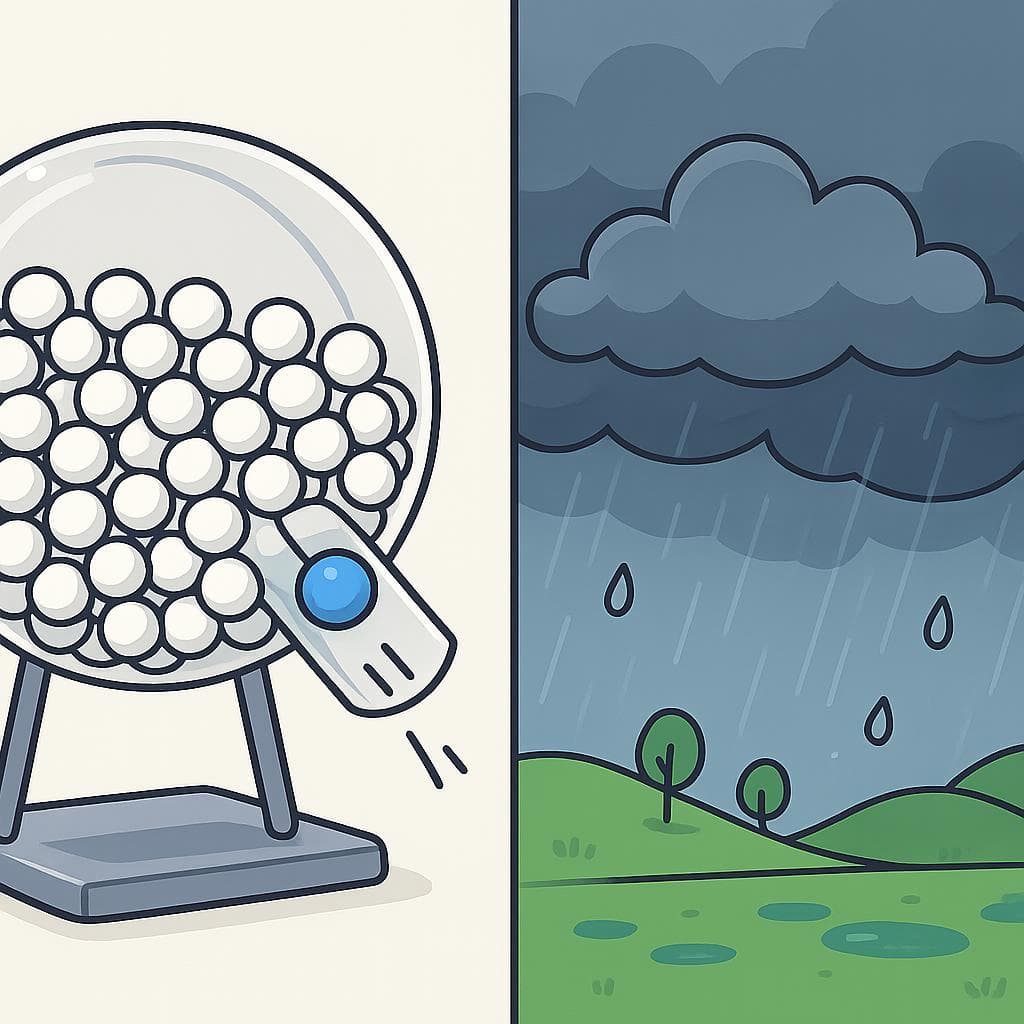
posible
Possible. Describes something that can exist or happen, even if the chance is very small.
poh-SEE-blehprobable
Probable or likely. Describes something that is expected to happen based on evidence or logic.
proh-BAH-blehQuick Rule
Posible = It *can* happen. Probable = It's *likely* to happen.
Think: Posible = Possibility (any chance). Probable = Probability (a good chance).
- In very casual speech, people sometimes use 'posible' when 'probable' would be more precise, but the technical distinction always holds.
Comparison Table
| Context | posible | probable | Why? |
|---|---|---|---|
| Weather | Es posible que nieve en agosto. | Es probable que llueva en abril. | 'Posible' for a rare, but not impossible event. 'Probable' for an expected, common event. |
| Project Deadline | Es posible terminar hoy. | Es probable que terminemos mañana. | 'Posible' refers to a best-case scenario that could happen. 'Probable' refers to the most realistic outcome. |
| Finding something | Es posible que mis llaves estén en el coche. | Es probable que mis llaves estén en la mesa. | 'Posible' for a location you're not sure about. 'Probable' for the place you usually leave them. |
When to Use "posible / probable"
posible
Possible. Describes something that can exist or happen, even if the chance is very small.
poh-SEE-bleh
Any chance, no matter how small
Es posible ganar la lotería.
It's possible to win the lottery.
Suggesting options or alternatives
Una posible solución es empezar de nuevo.
A possible solution is to start over.
Hypothetical or theoretical situations
Haré todo lo posible para llegar a tiempo.
I will do everything possible to arrive on time.
probable
Probable or likely. Describes something that is expected to happen based on evidence or logic.
proh-BAH-bleh
High likelihood based on evidence
Con esas nubes negras, es probable que llueva.
With those dark clouds, it's probable that it will rain.
Stating the most logical outcome
Lo más probable es que la tienda ya esté cerrada.
The most probable thing is that the store is already closed.
Making a reasonable prediction
Es probable que el tráfico sea terrible a esta hora.
It's likely that the traffic is terrible at this hour.
Contrast Examples
With "posible":
Es posible ganar la lotería.
It is possible to win the lottery.
With "probable":
No es probable ganar la lotería.
It is not probable/likely to win the lottery.
The Difference: This is the perfect example. Winning is always *possible* because someone wins, but for any individual, it is never *probable* because the odds are extremely low.
With "posible":
Es posible que venga Ana, pero no me ha confirmado.
It's possible that Ana will come, but she hasn't confirmed with me.
With "probable":
Es probable que venga Ana, me dijo que salía de su casa ahora.
It's probable that Ana will come, she told me she was leaving her house now.
The Difference: 'Posible' is for when you have no real evidence, it's just an open chance. 'Probable' is for when you have a reason or evidence to expect it.
Common Mistakes
Es probable que un día los humanos vivan en Marte.
Es posible que un día los humanos vivan en Marte.
Living on Mars is a theoretical possibility for the distant future, not a likely event soon. 'Posible' is the right word for this kind of speculation.
Estudió mucho, así que es posible que apruebe el examen.
Estudió mucho, así que es probable que apruebe el examen.
Studying a lot is strong evidence. This makes passing the exam not just possible, but likely. 'Probable' is a much better fit.
Quick Practice
Quick Quiz: Posible vs Probable
Question 1 of 2
If you see dark clouds, what would you say? 'Es ___ que llueva.'
Related Grammar
Want to understand the grammar behind this pair? Explore these lessons for a deep dive:
Key Words




Tags
Build the instinct, not just the rule
Rules help you get it right; context makes it automatic. Read 200+ illustrated and narrated Spanish stories to see confusing pairs chosen correctly — over and over — until you stop thinking about it.
Frequently Asked Questions
Do 'posible' and 'probable' always trigger the subjunctive?
Almost always. When you say 'Es posible que...' or 'Es probable que...', you are expressing uncertainty, which is a classic use for the subjunctive mood. For example, 'Es probable que venga' (It's probable that he will come).
Is there a difference in certainty between them?
Yes, absolutely. Think of it as a scale. 'Posible' can be anywhere from a 0.1% to a 100% chance (it just means 'not impossible'). 'Probable' implies a high chance, maybe over 50%. So, 'probable' is always 'posible', but 'posible' is not always 'probable'.