
Suave vs Blando
Suave is about texture (smoothness). Blando is about give (squishiness).
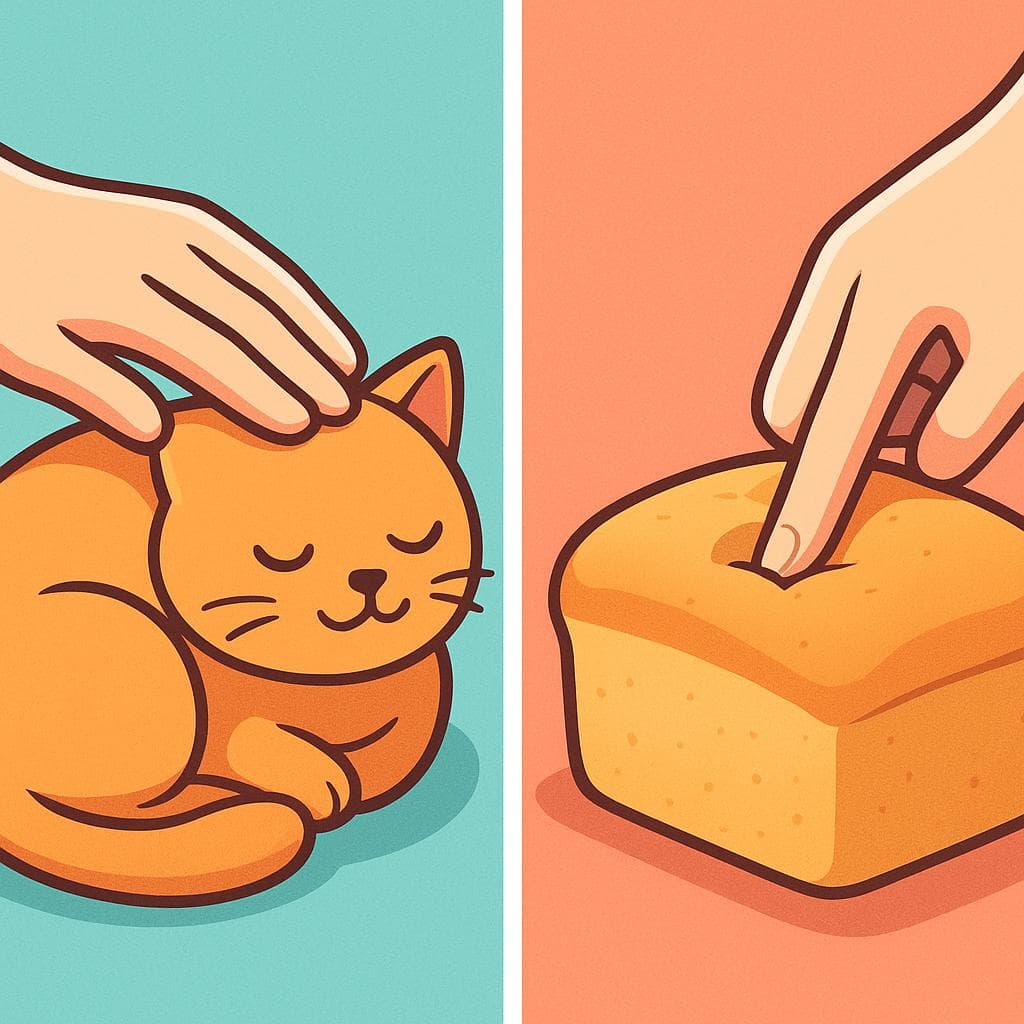
suave
Soft to the touch, smooth, gentle, not harsh.
SWAH-vehblando
Soft by yielding to pressure, not hard, squishy, tender (for food).
BLAHN-dohQuick Rule
Suave is about texture (smoothness). Blando is about give (squishiness).
Think: Suave is for Surfaces (like skin), Blando is for Bodies (like bread).
- Figurative uses: 'música suave' (gentle music) and 'carácter blando' (weak character).
Comparison Table
| Context | suave | blando | Why? |
|---|---|---|---|
| On a bed | Las sábanas son suaves. | El colchón es blando. | Suave for the smooth feel of the sheets, blando for the squishiness of the mattress. |
| Describing Food | Un puré de patatas suave. | El pan está recién hecho y blando. | Suave describes a smooth, lump-free texture. Blando describes a fresh, yielding texture. |
| Describing People | Tiene la piel muy suave. | Tiene un carácter blando. | Suave for physical smoothness, blando for a weak or permissive character. |
| Objects | El cuero de la chaqueta es suave. | Este juguete de goma es blando. | Suave describes the pleasant surface texture. Blando describes its ability to be squeezed. |
When to Use "suave / blando"
suave
Soft to the touch, smooth, gentle, not harsh.
SWAH-veh
Texture & Surface
Esta manta de cachemira es muy suave.
This cashmere blanket is very soft.
Gentle Sensations (sounds, breezes)
Hablaba con una voz suave.
He spoke with a soft/gentle voice.
Mild Flavors or Scents
Prefiero un café de sabor suave.
I prefer a coffee with a mild flavor.
Smoothness
Después de la crema, mi piel está muy suave.
After the lotion, my skin is very smooth.
blando
Soft by yielding to pressure, not hard, squishy, tender (for food).
BLAHN-doh
Yielding to Pressure (squishy)
Esta almohada es demasiado blanda para mí.
This pillow is too soft for me.
Cooked Until Tender
Las zanahorias ya están blandas.
The carrots are already soft/tender.
Figurative Weakness
No seas tan blando con él; necesita disciplina.
Don't be so soft with him; he needs discipline.
Ripe Fruit/Vegetables
El aguacate está blando, ¡perfecto para el guacamole!
The avocado is soft, perfect for guacamole!
Contrast Examples
With "suave":
Las sábanas de seda son muy suaves.
The silk sheets are very soft (to the touch).
With "blando":
El colchón de espuma es muy blando.
The foam mattress is very soft (squishy).
The Difference: Suave describes the surface you feel with your hand (smooth sheets). Blando describes what your body sinks into (the yielding mattress).
With "suave":
La piel del melocotón es suave.
The skin of the peach is soft (fuzzy/smooth).
With "blando":
El melocotón está blando, ya se puede comer.
The peach is soft (ripe), you can eat it now.
The Difference: Suave is about the texture of the peach's skin. Blando is about its ripeness and how it gives when you press it.
With "suave":
Tiene un tono de voz muy suave.
He has a very gentle tone of voice.
With "blando":
Es demasiado blando con sus empleados.
He is too soft (lenient/weak) with his employees.
The Difference: Here, 'suave' means gentle and pleasant. 'Blando' means lacking firmness or strictness, often with a negative connotation.
Common Mistakes
El colchón es muy suave.
El colchón es muy blando.
When you talk about a mattress being comfortable because it sinks in, you're describing its 'squishiness' (blando), not its surface texture (suave).
Después de cocinarla, la carne está muy suave.
Después de cocinarla, la carne está muy blanda (o tierna).
For meat that is easy to chew, the correct word is 'blanda' or 'tierna' (tender). 'Suave' would be unusual, perhaps describing the texture of pâté.
Quick Practice
Quick Quiz: Suave vs Blando
Question 1 of 3
Which word would you use to describe a comfortable, squishy mattress?
Related Grammar
Want to understand the grammar behind this pair? Explore these lessons for a deep dive:
Key Words



Tags
Build the instinct, not just the rule
Rules help you get it right; context makes it automatic. Read 200+ illustrated and narrated Spanish stories to see confusing pairs chosen correctly — over and over — until you stop thinking about it.
Frequently Asked Questions
Can 'suave' and 'blando' ever be used for the same thing?
Yes, sometimes an object can be both. For example, a wool sweater could be 'suave' (its texture is not scratchy) and also 'blando' (it's thick and squishy). However, you'd be describing two different qualities.
What about the word 'tierno' for food?
'Tierno' (tender) is a great synonym for 'blando' when talking about cooked meat or vegetables. 'La carne está tierna' and 'La carne está blanda' both mean the meat is tender and easy to chew.
Is 'suave' only for touch?
No, while its core meaning relates to touch, it's often extended to other senses to mean 'gentle' or 'mild'. You can have 'música suave' (soft/gentle music), 'luz suave' (soft light), and 'sabor suave' (mild flavor).