
Subir vs Subirse
Subir = to go up or lift up. Subirse = to get on or climb onto.
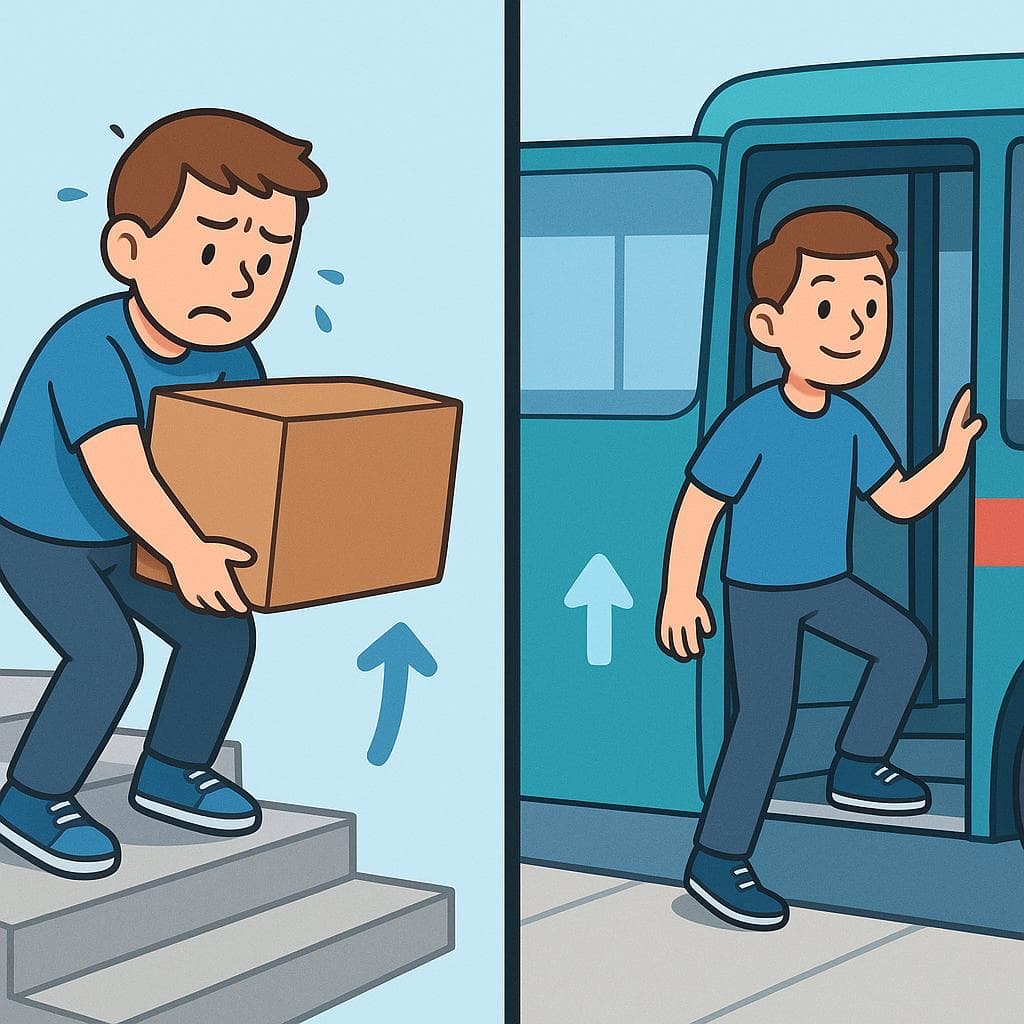
subir
To go up, climb, raise, lift, or upload something.
soo-BEERsubirse
To get on or into a vehicle; to climb onto a surface.
soo-BEER-sehQuick Rule
Subir = to go up or lift up. Subirse = to get on or climb onto.
Think: You 'subir' a mountain (climb it), but you 'subirse' a bus (get on it). The 'se' is like you're putting yourself *on* it.
- Sometimes 'subirse' implies a sudden change, like 'se subieron los precios' (the prices shot up).
Comparison Table
| Context | subir | subirse | Why? |
|---|---|---|---|
| A Chair | Subió la silla al ático. | Se subió a la silla. | Subir = he carried the chair up. Subirse = he climbed onto the chair. |
| Transportation | Subió las maletas al tren. | Se subió al tren. | Subir = he lifted the suitcases onto the train. Subirse = he got on the train. |
| Prices | La tienda subió los precios. | Se subieron los precios. | Subir = the store (an agent) raised prices. Subirse = prices went up (describes the event). |
When to Use "subir / subirse"
subir
To go up, climb, raise, lift, or upload something.
soo-BEER
Going up a place
Voy a subir las escaleras.
I'm going to go up the stairs.
Lifting an object
Ayúdame a subir la maleta al coche.
Help me lift the suitcase into the car.
Uploading a file
Tengo que subir estas fotos a la nube.
I have to upload these photos to the cloud.
Increasing in value or level
La temperatura va a subir mañana.
The temperature is going to go up tomorrow.
subirse
To get on or into a vehicle; to climb onto a surface.
soo-BEER-seh
Boarding transportation
Me subo al tren en la próxima estación.
I get on the train at the next station.
Climbing onto something
¡No te subas a la mesa con los zapatos sucios!
Don't get on the table with dirty shoes!
When something 'goes to your head'
Con dos copas, el vino se me sube a la cabeza.
With two glasses, the wine goes to my head.
A sudden rise (curtain, prices)
Se subió el telón y empezó la obra.
The curtain rose and the play began.
Contrast Examples
With "subir":
Voy a subir la compra al coche.
I'm going to put (lift) the groceries into the car.
With "subirse":
Voy a subirme al coche.
I'm going to get in the car.
The Difference: 'Subir' is used for loading things *into* the car. 'Subirse' is used for getting *yourself* into the car.
With "subir":
El niño subió la escalera.
The boy went up the ladder/stairs.
With "subirse":
El niño se subió a la escalera.
The boy climbed onto the ladder.
The Difference: The difference is subtle. 'Subir' focuses on the journey upwards. 'Subirse a' emphasizes the action of getting *onto* the object.
Common Mistakes
Yo subo el autobús a las ocho.
Yo me subo al autobús a las ocho.
For boarding any type of transportation (bus, train, plane, car), you always use the reflexive form 'subirse'.
Me subí las cajas al desván.
Subí las cajas al desván.
When you are lifting an object, you use the standard verb 'subir'. Using 'me subí' would imply you climbed onto the boxes.
Quick Practice
Quick Quiz: Subir vs Subirse
Question 1 of 2
Which is the correct way to say 'I get on the bus'?
Related Grammar
Want to understand the grammar behind this pair? Explore these lessons for a deep dive:
Key Words

Tags
Build the instinct, not just the rule
Rules help you get it right; context makes it automatic. Read 200+ illustrated and narrated Spanish stories to see confusing pairs chosen correctly — over and over — until you stop thinking about it.
Frequently Asked Questions
Can I just use 'subir' for getting on a bus? Will people understand?
People would likely understand you from context, but it would sound unnatural. The standard, correct way to talk about boarding any vehicle is with 'subirse'.
Is 'subirse' always about movement? What about 'se me subió el color'?
Great question! While its main use is physical, 'subirse' can be used figuratively. 'Se me subió el color' means 'I blushed' (literally, the color rose to me). In these cases, the 'se' implies something happening to you involuntarily.