
Tirar vs Botar
Use `tirar` for 'to throw' in general. Use `botar` for 'to throw away' (especially in Latin America) or 'to bounce'.
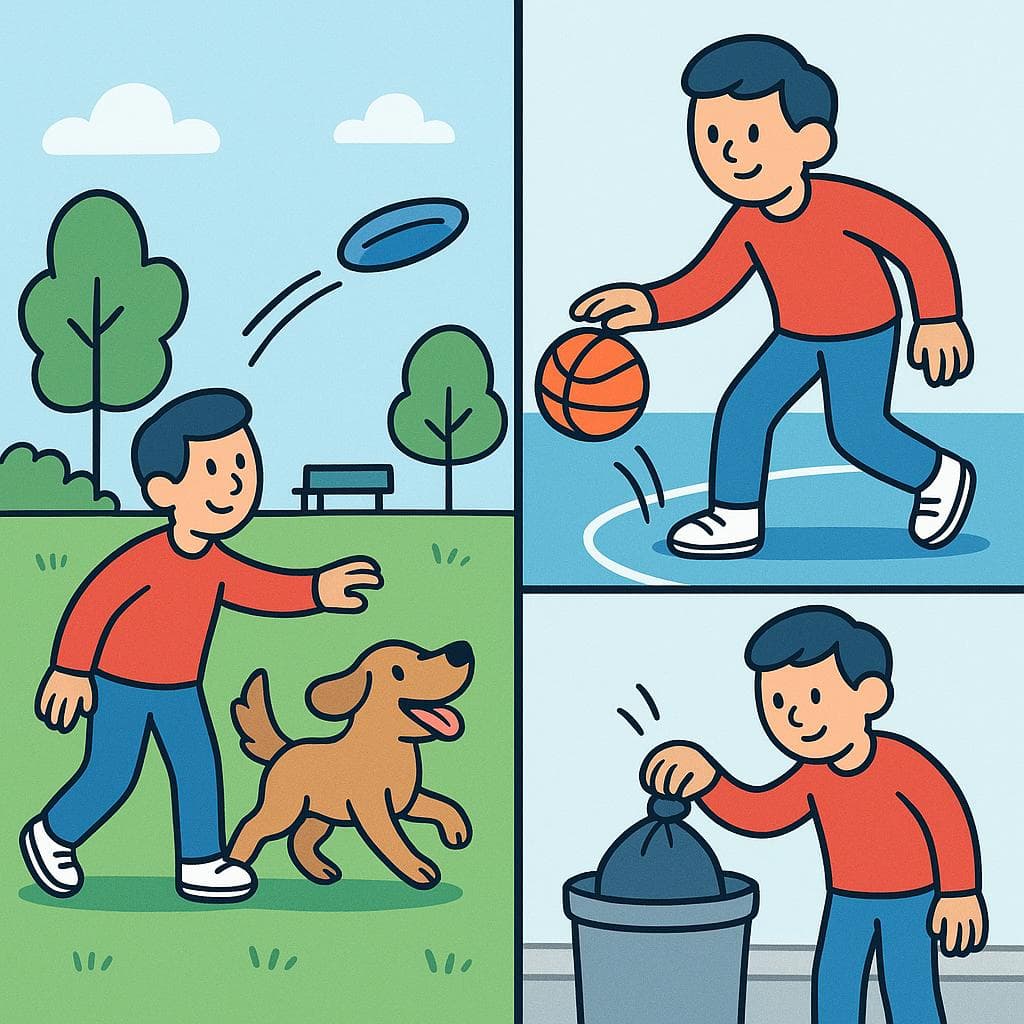
tirar
To throw (in general), throw away, pull, shoot, or waste.
tee-RAHRbotar
To throw away, bounce, discard, or fire someone (colloquial).
boh-TAHRQuick Rule
Use `tirar` for 'to throw' in general. Use `botar` for 'to throw away' (especially in Latin America) or 'to bounce'.
Think: `Tirar` is versatile for any throw, `Botar` is for the bin or a bouncing ball.
- In Spain, 'botar' almost always means 'to bounce'. Using it for trash is rare.
- In many Latin American countries, 'tirar' and 'botar' are used interchangeably for 'to throw away'.
Comparison Table
| Context | tirar | botar | Why? |
|---|---|---|---|
| Getting rid of trash | Voy a tirar estos papeles. | Voy a botar estos papeles. | Both mean 'throw away'. `Tirar` is universal; `botar` is more common in Latin America. |
| Playing with a ball | Tírale la pelota al niño. | Bota la pelota contra la pared. | `Tirar` is to throw it *to* someone. `Botar` is to make it *bounce*. |
| Losing a job | Tiró su carrera por la borda. (Figurative) | Lo botaron del trabajo. (Direct) | `Tirar` can mean to waste an opportunity. `Botar` is used colloquially to mean getting fired. |
| Interacting with a door | Tira de la puerta para abrirla. | ¡No botes la puerta! | `Tirar` means 'to pull'. `Botar` can colloquially mean 'to slam'. |
When to Use "tirar / botar"
tirar
To throw (in general), throw away, pull, shoot, or waste.
tee-RAHR
To throw an object to someone/something
Tírame las llaves, por favor.
Throw me the keys, please.
To throw away (universal)
Tengo que tirar la basura.
I have to throw out the trash.
To pull
Para abrir, tienes que tirar de la puerta.
To open, you have to pull the door.
To waste
No tires tu dinero en eso.
Don't waste your money on that.
botar
To throw away, bounce, discard, or fire someone (colloquial).
boh-TAHR
To bounce a ball
A mi perro le encanta botar la pelota.
My dog loves to bounce the ball.
To throw away (very common in Latin America)
¿Dónde puedo botar esta botella?
Where can I throw away this bottle?
To fire someone (colloquial)
Lo botaron del trabajo por llegar tarde.
They fired him from his job for being late.
To launch a ship
Mañana van a botar el nuevo barco al mar.
Tomorrow they are going to launch the new ship into the sea.
Contrast Examples
With "tirar":
¡Tira a la canasta!
Shoot at the basket!
With "botar":
Primero, aprende a botar el balón.
First, learn to bounce (dribble) the ball.
The Difference: `Tirar` refers to the act of throwing the ball towards a target (shooting). `Botar` refers to the act of bouncing it (dribbling).
With "tirar":
Es una mala idea, estás tirando tu dinero.
It's a bad idea, you're throwing away (wasting) your money.
With "botar":
Voy a botar estos zapatos viejos.
I'm going to throw away (discard) these old shoes.
The Difference: `Tirar` often carries a sense of 'wasting' something valuable. `Botar` is more neutral, simply meaning to discard or get rid of something unwanted.
Common Mistakes
Bótame la pelota.
Tírame la pelota.
If you want someone to throw a ball *to you*, use `tirar`. 'Bótame la pelota' would sound like you're asking them to bounce the ball on you.
En España: 'Voy a botar la basura'.
En España: 'Voy a tirar la basura'.
In Spain, `botar` is almost exclusively for bouncing. Using it for trash sounds like a regionalism from Latin America.
Quick Practice
Quick Quiz: Tirar vs Botar
Question 1 of 2
To tell a friend to dribble the basketball, you'd say...
Related Grammar
Want to understand the grammar behind this pair? Explore these lessons for a deep dive:
Key Words


Tags
Build the instinct, not just the rule
Rules help you get it right; context makes it automatic. Read 200+ illustrated and narrated Spanish stories to see confusing pairs chosen correctly — over and over — until you stop thinking about it.
Frequently Asked Questions
Is this mainly a Spain vs. Latin America difference?
Partially, yes. The biggest difference is with trash. In Spain, you almost always 'tirar la basura'. In Latin America, 'botar la basura' is very common. For other meanings like 'bounce' (botar) and 'pull' (tirar), the distinction is clear in all regions.
So can I just always use 'tirar' for 'throw away' to be safe?
Yes, using 'tirar' for throwing away trash will be understood everywhere. However, if you're in a Latin American country, you'll hear 'botar' constantly, so it's very important to know what it means.