
Volver a + infinitive vs Otra vez
Use 'volver a' like the prefix 're-' (to re-do). Use 'otra vez' to mean 'one more time'.
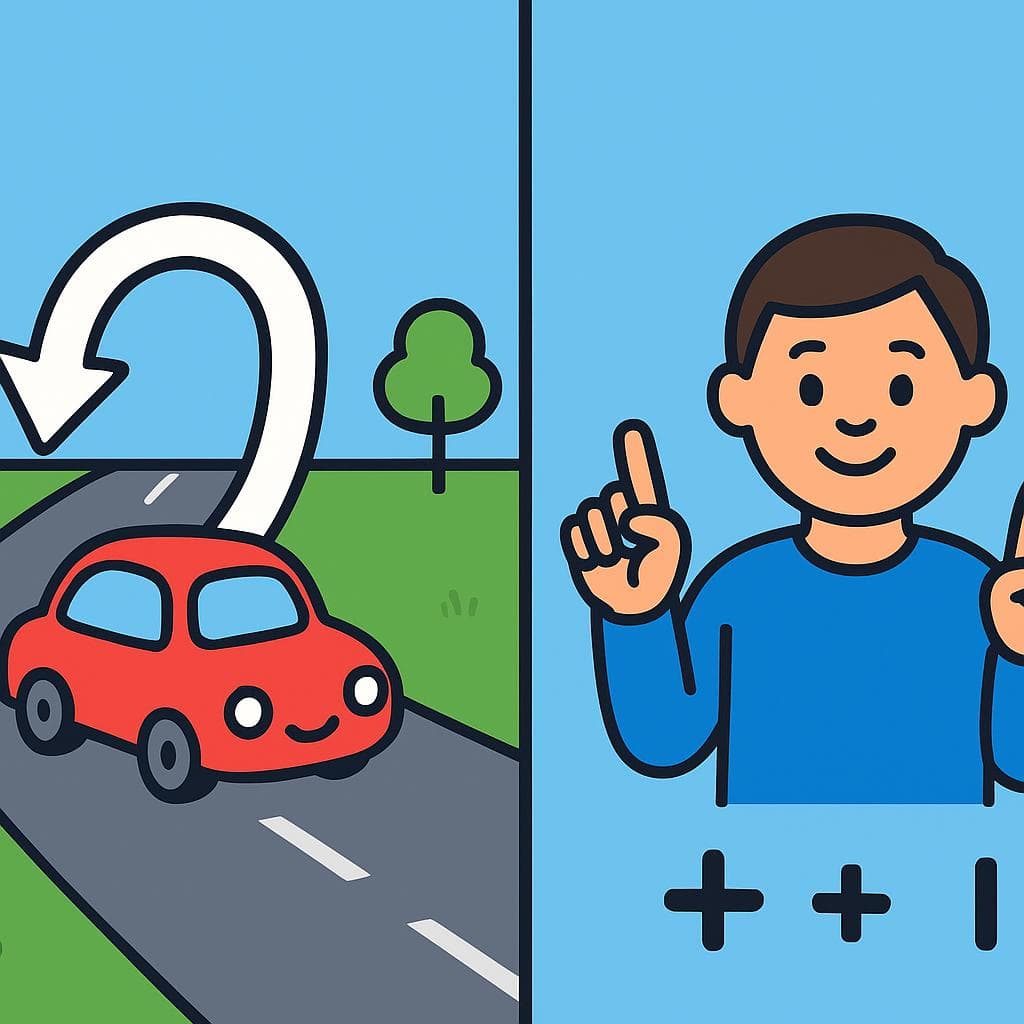
volver a + infinitive
A verb structure that means 'to do something again'. It integrates the idea of repetition directly into the main action.
bohl-BEHR ahotra vez
An adverbial phrase that means 'again' or 'one more time'. It modifies an action to show it's a repetition.
OH-trah BESSQuick Rule
Use 'volver a' like the prefix 're-' (to re-do). Use 'otra vez' to mean 'one more time'.
Think: Volver a = Verb action again. Otra Vez = one more Vez (time).
- In many everyday situations, they are interchangeable. The main difference is grammatical structure, not meaning.
Comparison Table
| Context | volver a + infinitive | otra vez | Why? |
|---|---|---|---|
| Asking a question | ¿Vas a volver a llamarla? | ¿Vas a llamarla otra vez? | Both mean 'Are you going to call her again?'. They are perfectly interchangeable here. |
| Giving a command | Vuelve a empezar desde el principio. | Empieza otra vez desde el principio. | 'Volver a empezar' is a very common phrase for 'to start over'. 'Empezar otra vez' is also correct but slightly less common. |
| Narrating a past event | Se equivocó y tuvo que volver a hacerlo. | Se equivocó y tuvo que hacerlo otra vez. | Both are correct. 'Volver a hacerlo' emphasizes the act of 're-doing', while 'hacerlo otra vez' marks it as a second attempt. |
| Expressing frustration | No quiero volver a hablar de esto. | No quiero hablar de esto otra vez. | Both work. Placing 'otra vez' at the end often adds a bit more emotional emphasis or finality. |
When to Use "volver a + infinitive / otra vez"
volver a + infinitive
A verb structure that means 'to do something again'. It integrates the idea of repetition directly into the main action.
bohl-BEHR ah + [infinitive]
To 're-do' an action
Tuve que volver a escribir el correo.
I had to re-write the email.
Resuming a habit after a break
Después de dos años, volví a fumar.
After two years, I started smoking again.
Asking someone to repeat something
¿Puedes volver a explicarlo?
Can you explain it again?
Must be conjugated
Mañana volveremos a intentarlo.
Tomorrow we will try it again.
otra vez
An adverbial phrase that means 'again' or 'one more time'. It modifies an action to show it's a repetition.
OH-trah BESS
To mark simple repetition
Leí el libro otra vez.
I read the book again.
To mean 'one more time'
Canta esa canción otra vez.
Sing that song one more time.
Expressing frustration at repetition
¡Llegas tarde otra vez!
You're late again!
Is a fixed phrase (doesn't change)
Lo intentamos otra vez.
We tried it again.
Contrast Examples
With "volver a + infinitive":
Después de un año, volví a correr.
After a year, I started running again.
With "otra vez":
Corrí otra vez después de un año.
I ran again after a year.
The Difference: 'Volver a' strongly implies resuming an activity after a significant pause. 'Correr otra vez' is more neutral, simply stating that another instance of running occurred.
With "volver a + infinitive":
Tenemos que volver a pintar la pared.
We have to re-paint the wall.
With "otra vez":
Tenemos que pintar la pared otra vez.
We have to paint the wall again.
The Difference: The meaning is identical. The only difference is grammatical. 'Volver a' acts as a single verb unit ('to re-paint'), while 'otra vez' is an adverb that modifies the verb 'pintar'.
Common Mistakes
Yo vuelvo a otra vez.
Yo vuelvo a hacerlo. OR Lo hago otra vez.
You can't use both together. Choose one structure: either 'volver a + [verb]' or add 'otra vez' to your sentence.
Volver a lo hice.
Volví a hacerlo.
The structure is always 'volver a' followed by an infinitive (the base form of a verb like hacer, comer, vivir), not a conjugated verb.
Yo no entiendo volver a.
No vuelvo a entender.
'Volver' is the verb that needs to be conjugated to match the subject. 'No vuelvo a entender' means 'I don't understand again'.
Quick Practice
Quick Quiz: Volver a + infinitive vs Otra vez
Question 1 of 3
Which sentence is grammatically correct?
Related Grammar
Want to understand the grammar behind this pair? Explore these lessons for a deep dive:
Key Words

Tags
Build the instinct, not just the rule
Rules help you get it right; context makes it automatic. Read 200+ illustrated and narrated Spanish stories to see confusing pairs chosen correctly — over and over — until you stop thinking about it.
Frequently Asked Questions
Are 'volver a' and 'otra vez' ever NOT interchangeable?
While they often overlap, 'volver a' is better for implying the resumption of a long-term habit (like 'Volví a fumar'). 'Otra vez' is more neutral and common for simple, immediate repetitions ('¿Puedes repetirlo otra vez?'). Functionally, you can't swap them if the grammar doesn't fit—'volver a' needs an infinitive right after it.
What about 'de nuevo'?
'De nuevo' is another way to say 'again' and is often a perfect synonym for 'otra vez'. You can say 'Lo hice otra vez' or 'Lo hice de nuevo' with almost no difference in meaning. All three ('volver a', 'otra vez', 'de nuevo') express repetition.
Why is it 'volver A' and not just 'volver'?
This is a great question! 'Volver a + infinitive' is a specific type of structure in Spanish called a 'perífrasis verbal'. The 'a' acts as a necessary connector linking the conjugated verb 'volver' to the action verb in its infinitive form. Without the 'a', the sentence wouldn't make sense.