ablandarConjugation
ablandar means to soften.
Complete Conjugation Tables
Reference all tenses and moods
Subjunctive
Imperfect Subjunctive
The imperfect subjunctive of ablandar expresses hypothetical past conditions or wishes: ablandara/ablandase (yo/él/ella/usted), ablandaras/ablandases (tú), etc.
Present Subjunctive
The present subjunctive of ablandar is used for wishes, doubts, emotions, and uncertainty: ablande (yo/él/ella/usted), ablandes (tú), ablandemos (nosotros), ablanden (ellos/ellas/ustedes).
Imperative
Negative Imperative
Negative commands for ablandar use the present subjunctive: no ablandes (tú), no ablande (usted), no ablandemos (nosotros), no ablandéis (vosotros), no ablanden (ustedes).
Imperative
The imperative of ablandar gives direct commands: ablanda (tú), ablande (usted), ablandemos (nosotros), ablandad (vosotros), ablanden (ustedes).
Indicative
Conditional
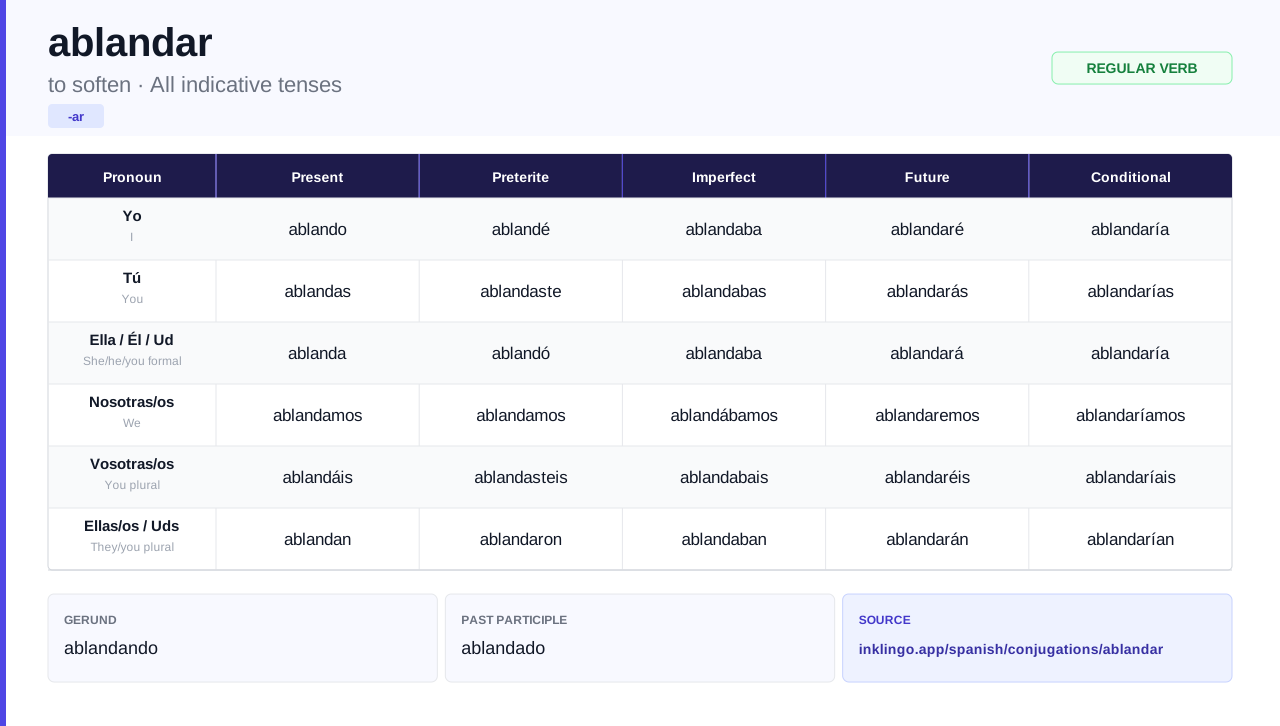
The conditional of ablandar expresses hypotheticals ('would'), polite requests, or future-in-the-past: ablandaría, ablandarías, ablandaría, ablandaríamos, ablandaríais, ablandarían.
Preterite
The preterite of ablandar is regular: ablandé, ablandaste, ablandó, ablandamos, ablandasteis, ablandaron.
Imperfect
The imperfect of ablandar describes ongoing or habitual past actions: ablandaba, ablandabas, ablandaba, ablandábamos, ablandabais, ablandaban.
Present
The present indicative of ablandar describes current actions or habits: ablando, ablandas, ablanda, ablandamos, ablandáis, ablandan.
Future
The future tense of ablandar expresses what will happen: ablandaré, ablandarás, ablandará, ablandaremos, ablandaréis, ablandarán.
Practice Conjugations
Test your knowledge with interactive exercises
Take ablandar from tables to real Spanish
Conjugation tables are the start. Read 200+ illustrated and narrated Spanish stories to see 'ablandar' in action across real sentences — and build the instinct that native speakers have.
Frequently Asked Questions
What does ablandar mean in Spanish?
ablandar means "to soften".
Is ablandar a regular or irregular verb?
ablandar is a regular -ar verb in Spanish.
How do you conjugate ablandar in the present tense?
The present tense of ablandar is: yo ablando, tú ablandas, él/ella/usted ablanda, nosotros ablandamos, vosotros ablandáis, ellos/ellas/ustedes ablandan.
How do you conjugate ablandar in the preterite (past tense)?
The preterite of ablandar is: yo ablandé, tú ablandaste, él/ella/usted ablandó, nosotros ablandamos, vosotros ablandasteis, ellos/ellas/ustedes ablandaron.
ablandar conjugation cheat sheet