cagarConjugation
cagar means to mess up.
Complete Conjugation Tables
Reference all tenses and moods
Subjunctive
Imperfect Subjunctive
Use 'cagar' imperfect subjunctive for past hypotheticals or wishes: 'si cagara,' 'ojalá cagase'.
Present Subjunctive
Use present subjunctive after doubts, wishes, emotions: 'espero que cagues', 'dudo que cague'.
Imperative
Negative Imperative
Negative commands use 'no' + present subjunctive: 'no cagues' (tú), 'no caguen' (ustedes).
Imperative
Use 'cagar' commands directly: 'caga' (tú), 'caguen' (ustedes), etc.
Indicative
Conditional
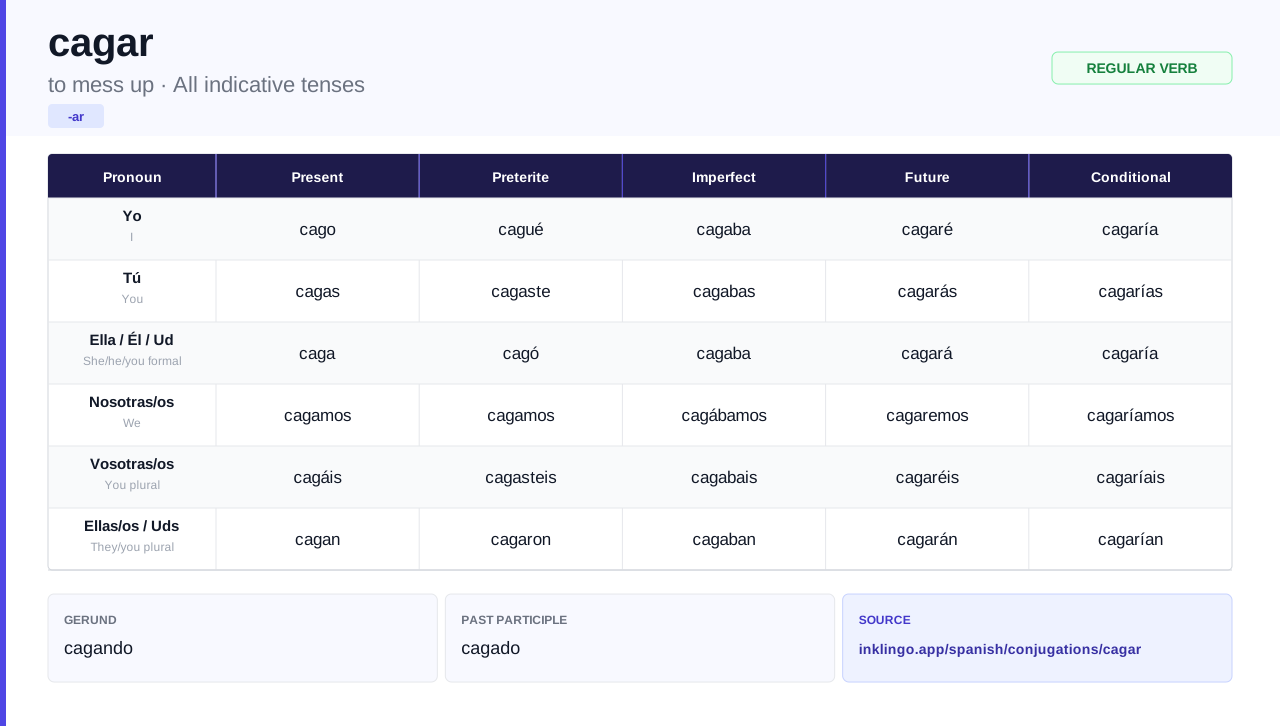
Use conditional for hypotheticals ('would'): 'cagaría' (I would mess up), 'cagarían' (they would mess up).
Preterite
Use preterite for completed past actions: 'cagué' (I messed up), 'cagó' (he/she messed up).
Imperfect
Use imperfect for ongoing/habitual past actions: 'cagaba' (I used to mess up), 'cagaban' (they used to mess up).
Present
Use present for current actions or habits: 'cago' (I mess up), 'cagan' (they mess up).
Future
Use future for predictions: 'cagaré' (I will mess up), 'cagarán' (they will mess up).
Practice Conjugations
Test your knowledge with interactive exercises
Take cagar from tables to real Spanish
Conjugation tables are the start. Read 200+ illustrated and narrated Spanish stories to see 'cagar' in action across real sentences — and build the instinct that native speakers have.
Frequently Asked Questions
What does cagar mean in Spanish?
cagar means "to mess up".
Is cagar a regular or irregular verb?
cagar is a regular -ar verb in Spanish.
How do you conjugate cagar in the present tense?
The present tense of cagar is: yo cago, tú cagas, él/ella/usted caga, nosotros cagamos, vosotros cagáis, ellos/ellas/ustedes cagan.
How do you conjugate cagar in the preterite (past tense)?
The preterite of cagar is: yo cagué, tú cagaste, él/ella/usted cagó, nosotros cagamos, vosotros cagasteis, ellos/ellas/ustedes cagaron.
cagar conjugation cheat sheet