encoger Preterite Conjugation
encoger — to shrink
The preterite of encoger is regular: encogí, encogiste, encogió, encogimos, encogisteis, encogieron.
encoger Preterite Forms
When to Use the Preterite
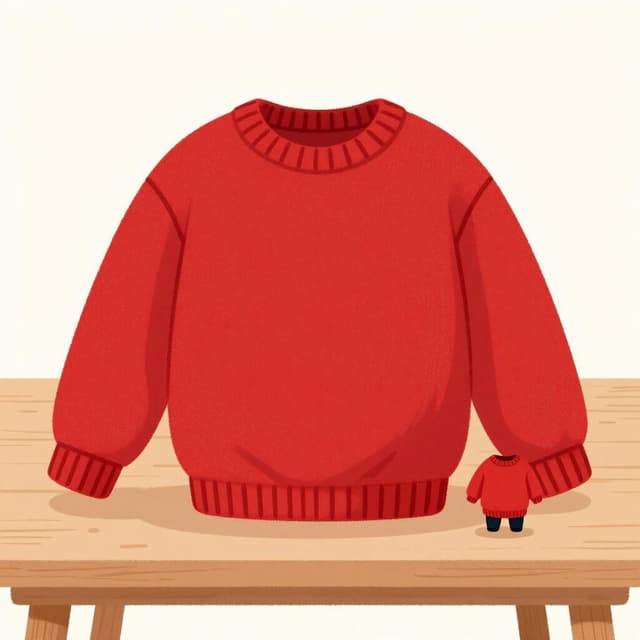
Use the preterite to describe a specific instance where something shrank, like a sweater after one bad laundry cycle.
Notes on encoger in the Preterite
Encoger is fully regular in the preterite. There is no 'g-to-j' change here because the endings start with 'i' or 'ie', which naturally keep the 'g' sounding soft.
Example Sentences
Mi suéter favorito se encogió en la secadora.
My favorite sweater shrank in the dryer.
él/ella/usted
Encogí los hombros y no dije nada.
I shrugged my shoulders and said nothing.
yo
Los pantalones se encogieron mucho.
The pants shrank a lot.
ellos/ellas/ustedes
Common Mistakes
Mistake: encojió
Correct: encogió
Why: Learners often try to carry the 'j' from the present tense 'yo' form into the preterite, but it's not needed before 'i'.
Master Spanish verbs in context
Memorizing tables only gets you so far. Read 200+ illustrated and narrated Spanish stories to see verbs like 'encoger' used naturally — in the tenses you're learning.
Related Tenses
Present
yo: encojo
Encoger has a spelling change in the 'yo' form (encojo) but is otherwise a regular -er verb.
Imperfect
yo: encogía
The imperfect of encoger is regular: encogía, encogías, encogía, encogíamos, encogíais, encogían.
Future
yo: encogeré
The future of encoger is regular: encogeré, encogerás, encogerá, encogeremos, encogeréis, encogerán.
Conditional
yo: encogería
The conditional of encoger is regular: encogería, encogerías, encogería, encogeríamos, encogeríais, encogerían.
Present Subjunctive
yo: encoja
The present subjunctive uses the 'j' spelling change in all forms: encoja, encojas, encoja, encojamos, encojáis, encojan.
Imperfect Subjunctive
yo: encogiera
The imperfect subjunctive of encoger is regular: encogiera, encogieras, encogiera, encogiéramos, encogierais, encogieran.
Affirmative Imperative
yo: encoge
The imperative uses 'encoge' (tú) and 'encoged' (vosotros), but switches to 'j' for formal commands: encoja, encojan.
Negative Imperative
yo: no encojas
The negative imperative always uses the 'j' spelling change: no encojas, no encoja, no encojamos, no encojáis, no encojan.