freírConjugation
freír means to fry.
Complete Conjugation Tables
Reference all tenses and moods
Subjunctive
Imperfect Subjunctive
The imperfect subjunctive uses the 'fri-' stem: friera, frieras, friera, friéramos, frierais, frieran.
Present Subjunctive
The present subjunctive of freír uses the 'i' stem change: fría, frías, fría, friamos, friáis, frían.
Imperative
Negative Imperative
Negative commands use the present subjunctive: no frías, no fría, no friamos, no friáis, no frían.
Imperative
Give commands to fry: fríe (tú), fría (usted), friamos (nosotros), freíd (vosotros), frían (ustedes).
Indicative
Conditional
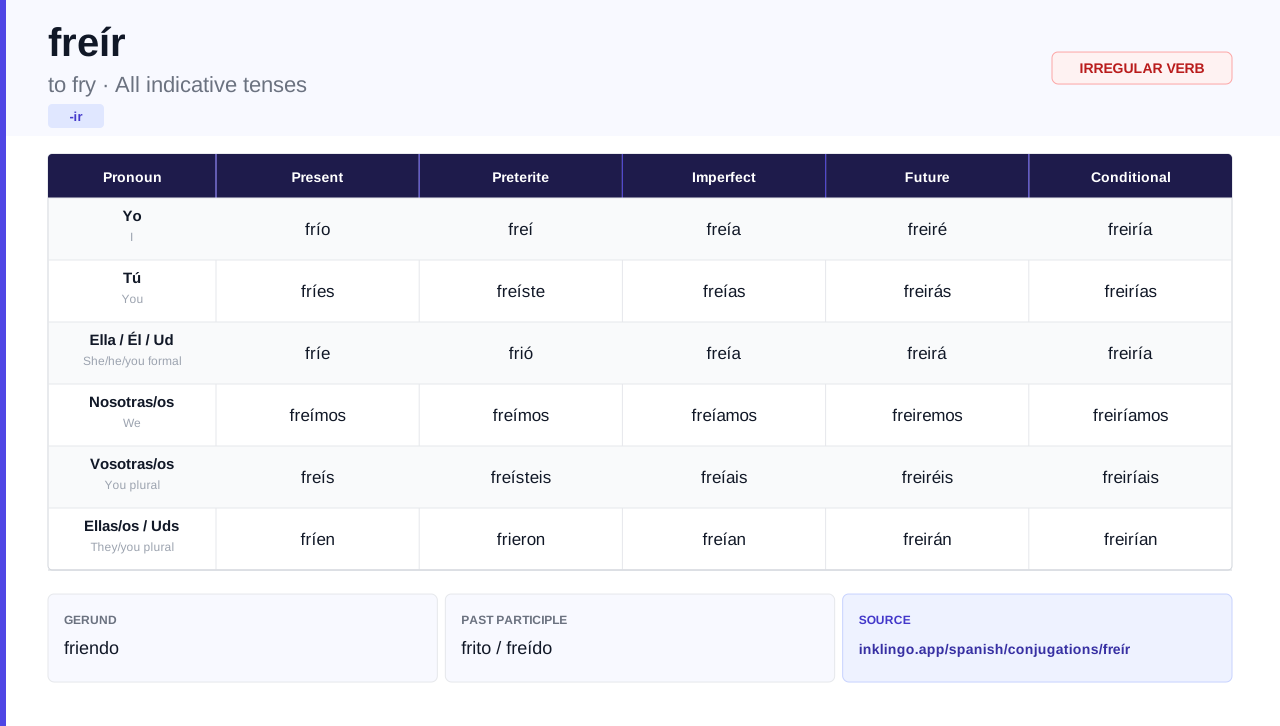
Freír is regular in the conditional: freiría, freirías, freiría, freiríamos, freiríais, freirían.
Preterite
Freír has a stem change (e > i) in the third-person forms and requires accents on most endings.
Imperfect
Freír is regular in the imperfect: freía, freías, freía, freíamos, freíais, freían.
Present
Freír is a stem-changing verb where the 'e' becomes 'í' in all forms except nosotros and vosotros.
Future
Freír is regular in the future: freiré, freirás, freirá, freiremos, freiréis, freirán.
Practice Conjugations
Test your knowledge with interactive exercises
Take freír from tables to real Spanish
Conjugation tables are the start. Read 200+ illustrated and narrated Spanish stories to see 'freír' in action across real sentences — and build the instinct that native speakers have.
Frequently Asked Questions
What does freír mean in Spanish?
freír means "to fry".
Is freír a regular or irregular verb?
freír is a irregular -ir verb in Spanish.
How do you conjugate freír in the present tense?
The present tense of freír is: yo frío, tú fríes, él/ella/usted fríe, nosotros freímos, vosotros freís, ellos/ellas/ustedes fríen.
How do you conjugate freír in the preterite (past tense)?
The preterite of freír is: yo freí, tú freíste, él/ella/usted frió, nosotros freímos, vosotros freísteis, ellos/ellas/ustedes frieron.
freír conjugation cheat sheet