montar Future Conjugation
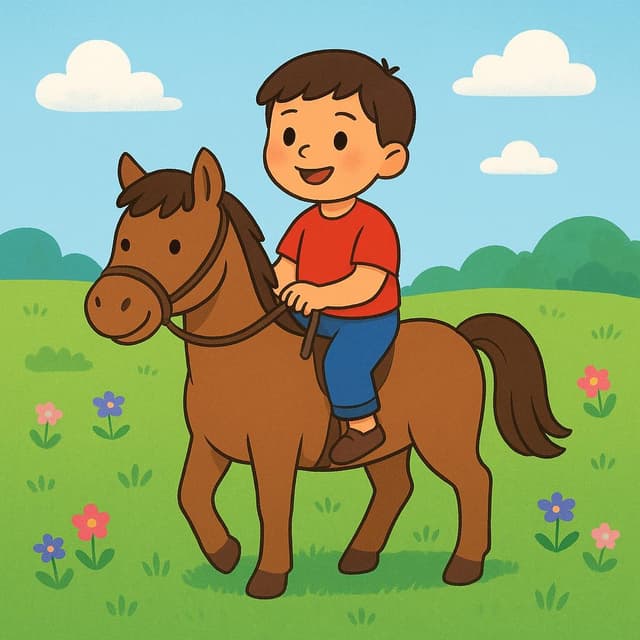
montar — to ride
The future tense of montar expresses actions that will happen or probabilities.
montar Future Forms
When to Use the Future
Use the future tense of 'montar' to talk about actions that are certain to happen in the future or to express a probability or assumption about a present or future event.
Notes on montar in the Future
Montar is regular in the future tense. The stem is the full infinitive 'montar', and you add the standard future endings (-é, -ás, -á, -emos, -éis, -án).
Example Sentences
Mañana montaré a caballo en la sierra.
Tomorrow I will ride horses in the mountains.
yo
¿Montarás en bicicleta al trabajo?
Will you ride your bike to work?
tú
Ellos montarán la nueva atracción la próxima semana.
They will assemble the new attraction next week.
ellos/ellas/ustedes
Seguro que montará un buen negocio.
He will surely start a good business.
él/ella/usted
Common Mistakes
Mistake: Using the present tense or 'ir a + infinitive' when a more formal future is needed.
Correct: Use the future tense for predictions or formal statements about the future: 'Montaré' instead of 'Monto' or 'Voy a montar'.
Why: While 'ir a + infinitive' is common, the simple future tense has distinct uses for probability and certainty.
Mistake: Forgetting to add the accent on the future endings.
Correct: All future endings require an accent: 'montaré', 'montarás', 'montará', etc.
Why: The accent indicates the stressed syllable and distinguishes future forms.
Master Spanish verbs in context
Memorizing tables only gets you so far. Read 200+ illustrated and narrated Spanish stories to see verbs like 'montar' used naturally — in the tenses you're learning.
Related Tenses
Present
yo: monto
The present tense of montar describes habitual actions, things happening now, or general truths.
Preterite
yo: monté
The preterite of montar describes completed actions like riding or assembling in the past.
Imperfect
yo: montaba
The imperfect tense of montar describes ongoing or habitual past actions.
Conditional
yo: montaría
The conditional of montar expresses 'would' actions, polite requests, or future-in-the-past.
Present Subjunctive
yo: monte
The present subjunctive of montar is used for wishes, doubts, and suggestions.
Imperfect Subjunctive
yo: montara
The imperfect subjunctive of montar expresses past doubts, wishes, or hypothetical situations.
Affirmative Imperative
yo: monta
Use the imperative of montar for direct commands like 'ride!' or 'let's ride!'.
Negative Imperative
yo: no montes
Use 'no' + present subjunctive for negative commands with montar, like 'don't ride!'.