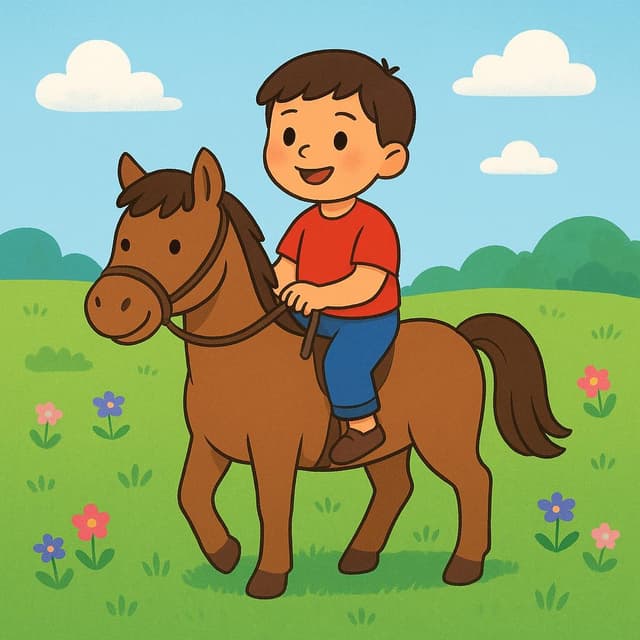
montar Present Conjugation
montar — to ride
The present tense of montar describes habitual actions, things happening now, or general truths.
montar Present Forms
When to Use the Present
Use the present tense of 'montar' for actions happening right now, regular habits (like riding a bike daily), or general statements about riding or assembling things.
Notes on montar in the Present
Montar is regular in the present indicative. Follows the standard pattern for -ar verbs: 'monto', 'montas', 'monta', 'montamos', 'montáis', 'montan'.
Example Sentences
Yo monto en patinete por la ciudad.
I ride a scooter around the city.
yo
¿Montas a caballo los fines de semana?
Do you ride horses on the weekends?
tú
El mecánico monta las piezas del motor.
The mechanic assembles the engine parts.
él/ella/usted
Mis amigos montan en bicicleta juntos.
My friends ride bikes together.
ellos/ellas/ustedes
Common Mistakes
Mistake: Using the present subjunctive when the indicative is needed.
Correct: For factual statements or habits, use the indicative: 'Yo monto' not 'Yo monte'.
Why: The indicative is for facts and reality, while the subjunctive is for wishes, doubts, etc.
Mistake: Omitting the verb in simple present sentences.
Correct: Ensure the conjugated verb is present: 'Él monta' not just 'Él'.
Why: The verb is the core of the sentence.
Master Spanish verbs in context
Memorizing tables only gets you so far. Read 200+ illustrated and narrated Spanish stories to see verbs like 'montar' used naturally — in the tenses you're learning.
Related Tenses
Preterite
yo: monté
The preterite of montar describes completed actions like riding or assembling in the past.
Imperfect
yo: montaba
The imperfect tense of montar describes ongoing or habitual past actions.
Future
yo: montaré
The future tense of montar expresses actions that will happen or probabilities.
Conditional
yo: montaría
The conditional of montar expresses 'would' actions, polite requests, or future-in-the-past.
Present Subjunctive
yo: monte
The present subjunctive of montar is used for wishes, doubts, and suggestions.
Imperfect Subjunctive
yo: montara
The imperfect subjunctive of montar expresses past doubts, wishes, or hypothetical situations.
Affirmative Imperative
yo: monta
Use the imperative of montar for direct commands like 'ride!' or 'let's ride!'.
Negative Imperative
yo: no montes
Use 'no' + present subjunctive for negative commands with montar, like 'don't ride!'.