montar Affirmative Imperative Conjugation
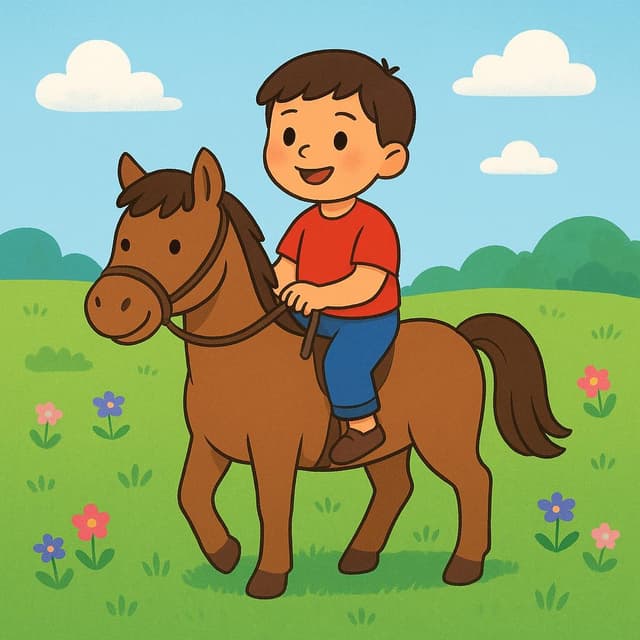
montar — to ride
Use the imperative of montar for direct commands like 'ride!' or 'let's ride!'.
montar Affirmative Imperative Forms
When to Use the Affirmative Imperative
The imperative is used for giving direct commands or making requests. For 'montar', this means telling someone to ride a bike, a horse, or even to assemble furniture.
Notes on montar in the Affirmative Imperative
Montar is regular in the imperative. The 'tú' form is 'monta' and the 'vosotros' form is 'montad'.
Example Sentences
¡Monta en bicicleta todos los días!
Ride your bike every day!
tú
Montemos un mueble nuevo.
Let's assemble a new piece of furniture.
nosotros
Monten a caballo con cuidado.
Ride the horse carefully.
ustedes
¡Montad la tienda de campaña rápido!
Set up the tent quickly!
vosotros
Common Mistakes
Mistake: Using the present tense instead of the imperative for commands.
Correct: Use the imperative mood for direct commands, e.g., '¡Monta!' not '¡Montas!'.
Why: The present tense describes actions, while the imperative gives orders.
Mistake: Confusing 'monta' (tú imperative) with 'monta' (él/ella/usted present indicative).
Correct: Context usually clarifies, but explicit commands use the imperative: '¡Monta tú!' vs. 'Él monta'.
Why: They are spelled the same but have different grammatical functions.
Master Spanish verbs in context
Memorizing tables only gets you so far. Read 200+ illustrated and narrated Spanish stories to see verbs like 'montar' used naturally — in the tenses you're learning.
Related Tenses
Present
yo: monto
The present tense of montar describes habitual actions, things happening now, or general truths.
Preterite
yo: monté
The preterite of montar describes completed actions like riding or assembling in the past.
Imperfect
yo: montaba
The imperfect tense of montar describes ongoing or habitual past actions.
Future
yo: montaré
The future tense of montar expresses actions that will happen or probabilities.
Conditional
yo: montaría
The conditional of montar expresses 'would' actions, polite requests, or future-in-the-past.
Present Subjunctive
yo: monte
The present subjunctive of montar is used for wishes, doubts, and suggestions.
Imperfect Subjunctive
yo: montara
The imperfect subjunctive of montar expresses past doubts, wishes, or hypothetical situations.
Negative Imperative
yo: no montes
Use 'no' + present subjunctive for negative commands with montar, like 'don't ride!'.