montar Preterite Conjugation
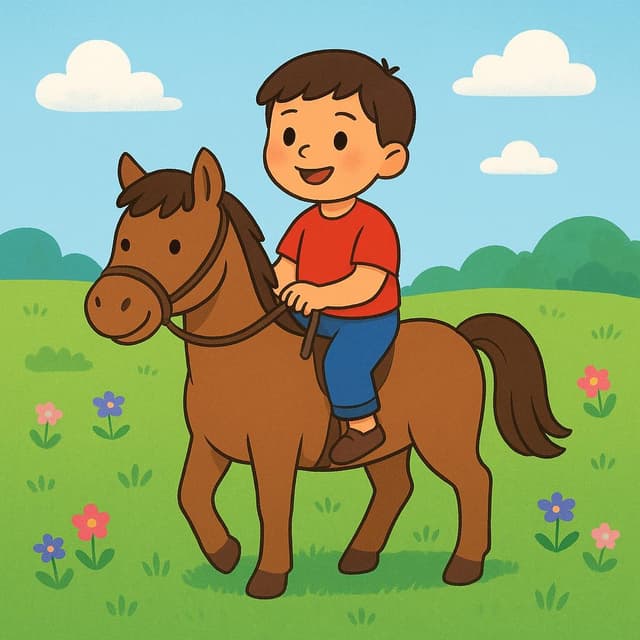
montar — to ride
The preterite of montar describes completed actions like riding or assembling in the past.
montar Preterite Forms
When to Use the Preterite
Use the preterite tense of 'montar' to talk about a specific, completed action in the past. Think of it as a snapshot: you rode, you assembled, it happened and finished.
Notes on montar in the Preterite
Montar is regular in the preterite tense. The forms are 'monté', 'montaste', 'montó', 'montamos', 'montasteis', 'montaron'. Note that the 'nosotros' form is identical to the present tense, so context is key.
Example Sentences
Ayer monté en bicicleta hasta el parque.
Yesterday I rode my bike to the park.
yo
¿Montaste a caballo cuando fuiste de vacaciones?
Did you ride horses when you went on vacation?
tú
Mi padre montó una tienda de campaña.
My father set up a tent.
él/ella/usted
Ellos montaron el escenario para el concierto.
They assembled the stage for the concert.
ellos/ellas/ustedes
Common Mistakes
Mistake: Using the imperfect instead of the preterite for a single, completed action.
Correct: For a specific event that finished, use the preterite: 'Monté la bicicleta' (I rode the bike) not 'Montaba la bicicleta' (I was riding/used to ride).
Why: The preterite marks completion, the imperfect describes ongoing or habitual past actions.
Mistake: Forgetting the accent on the 'yo' and 'él/ella/usted' forms.
Correct: The accents are crucial: 'monté' and 'montó'.
Why: The accent distinguishes these preterite forms and indicates the stressed syllable.
Master Spanish verbs in context
Memorizing tables only gets you so far. Read 200+ illustrated and narrated Spanish stories to see verbs like 'montar' used naturally — in the tenses you're learning.
Related Tenses
Present
yo: monto
The present tense of montar describes habitual actions, things happening now, or general truths.
Imperfect
yo: montaba
The imperfect tense of montar describes ongoing or habitual past actions.
Future
yo: montaré
The future tense of montar expresses actions that will happen or probabilities.
Conditional
yo: montaría
The conditional of montar expresses 'would' actions, polite requests, or future-in-the-past.
Present Subjunctive
yo: monte
The present subjunctive of montar is used for wishes, doubts, and suggestions.
Imperfect Subjunctive
yo: montara
The imperfect subjunctive of montar expresses past doubts, wishes, or hypothetical situations.
Affirmative Imperative
yo: monta
Use the imperative of montar for direct commands like 'ride!' or 'let's ride!'.
Negative Imperative
yo: no montes
Use 'no' + present subjunctive for negative commands with montar, like 'don't ride!'.