pegar Future Conjugation
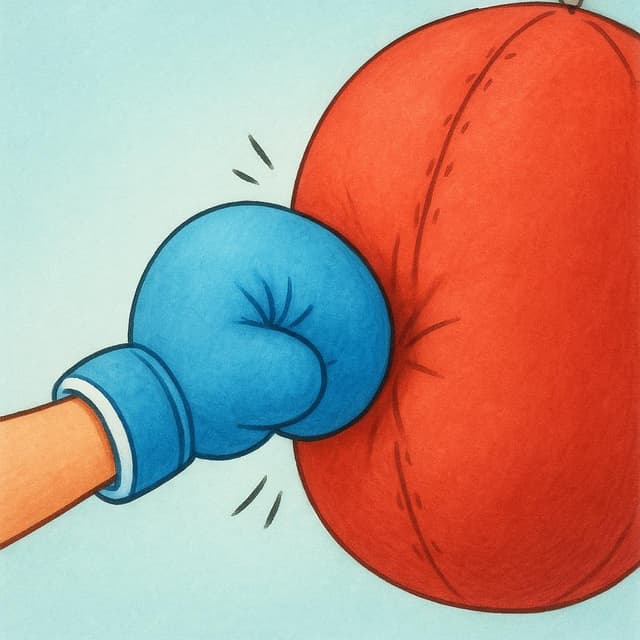
pegar — to hit
The future tense of pegar is regular, using the full infinitive as the stem: pegaré, pegarás, pegará...
pegar Future Forms
When to Use the Future
Use this to talk about things you will glue, posters you will hang, or to predict if something will 'catch on' or become popular.
Notes on pegar in the Future
Pegar is regular in the future tense. Simply add the future endings to the infinitive.
Example Sentences
Pegaré el aviso en la puerta mañana.
I will stick the notice on the door tomorrow.
yo
Esa canción pegará fuerte este verano.
That song will be a big hit this summer.
él/ella/usted
Ellos pegarán los trozos con cuidado.
They will glue the pieces carefully.
ellos/ellas/ustedes
Common Mistakes
Mistake: Forgetting the accent marks on the endings.
Correct: pegaré, pegarás, pegará, etc.
Why: All future tense endings except 'nosotros' require an accent to show stress on the last syllable.
Master Spanish verbs in context
Memorizing tables only gets you so far. Read 200+ illustrated and narrated Spanish stories to see verbs like 'pegar' used naturally — in the tenses you're learning.
Related Tenses
Present
yo: pego
The present tense of pegar is completely regular: pego, pegas, pega, pegamos, pegáis, pegan.
Preterite
yo: pegué
The preterite of pegar has a spelling change in the 'yo' form (pegué) to keep the hard 'g' sound.
Imperfect
yo: pegaba
The imperfect of pegar is regular: pegaba, pegabas, pegaba, pegábamos, pegabais, pegaban.
Conditional
yo: pegaría
The conditional of pegar is regular: pegaría, pegarías, pegaría, pegaríamos, pegaríais, pegarían.
Present Subjunctive
yo: pegue
The present subjunctive of pegar uses the 'gu' spelling change in all forms: pegue, pegues, pegue, peguemos, peguéis, peguen.
Imperfect Subjunctive
yo: pegara
The imperfect subjunctive of pegar is regular: pegara, pegaras, pegara, pegáramos, pegarais, pegaran.
Affirmative Imperative
yo: pega
Use 'pega' (tú) for commands, and remember the 'gu' change for 'pegue' (usted) and 'peguen' (ustedes).
Negative Imperative
yo: no pegues
Negative commands always use the 'gu' spelling: no pegues, no pegue, no peguemos, no peguéis, no peguen.