pegar Present Subjunctive Conjugation
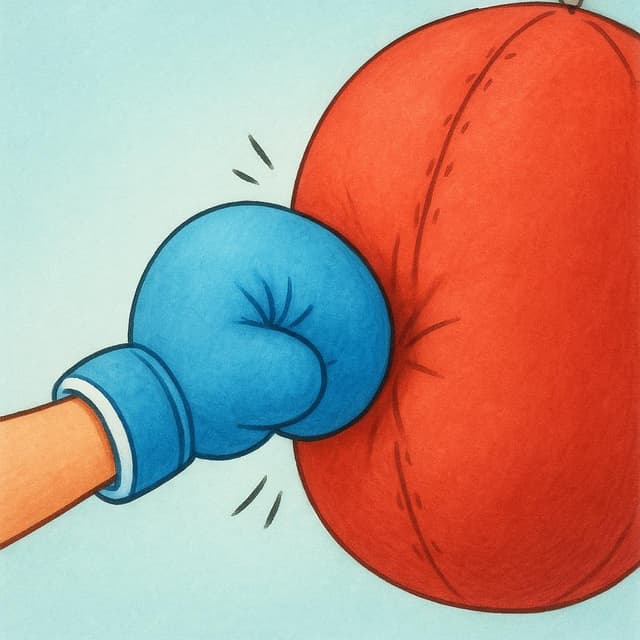
pegar — to hit
The present subjunctive of pegar uses the 'gu' spelling change in all forms: pegue, pegues, pegue, peguemos, peguéis, peguen.
pegar Present Subjunctive Forms
When to Use the Present Subjunctive
Use this for wishes, doubts, or requests regarding sticking or hitting (e.g., 'I hope it sticks' or 'Don't let him hit it').
Notes on pegar in the Present Subjunctive
Because the endings start with 'e', the 'g' must change to 'gu' in every single form to maintain the hard 'g' sound.
Example Sentences
Espero que el pegamento pegue bien.
I hope the glue sticks well.
él/ella/usted
No quiero que le pegues al perro.
I don't want you to hit the dog.
tú
Dudo que esas cortinas peguen con el sofá.
I doubt those curtains match the sofa.
ellos/ellas/ustedes
Common Mistakes
Mistake: Writing 'pege' instead of 'pegue'.
Correct: pegue
Why: Without the 'u', the 'g' would sound like an 'h' (pe-he).
Master Spanish verbs in context
Memorizing tables only gets you so far. Read 200+ illustrated and narrated Spanish stories to see verbs like 'pegar' used naturally — in the tenses you're learning.
Related Tenses
Present
yo: pego
The present tense of pegar is completely regular: pego, pegas, pega, pegamos, pegáis, pegan.
Preterite
yo: pegué
The preterite of pegar has a spelling change in the 'yo' form (pegué) to keep the hard 'g' sound.
Imperfect
yo: pegaba
The imperfect of pegar is regular: pegaba, pegabas, pegaba, pegábamos, pegabais, pegaban.
Future
yo: pegaré
The future tense of pegar is regular, using the full infinitive as the stem: pegaré, pegarás, pegará...
Conditional
yo: pegaría
The conditional of pegar is regular: pegaría, pegarías, pegaría, pegaríamos, pegaríais, pegarían.
Imperfect Subjunctive
yo: pegara
The imperfect subjunctive of pegar is regular: pegara, pegaras, pegara, pegáramos, pegarais, pegaran.
Affirmative Imperative
yo: pega
Use 'pega' (tú) for commands, and remember the 'gu' change for 'pegue' (usted) and 'peguen' (ustedes).
Negative Imperative
yo: no pegues
Negative commands always use the 'gu' spelling: no pegues, no pegue, no peguemos, no peguéis, no peguen.