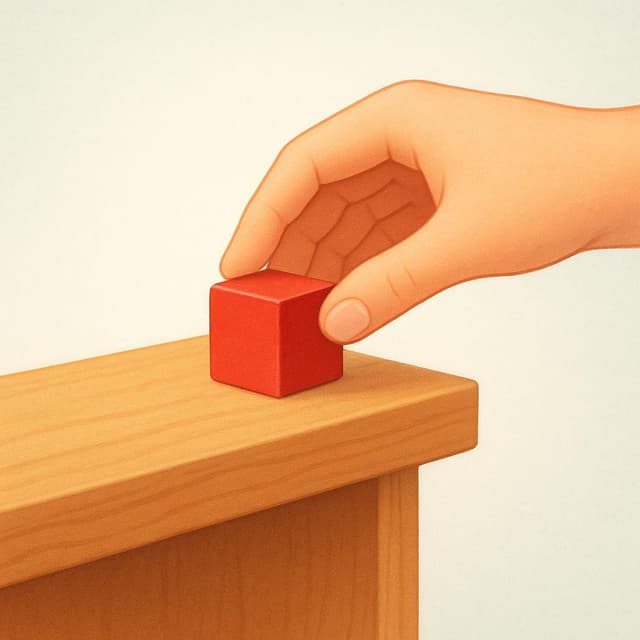
quitar Imperfect Conjugation
quitar — remove
The imperfect of quitar follows the standard -aba pattern: quitaba, quitabas, quitaba, quitábamos, quitabais, quitaban.
quitar Imperfect Forms
When to Use the Imperfect
Use the imperfect to describe habitual past removals, like a teacher who used to take away phones, or ongoing background actions.
Notes on quitar in the Imperfect
Quitar is regular in the imperfect. Remember the accent only on the 'nosotros' form: quitábamos.
Example Sentences
De niño, mi madre me quitaba los dulces.
As a child, my mother used to take away my sweets.
él/ella/usted
Mientras nosotros quitábamos la pintura, ellos limpiaban.
While we were removing the paint, they were cleaning.
nosotros
Tú siempre quitabas la etiqueta de la ropa.
You always used to remove the tag from clothes.
tú
Common Mistakes
Mistake: Using preterite for 'used to remove'.
Correct: Use the imperfect (quitaba) for habitual actions.
Why: Learners often default to the preterite for all past actions even if they were repeated.
Master Spanish verbs in context
Memorizing tables only gets you so far. Read 200+ illustrated and narrated Spanish stories to see verbs like 'quitar' used naturally — in the tenses you're learning.
Related Tenses
Present
yo: quito
The present tense of quitar is regular: quito, quitas, quita, quitamos, quitáis, quitan.
Preterite
yo: quité
The preterite of quitar is regular: quité, quitaste, quitó, quitamos, quitasteis, quitaron.
Future
yo: quitaré
The future of quitar uses the infinitive as a stem: quitaré, quitarás, quitará, quitaremos, quitaréis, quitarán.
Conditional
yo: quitaría
The conditional of quitar is regular: quitaría, quitarías, quitaría, quitaríamos, quitaríais, quitarían.
Present Subjunctive
yo: quite
The present subjunctive of quitar swaps -ar for -e: quite, quites, quite, quitemos, quitéis, quiten.
Imperfect Subjunctive
yo: quitara
The imperfect subjunctive of quitar uses the preterite stem: quitara, quitaras, quitara, quitáramos, quitarais, quitaran.
Affirmative Imperative
yo: quita
The affirmative imperative of quitar is quita (tú), quite (usted), and quitad (vosotros).
Negative Imperative
yo: no quites
The negative imperative of quitar uses the present subjunctive: no quites, no quite, no quitemos, no quitéis, no quiten.