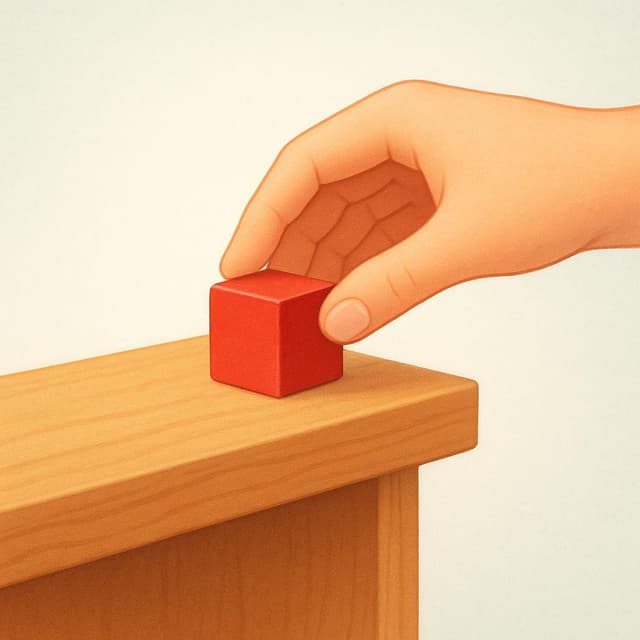
quitar Present Conjugation
quitar — remove
The present tense of quitar is regular: quito, quitas, quita, quitamos, quitáis, quitan.
quitar Present Forms
When to Use the Present
Use the present tense for everyday habits, like removing your shoes at the door or clearing the table after dinner. It also works for general facts about removing things from a list or a physical space.
Notes on quitar in the Present
Quitar is a perfectly regular -ar verb in the present tense; no stem changes or spelling shifts occur.
Example Sentences
Yo siempre me quito los zapatos al entrar.
I always take off my shoes when entering.
yo
¿Por qué quitas los cuadros de la pared?
Why are you removing the paintings from the wall?
tú
Nosotros quitamos las manchas de la alfombra.
We are removing the stains from the carpet.
nosotros
Common Mistakes
Mistake: Confusing quitar with 'salir' for 'to leave'.
Correct: Use quitar to remove an object; use salir to leave a place.
Why: Learners sometimes mix up 'removing oneself' (leaving) with 'removing an item'.
Master Spanish verbs in context
Memorizing tables only gets you so far. Read 200+ illustrated and narrated Spanish stories to see verbs like 'quitar' used naturally — in the tenses you're learning.
Related Tenses
Preterite
yo: quité
The preterite of quitar is regular: quité, quitaste, quitó, quitamos, quitasteis, quitaron.
Imperfect
yo: quitaba
The imperfect of quitar follows the standard -aba pattern: quitaba, quitabas, quitaba, quitábamos, quitabais, quitaban.
Future
yo: quitaré
The future of quitar uses the infinitive as a stem: quitaré, quitarás, quitará, quitaremos, quitaréis, quitarán.
Conditional
yo: quitaría
The conditional of quitar is regular: quitaría, quitarías, quitaría, quitaríamos, quitaríais, quitarían.
Present Subjunctive
yo: quite
The present subjunctive of quitar swaps -ar for -e: quite, quites, quite, quitemos, quitéis, quiten.
Imperfect Subjunctive
yo: quitara
The imperfect subjunctive of quitar uses the preterite stem: quitara, quitaras, quitara, quitáramos, quitarais, quitaran.
Affirmative Imperative
yo: quita
The affirmative imperative of quitar is quita (tú), quite (usted), and quitad (vosotros).
Negative Imperative
yo: no quites
The negative imperative of quitar uses the present subjunctive: no quites, no quite, no quitemos, no quitéis, no quiten.