rebasar Future Conjugation
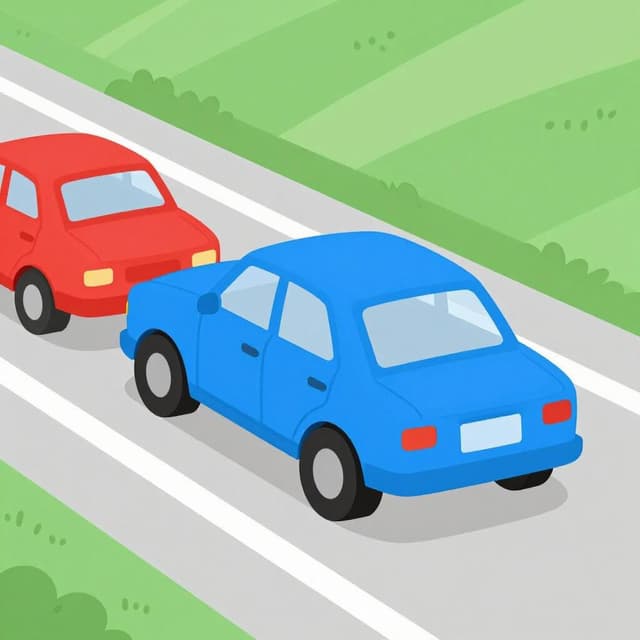
rebasar — to overtake
The future tense of rebasar (rebasaré, rebasarás...) indicates actions that will happen.
rebasar Future Forms
When to Use the Future
Use the future tense to talk about actions that are certain to happen later, or to express probability or conjecture about the present. For 'rebasar,' it could be 'I will overtake that car' or 'The price will probably exceed expectations.'
Notes on rebasar in the Future
Rebasar is regular in the future indicative. The stem is the full infinitive 'rebasar-' and the endings are the standard ones: -é, -ás, -á, -emos, -éis, -án.
Example Sentences
Mañana rebasaré el coche que va delante.
Tomorrow I will overtake the car in front.
yo
Si seguimos así, rebasaremos el objetivo.
If we continue like this, we will exceed the goal.
nosotros
No creo que tú rebasaras el límite.
I don't think you will exceed the limit.
tú
Ellos rebasarán la zona de seguridad si no tienen cuidado.
They will go past the safety zone if they are not careful.
ellos/ellas/ustedes
Common Mistakes
Mistake: Using the present tense instead of the future for a future action.
Correct: For 'I will overtake tomorrow', use 'Rebasaré mañana', not 'Rebasa mañana'.
Why: The present tense describes current or habitual actions, not future ones.
Mistake: Confusing future endings with conditional endings.
Correct: The future endings are -é, -ás, -á, etc. (e.g., 'rebasaré'), while conditional endings are -ía, -ías, -ía, etc. (e.g., 'rebasaría').
Why: These are distinct moods/tenses with different meanings and endings.
Master Spanish verbs in context
Memorizing tables only gets you so far. Read 200+ illustrated and narrated Spanish stories to see verbs like 'rebasar' used naturally — in the tenses you're learning.
Related Tenses
Present
yo: rebaso
The present tense of rebasar (rebaso, rebasas, rebasa...) is used for current actions, habits, or general truths.
Preterite
yo: rebasé
The preterite of rebasar is regular: rebasé, rebasaste, rebasó, rebasamos, rebasasteis, rebasaron.
Imperfect
yo: rebasaba
The imperfect of rebasar (rebasaba, rebasabas...) describes ongoing or habitual past actions.
Conditional
yo: rebasaría
The conditional of rebasar (rebasaría, rebasarías...) expresses hypothetical actions ('would overtake') or polite requests.
Present Subjunctive
yo: rebase
Use the present subjunctive (rebase, rebases) after expressions of doubt, desire, emotion, or uncertainty.
Imperfect Subjunctive
yo: rebasara
The imperfect subjunctive (rebasara/rebasase) is used for past hypotheticals, wishes, or politeness.
Affirmative Imperative
yo: rebasa
Use imperative forms like 'rebasa' (tú) and 'rebasen' (ustedes) for direct commands.
Negative Imperative
yo: no rebases
Use 'no + present subjunctive' for negative commands like 'no rebases' (tú) or 'no rebasen' (ustedes).