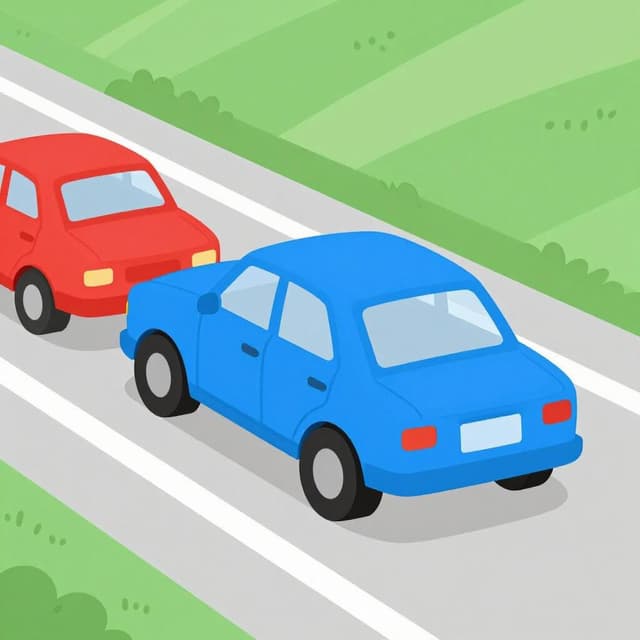
rebasar Present Conjugation
rebasar — to overtake
The present tense of rebasar (rebaso, rebasas, rebasa...) is used for current actions, habits, or general truths.
rebasar Present Forms
When to Use the Present
Use the present tense for actions happening right now ('The car is overtaking'), habitual actions ('He always overtakes on this road'), or general truths ('Exceeding the limit is dangerous').
Notes on rebasar in the Present
Rebasar is regular in the present indicative. All forms follow the standard pattern for -ar verbs: -o, -as, -a, -amos, -áis, -an.
Example Sentences
Yo rebaso a los coches lentos siempre que puedo.
I overtake slow cars whenever I can.
yo
El camión rebasa el límite de ancho con cuidado.
The truck carefully exceeds the width limit.
ellos/ellas/ustedes
¿Tú rebasas a menudo en esta carretera?
Do you often overtake on this road?
tú
El agua rebasó el borde de la bañera.
The water is overflowing the edge of the bathtub.
él/ella/usted
Common Mistakes
Mistake: Using the present for a single, completed past action.
Correct: For 'He overtook me yesterday,' use the preterite 'Me rebasó', not the present 'Me rebasa'.
Why: The present tense describes current or habitual actions, not finished events in the past.
Mistake: Incorrect 'vosotros' form.
Correct: The 'vosotros' form is 'rebasáis', not 'rebasas' or 'rebasan'.
Why: The '-áis' ending is standard for regular -ar verbs in the present indicative vosotros form.
Master Spanish verbs in context
Memorizing tables only gets you so far. Read 200+ illustrated and narrated Spanish stories to see verbs like 'rebasar' used naturally — in the tenses you're learning.
Related Tenses
Preterite
yo: rebasé
The preterite of rebasar is regular: rebasé, rebasaste, rebasó, rebasamos, rebasasteis, rebasaron.
Imperfect
yo: rebasaba
The imperfect of rebasar (rebasaba, rebasabas...) describes ongoing or habitual past actions.
Future
yo: rebasaré
The future tense of rebasar (rebasaré, rebasarás...) indicates actions that will happen.
Conditional
yo: rebasaría
The conditional of rebasar (rebasaría, rebasarías...) expresses hypothetical actions ('would overtake') or polite requests.
Present Subjunctive
yo: rebase
Use the present subjunctive (rebase, rebases) after expressions of doubt, desire, emotion, or uncertainty.
Imperfect Subjunctive
yo: rebasara
The imperfect subjunctive (rebasara/rebasase) is used for past hypotheticals, wishes, or politeness.
Affirmative Imperative
yo: rebasa
Use imperative forms like 'rebasa' (tú) and 'rebasen' (ustedes) for direct commands.
Negative Imperative
yo: no rebases
Use 'no + present subjunctive' for negative commands like 'no rebases' (tú) or 'no rebasen' (ustedes).