rebasar Imperfect Conjugation
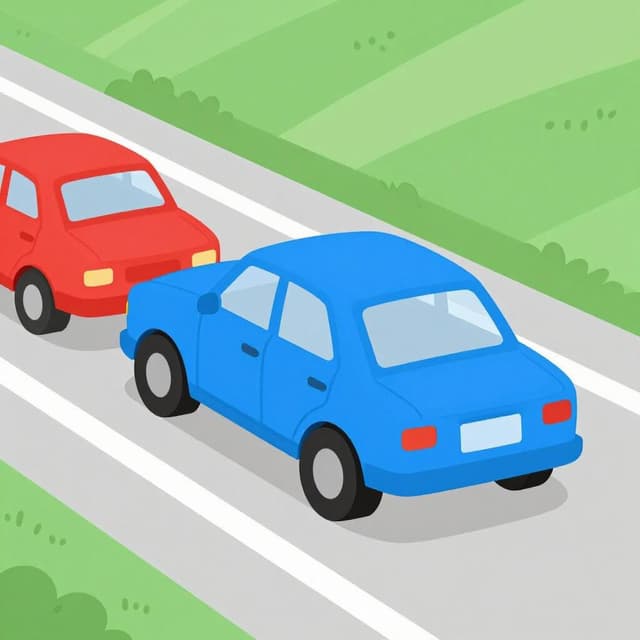
rebasar — to overtake
The imperfect of rebasar (rebasaba, rebasabas...) describes ongoing or habitual past actions.
rebasar Imperfect Forms
When to Use the Imperfect
Use the imperfect of 'rebasar' to describe actions in the past that were ongoing, habitual, or set the scene. For example, 'He used to overtake often' or 'The car was overtaking as the light turned red.' It focuses on the duration or repetition, not the completion.
Notes on rebasar in the Imperfect
Rebasar is regular in the imperfect indicative. All forms follow the standard pattern: -aba, -abas, -aba, -ábamos, -abais, -aban.
Example Sentences
Cuando era joven, rebasaba a todos en las carreras.
When I was young, I used to overtake everyone in races.
yo
El río rebasaba su cauce debido a las lluvias.
The river was overflowing its banks due to the rains.
él/ella/usted
Tú rebasabas los límites de velocidad constantemente.
You were constantly exceeding the speed limits.
tú
Mientras conducíamos, ellos rebasaban a otros coches.
While we were driving, they were overtaking other cars.
ellos/ellas/ustedes
Common Mistakes
Mistake: Using the imperfect for a single, completed past overtaking.
Correct: For 'He overtook me yesterday,' use the preterite 'Me rebasó'. The imperfect 'Me rebasaba' suggests it happened repeatedly or over a period.
Why: The imperfect describes ongoing or habitual actions, whereas the preterite describes completed actions.
Mistake: Confusing the 'nosotros' imperfect with the present tense.
Correct: The 'nosotros' form 'rebasábamos' is distinct from the present 'rebasamos'.
Why: The '-ábamos' ending clearly marks the imperfect tense for regular -ar verbs.
Master Spanish verbs in context
Memorizing tables only gets you so far. Read 200+ illustrated and narrated Spanish stories to see verbs like 'rebasar' used naturally — in the tenses you're learning.
Related Tenses
Present
yo: rebaso
The present tense of rebasar (rebaso, rebasas, rebasa...) is used for current actions, habits, or general truths.
Preterite
yo: rebasé
The preterite of rebasar is regular: rebasé, rebasaste, rebasó, rebasamos, rebasasteis, rebasaron.
Future
yo: rebasaré
The future tense of rebasar (rebasaré, rebasarás...) indicates actions that will happen.
Conditional
yo: rebasaría
The conditional of rebasar (rebasaría, rebasarías...) expresses hypothetical actions ('would overtake') or polite requests.
Present Subjunctive
yo: rebase
Use the present subjunctive (rebase, rebases) after expressions of doubt, desire, emotion, or uncertainty.
Imperfect Subjunctive
yo: rebasara
The imperfect subjunctive (rebasara/rebasase) is used for past hypotheticals, wishes, or politeness.
Affirmative Imperative
yo: rebasa
Use imperative forms like 'rebasa' (tú) and 'rebasen' (ustedes) for direct commands.
Negative Imperative
yo: no rebases
Use 'no + present subjunctive' for negative commands like 'no rebases' (tú) or 'no rebasen' (ustedes).