rebasar Present Subjunctive Conjugation
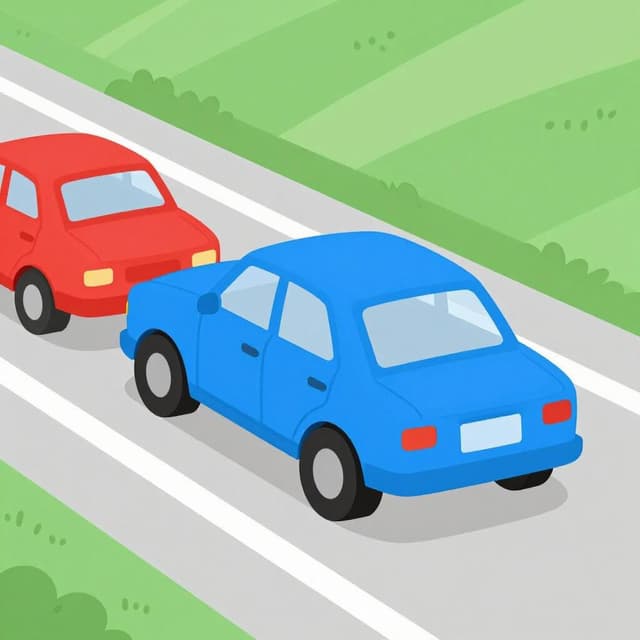
rebasar — to overtake
Use the present subjunctive (rebase, rebases) after expressions of doubt, desire, emotion, or uncertainty.
rebasar Present Subjunctive Forms
When to Use the Present Subjunctive
This tense is for when you're not stating a fact, but rather expressing a wish ('I hope they pass'), doubt ('I doubt he will overtake'), emotion ('I'm happy you're exceeding expectations'), or an impersonal opinion ('It's important to not fall behind').
Notes on rebasar in the Present Subjunctive
Rebasar is regular in the present subjunctive. The forms are: rebase (yo/él/ella/usted), rebases (tú), rebasemos (nosotros), rebaséis (vosotros), rebasen (ellos/ellas/ustedes).
Example Sentences
Espero que rebases el examen.
I hope you pass the exam.
tú
Dudo que ellos rebasen la meta a tiempo.
I doubt they will reach the goal on time.
ellos/ellas/ustedes
Me alegra que rebasemos nuestros objetivos.
I'm happy that we are exceeding our goals.
nosotros
Quiero que usted rebose confianza.
I want you to be full of confidence.
Common Mistakes
Mistake: Using the present indicative instead of the subjunctive after expressions of doubt or desire.
Correct: After 'Dudo que...' (I doubt that...), use the subjunctive: 'Dudo que rebase', not 'Dudo que rebasa'.
Why: Expressions of doubt, desire, emotion, and uncertainty trigger the subjunctive mood because they deal with non-factual or subjective situations.
Mistake: Forgetting the 'nosotros' and 'vosotros' forms.
Correct: The 'nosotros' form is 'rebasemos' and 'vosotros' is 'rebaséis', similar to other regular -ar verbs.
Why: These forms follow the standard pattern for regular -ar verbs in the present subjunctive.
Master Spanish verbs in context
Memorizing tables only gets you so far. Read 200+ illustrated and narrated Spanish stories to see verbs like 'rebasar' used naturally — in the tenses you're learning.
Related Tenses
Present
yo: rebaso
The present tense of rebasar (rebaso, rebasas, rebasa...) is used for current actions, habits, or general truths.
Preterite
yo: rebasé
The preterite of rebasar is regular: rebasé, rebasaste, rebasó, rebasamos, rebasasteis, rebasaron.
Imperfect
yo: rebasaba
The imperfect of rebasar (rebasaba, rebasabas...) describes ongoing or habitual past actions.
Future
yo: rebasaré
The future tense of rebasar (rebasaré, rebasarás...) indicates actions that will happen.
Conditional
yo: rebasaría
The conditional of rebasar (rebasaría, rebasarías...) expresses hypothetical actions ('would overtake') or polite requests.
Imperfect Subjunctive
yo: rebasara
The imperfect subjunctive (rebasara/rebasase) is used for past hypotheticals, wishes, or politeness.
Affirmative Imperative
yo: rebasa
Use imperative forms like 'rebasa' (tú) and 'rebasen' (ustedes) for direct commands.
Negative Imperative
yo: no rebases
Use 'no + present subjunctive' for negative commands like 'no rebases' (tú) or 'no rebasen' (ustedes).