tallar Affirmative Imperative Conjugation
tallar — to carve
Use the imperative of tallar for direct commands: talla (tú), talle (usted), tallemos (nosotros), tallen (ustedes), tallad (vosotros).
tallar Affirmative Imperative Forms
When to Use the Affirmative Imperative
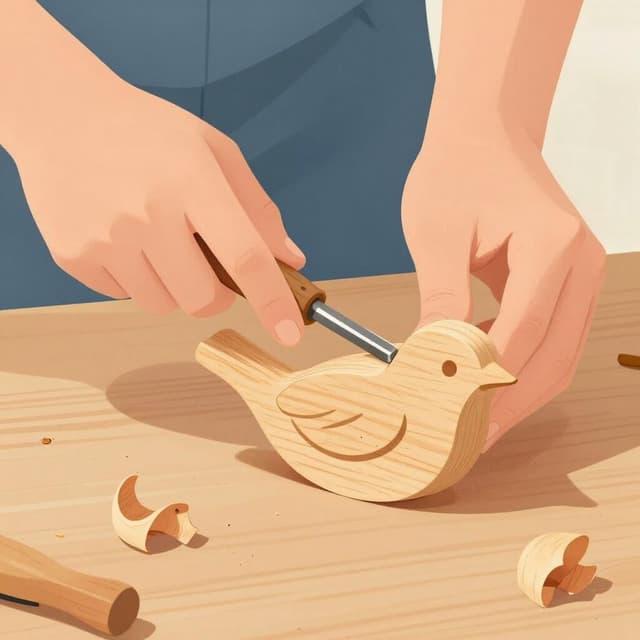
The imperative is for giving direct orders or instructions. For 'tallar,' you might use it to tell someone to carve something specific, like '¡Talla esta madera!' (Carve this wood!).
Notes on tallar in the Affirmative Imperative
Tallar is regular in the affirmative imperative. The vosotros form 'tallad' follows the standard pattern for -ar verbs.
Example Sentences
Talla la figura con cuidado.
Carve the figure carefully.
tú
Tallemos el diseño en la piedra.
Let's carve the design in the stone.
nosotros
Tallen la calabaza para Halloween.
Carve the pumpkin for Halloween.
ustedes
¡Tallad bien ese tronco!
Carve that log well!
vosotros
Common Mistakes
Mistake: Using the present indicative instead of the imperative for commands.
Correct: Use 'talla' for 'you' (tú), not 'tallas'.
Why: The imperative mood is specifically for commands, while the present indicative describes current actions.
Mistake: Forgetting the 'vosotros' form or using the wrong ending.
Correct: The correct form is 'tallad'.
Why: Regular -ar verbs in the vosotros imperative drop the 'r' and add 'd'.
Master Spanish verbs in context
Memorizing tables only gets you so far. Read 200+ illustrated and narrated Spanish stories to see verbs like 'tallar' used naturally — in the tenses you're learning.
Related Tenses
Present
yo: tallo
The present tense of tallar is regular: tallo, tallas, talla, tallamos, talláis, tallan, used for current or habitual carving.
Preterite
yo: tallé
The preterite of tallar is regular: tallé, tallaste, talló, tallamos, tallasteis, tallaron, used for completed carving actions.
Imperfect
yo: tallaba
The imperfect of tallar is regular: tallaba, tallabas, tallaba, tallábamos, tallabais, tallaban, for ongoing or habitual past carving.
Future
yo: tallaré
The future tense of tallar is regular: tallaré, tallarás, tallará, tallaremos, tallaréis, tallarán, for actions that will happen.
Conditional
yo: tallaría
The conditional of tallar is regular: tallaría, tallarías, tallaría, tallaríamos, tallaríais, tallarían, for hypothetical or polite carving.
Present Subjunctive
yo: talle
The present subjunctive of tallar (talle, talles, tallemos, tallen, talléis) is used after expressions of doubt, desire, emotion, or uncertainty.
Imperfect Subjunctive
yo: tallara
The imperfect subjunctive of tallar (tallara, tallaras, talláramos, tallaran) is used for past hypotheticals, wishes, or doubts.
Negative Imperative
yo: no talles
Negative commands for tallar use the present subjunctive: no talles (tú), no talle (usted), no tallemos (nosotros), no tallen (ustedes), no talléis (vosotros).