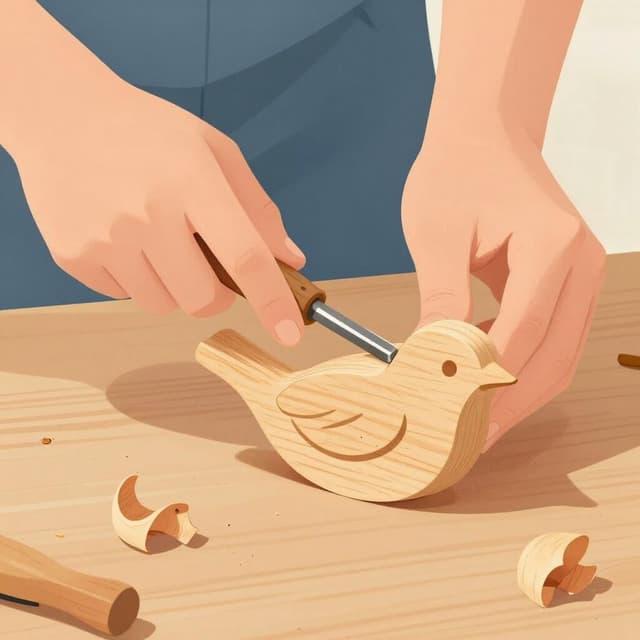
tallar Imperfect Conjugation
tallar — to carve
The imperfect of tallar is regular: tallaba, tallabas, tallaba, tallábamos, tallabais, tallaban, for ongoing or habitual past carving.
tallar Imperfect Forms
When to Use the Imperfect
Use the imperfect tense to describe actions of carving that were ongoing, habitual, or setting the scene in the past. For example, 'Cuando era niño, tallaba animales de madera' (When I was a child, I used to carve wooden animals).
Notes on tallar in the Imperfect
Tallar is regular in the imperfect tense. It follows the standard -ar verb pattern.
Example Sentences
Yo tallaba con un cuchillo pequeño.
I used to carve with a small knife.
yo
¿Tú tallabas figuras cuando eras joven?
Did you use to carve figures when you were young?
tú
Él tallaba la piedra mientras esperaba.
He was carving the stone while he waited.
él/ella/usted
Ellos tallaban la misma figura una y otra vez.
They carved the same figure over and over again.
ellos/ellas/ustedes
Common Mistakes
Mistake: Using the imperfect for a single, completed carving action.
Correct: Use the preterite 'talló' for a finished action, not 'tallaba'.
Why: The imperfect describes duration or repetition, while the preterite marks completion.
Mistake: Incorrect ending for 'vosotros'.
Correct: The correct form is 'tallabais'.
Why: Regular -ar verbs in the imperfect indicative for 'vosotros' end in -abais.
Master Spanish verbs in context
Memorizing tables only gets you so far. Read 200+ illustrated and narrated Spanish stories to see verbs like 'tallar' used naturally — in the tenses you're learning.
Related Tenses
Present
yo: tallo
The present tense of tallar is regular: tallo, tallas, talla, tallamos, talláis, tallan, used for current or habitual carving.
Preterite
yo: tallé
The preterite of tallar is regular: tallé, tallaste, talló, tallamos, tallasteis, tallaron, used for completed carving actions.
Future
yo: tallaré
The future tense of tallar is regular: tallaré, tallarás, tallará, tallaremos, tallaréis, tallarán, for actions that will happen.
Conditional
yo: tallaría
The conditional of tallar is regular: tallaría, tallarías, tallaría, tallaríamos, tallaríais, tallarían, for hypothetical or polite carving.
Present Subjunctive
yo: talle
The present subjunctive of tallar (talle, talles, tallemos, tallen, talléis) is used after expressions of doubt, desire, emotion, or uncertainty.
Imperfect Subjunctive
yo: tallara
The imperfect subjunctive of tallar (tallara, tallaras, talláramos, tallaran) is used for past hypotheticals, wishes, or doubts.
Affirmative Imperative
yo: talla
Use the imperative of tallar for direct commands: talla (tú), talle (usted), tallemos (nosotros), tallen (ustedes), tallad (vosotros).
Negative Imperative
yo: no talles
Negative commands for tallar use the present subjunctive: no talles (tú), no talle (usted), no tallemos (nosotros), no tallen (ustedes), no talléis (vosotros).