tallar Imperfect Subjunctive Conjugation
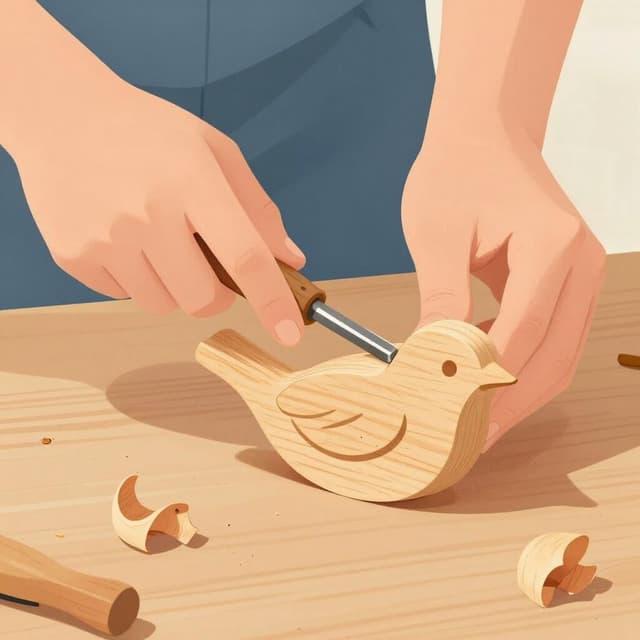
tallar — to carve
The imperfect subjunctive of tallar (tallara, tallaras, talláramos, tallaran) is used for past hypotheticals, wishes, or doubts.
tallar Imperfect Subjunctive Forms
When to Use the Imperfect Subjunctive
This tense is perfect for talking about hypothetical situations in the past or expressing wishes and doubts that were relevant at a past point in time. For example, 'Si tuviera tiempo, tallara un barco' (If I had time, I would carve a boat).
Notes on tallar in the Imperfect Subjunctive
Tallar is regular in the imperfect subjunctive. Both the -ra and -se forms exist, but the -ra form (tallara, tallaras, etc.) is generally more common and often preferred.
Example Sentences
Me pidió que tallara un corazón en la madera.
He asked me to carve a heart in the wood.
yo
Si tú tallaras más a menudo, serías un experto.
If you carved more often, you would be an expert.
tú
Ojalá ellos tallaran mejor.
I wish they carved better.
ellos/ellas/ustedes
No creía que tú tallaras tan rápido.
I didn't think you carved so fast.
tú
Common Mistakes
Mistake: Confusing imperfect subjunctive with the preterite or imperfect indicative.
Correct: Use 'tallara' for hypotheticals or wishes, not 'talló' or 'tallaba'.
Why: The subjunctive mood expresses non-factual or subjective situations, unlike the indicative.
Mistake: Using the -ra form when the -se form is expected, or vice-versa.
Correct: Both 'tallara' and 'tallase' are correct imperfect subjunctive forms, but 'tallara' is often more common.
Why: While both are grammatically correct, regional preferences and specific contexts can favor one over the other.
Master Spanish verbs in context
Memorizing tables only gets you so far. Read 200+ illustrated and narrated Spanish stories to see verbs like 'tallar' used naturally — in the tenses you're learning.
Related Tenses
Present
yo: tallo
The present tense of tallar is regular: tallo, tallas, talla, tallamos, talláis, tallan, used for current or habitual carving.
Preterite
yo: tallé
The preterite of tallar is regular: tallé, tallaste, talló, tallamos, tallasteis, tallaron, used for completed carving actions.
Imperfect
yo: tallaba
The imperfect of tallar is regular: tallaba, tallabas, tallaba, tallábamos, tallabais, tallaban, for ongoing or habitual past carving.
Future
yo: tallaré
The future tense of tallar is regular: tallaré, tallarás, tallará, tallaremos, tallaréis, tallarán, for actions that will happen.
Conditional
yo: tallaría
The conditional of tallar is regular: tallaría, tallarías, tallaría, tallaríamos, tallaríais, tallarían, for hypothetical or polite carving.
Present Subjunctive
yo: talle
The present subjunctive of tallar (talle, talles, tallemos, tallen, talléis) is used after expressions of doubt, desire, emotion, or uncertainty.
Affirmative Imperative
yo: talla
Use the imperative of tallar for direct commands: talla (tú), talle (usted), tallemos (nosotros), tallen (ustedes), tallad (vosotros).
Negative Imperative
yo: no talles
Negative commands for tallar use the present subjunctive: no talles (tú), no talle (usted), no tallemos (nosotros), no tallen (ustedes), no talléis (vosotros).