tallar Preterite Conjugation
tallar — to carve
The preterite of tallar is regular: tallé, tallaste, talló, tallamos, tallasteis, tallaron, used for completed carving actions.
tallar Preterite Forms
When to Use the Preterite
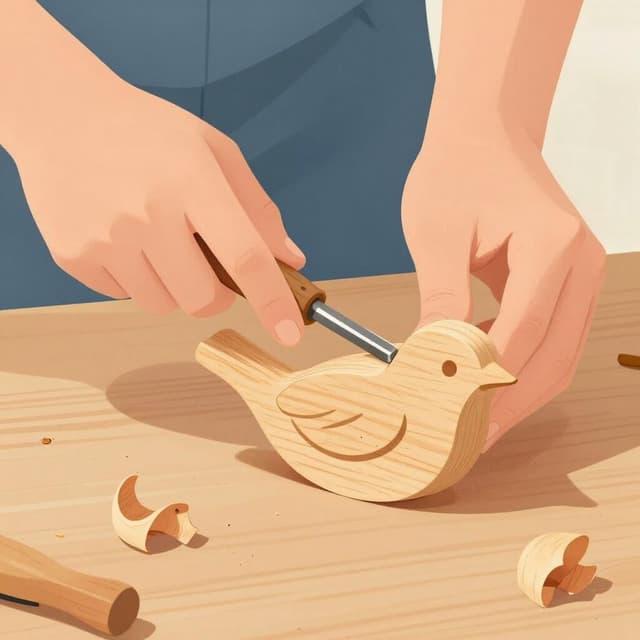
Use the preterite for specific, completed actions of carving in the past. For example, 'Ayer talló un pájaro de madera' (Yesterday he carved a wooden bird) – the action is finished.
Notes on tallar in the Preterite
Tallar is completely regular in the preterite tense. All forms follow the standard endings for -ar verbs.
Example Sentences
Yo tallé un pequeño barco de juguete.
I carved a small toy boat.
yo
¿Tú tallaste esa figura geométrica?
Did you carve that geometric shape?
tú
El artista talló el león en mármol.
The artist carved the lion in marble.
él/ella/usted
Ellos tallaron sus nombres en el árbol.
They carved their names in the tree.
ellos/ellas/ustedes
Common Mistakes
Mistake: Writing 'talle' instead of 'tallé' for the 'yo' form.
Correct: The 'yo' form is 'tallé', with an accent on the final 'é'.
Why: The accent on 'tallé' indicates the stress falls on the final syllable and distinguishes it from other forms like the present subjunctive.
Mistake: Using the imperfect 'tallaba' for a single completed action.
Correct: Use 'talló' for a specific carving event, not 'tallaba'.
Why: The preterite marks a finished action, while the imperfect describes ongoing or habitual past actions.
Master Spanish verbs in context
Memorizing tables only gets you so far. Read 200+ illustrated and narrated Spanish stories to see verbs like 'tallar' used naturally — in the tenses you're learning.
Related Tenses
Present
yo: tallo
The present tense of tallar is regular: tallo, tallas, talla, tallamos, talláis, tallan, used for current or habitual carving.
Imperfect
yo: tallaba
The imperfect of tallar is regular: tallaba, tallabas, tallaba, tallábamos, tallabais, tallaban, for ongoing or habitual past carving.
Future
yo: tallaré
The future tense of tallar is regular: tallaré, tallarás, tallará, tallaremos, tallaréis, tallarán, for actions that will happen.
Conditional
yo: tallaría
The conditional of tallar is regular: tallaría, tallarías, tallaría, tallaríamos, tallaríais, tallarían, for hypothetical or polite carving.
Present Subjunctive
yo: talle
The present subjunctive of tallar (talle, talles, tallemos, tallen, talléis) is used after expressions of doubt, desire, emotion, or uncertainty.
Imperfect Subjunctive
yo: tallara
The imperfect subjunctive of tallar (tallara, tallaras, talláramos, tallaran) is used for past hypotheticals, wishes, or doubts.
Affirmative Imperative
yo: talla
Use the imperative of tallar for direct commands: talla (tú), talle (usted), tallemos (nosotros), tallen (ustedes), tallad (vosotros).
Negative Imperative
yo: no talles
Negative commands for tallar use the present subjunctive: no talles (tú), no talle (usted), no tallemos (nosotros), no tallen (ustedes), no talléis (vosotros).