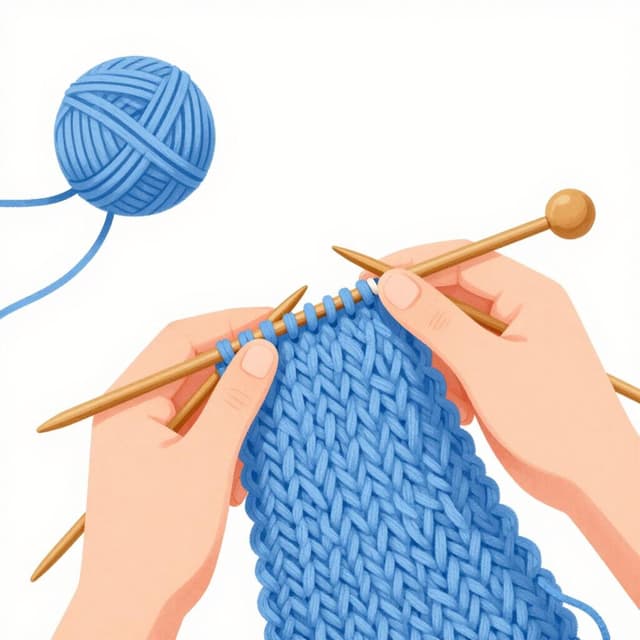
tejer Conditional Conjugation
tejer — to knit
Use 'tejería', 'tejerías', 'tejería', 'tejeríamos', 'tejeríais', 'tejerían' for hypotheticals ('would'), polite requests, or future-in-the-past.
tejer Conditional Forms
When to Use the Conditional
Use the conditional for hypothetical situations ('Si tuviera tiempo, tejería un chal' - If I had time, I would knit a shawl), polite requests ('¿Tejerías esto para mí?' - Would you knit this for me?), or to describe what someone would do in the future from a past perspective ('Dijo que tejería la bufanda' - He said he would knit the scarf).
Notes on tejer in the Conditional
Tejer is regular in the conditional. The stem is the infinitive 'tejer-', and the standard conditional endings are added.
Example Sentences
Yo tejería una manta si tuviera más paciencia.
I would knit a blanket if I had more patience.
yo
¿Tú tejerías un jersey para tu padre?
Would you knit a sweater for your father?
tú
Ella tejería todo a mano si pudiera.
She would knit everything by hand if she could.
él/ella/usted
Nosotros tejeríamos un tapiz si tuviéramos el material.
We would knit a tapestry if we had the material.
nosotros
Ellos tejerían más si tuvieran más tiempo libre.
They would knit more if they had more free time.
ellos/ellas/ustedes
Common Mistakes
Mistake: Using the imperfect 'tejía' instead of the conditional 'tejería' for a hypothetical 'would'.
Correct: Use 'tejería' for 'would knit'.
Why: 'Tejía' describes past habits or ongoing actions, while 'tejería' expresses hypothetical outcomes.
Mistake: Confusing the conditional 'tejería' (yo/él/ella/usted) with the imperfect 'tejía'.
Correct: Remember the extra 'r' in the conditional stem: 'tejer-' + '-ía'.
Why: The endings are similar, but the stem and meaning are different.
Master Spanish verbs in context
Memorizing tables only gets you so far. Read 200+ illustrated and narrated Spanish stories to see verbs like 'tejer' used naturally — in the tenses you're learning.
Related Tenses
Present
yo: tejo
Use 'tejo', 'tejes', 'teje', 'tejemos', 'tejéis', 'tejen' for knitting happening now, habitually, or as a general truth.
Preterite
yo: tejí
Use 'tejí', 'tejiste', 'tejió', 'tejimos', 'tejisteis', 'tejieron' for completed knitting actions in the past.
Imperfect
yo: tejía
Use 'tejía', 'tejías', 'tejía', 'tejíamos', 'tejíais', 'tejían' for ongoing or habitual knitting in the past.
Future
yo: tejeré
Use 'tejeré', 'tejerás', 'tejerá', 'tejeremos', 'tejeréis', 'tejerán' for future knitting actions or probability.
Present Subjunctive
yo: teja
Use 'teja' (yo/él/ella/usted), 'tejas' (tú), 'tejamos' (nosotros), 'tejan' (ellos/ellas/ustedes), 'tejáis' (vosotros) after expressions of doubt, desire, emotion, or uncertainty.
Imperfect Subjunctive
yo: tejiera
Use 'tejiera'/'tejiese' (yo/él/ella/usted), 'tejieras'/'tejieses' (tú), 'tejiéramos'/'tejiésemos' (nosotros), 'tejieran'/'tejiesen' (ellos/ellas/ustedes), 'tejierais'/'tejieseis' (vosotros) for past hypotheticals or wishes.
Affirmative Imperative
yo: teje
Use 'teje' (tú), 'teja' (usted), 'tejamos' (nosotros), 'tejan' (ustedes), 'tejed' (vosotros) for direct commands.
Negative Imperative
yo: no tejas
Use 'no tejas' (tú), 'no teja' (usted), 'no tejamos' (nosotros), 'no tejan' (ustedes), 'no tejáis' (vosotros) for negative commands.