tejer Preterite Conjugation
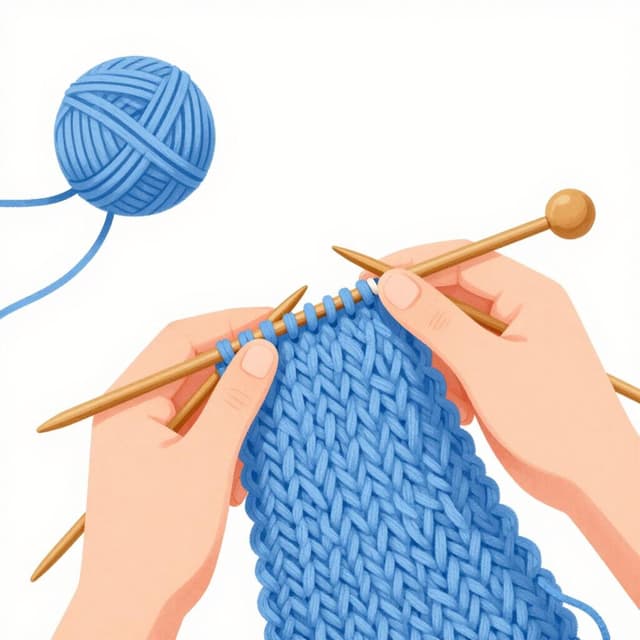
tejer — to knit
Use 'tejí', 'tejiste', 'tejió', 'tejimos', 'tejisteis', 'tejieron' for completed knitting actions in the past.
tejer Preterite Forms
When to Use the Preterite
Use the preterite for completed knitting actions that started and finished at a specific point in the past. For example, 'Ayer tejí un gorro' (Yesterday I knitted a hat) or 'Ella tejió la bufanda en una tarde' (She knitted the scarf in one afternoon).
Notes on tejer in the Preterite
Tejer is a regular -er verb in the preterite. The stem 'tej-' remains unchanged, and the standard endings are applied.
Example Sentences
Ayer tejí un suéter para mi sobrino.
Yesterday I knitted a sweater for my nephew.
yo
¿Tejiste la manta que te regalé?
Did you knit the blanket that I gave you?
tú
Mi abuela tejió esa chaqueta cuando era joven.
My grandmother knitted that jacket when she was young.
él/ella/usted
Ellos tejieron las medias durante el invierno.
They knitted the socks during the winter.
ellos/ellas/ustedes
Nosotros tejimos una alfombra para la sala.
We knitted a rug for the living room.
nosotros
Common Mistakes
Mistake: Using the imperfect 'tejía' instead of the preterite 'tejí' for a single completed action.
Correct: Use 'tejí' for a specific, completed knitting project.
Why: 'Tejía' implies an ongoing or habitual action in the past, not a finished one.
Mistake: Forgetting the accent on 'tejió' (él/ella/usted) and 'tejieron' (ellos/ellas/ustedes).
Correct: The forms are tejió and tejieron.
Why: The accent marks the stressed syllable in these third-person preterite forms.
Master Spanish verbs in context
Memorizing tables only gets you so far. Read 200+ illustrated and narrated Spanish stories to see verbs like 'tejer' used naturally — in the tenses you're learning.
Related Tenses
Present
yo: tejo
Use 'tejo', 'tejes', 'teje', 'tejemos', 'tejéis', 'tejen' for knitting happening now, habitually, or as a general truth.
Imperfect
yo: tejía
Use 'tejía', 'tejías', 'tejía', 'tejíamos', 'tejíais', 'tejían' for ongoing or habitual knitting in the past.
Future
yo: tejeré
Use 'tejeré', 'tejerás', 'tejerá', 'tejeremos', 'tejeréis', 'tejerán' for future knitting actions or probability.
Conditional
yo: tejería
Use 'tejería', 'tejerías', 'tejería', 'tejeríamos', 'tejeríais', 'tejerían' for hypotheticals ('would'), polite requests, or future-in-the-past.
Present Subjunctive
yo: teja
Use 'teja' (yo/él/ella/usted), 'tejas' (tú), 'tejamos' (nosotros), 'tejan' (ellos/ellas/ustedes), 'tejáis' (vosotros) after expressions of doubt, desire, emotion, or uncertainty.
Imperfect Subjunctive
yo: tejiera
Use 'tejiera'/'tejiese' (yo/él/ella/usted), 'tejieras'/'tejieses' (tú), 'tejiéramos'/'tejiésemos' (nosotros), 'tejieran'/'tejiesen' (ellos/ellas/ustedes), 'tejierais'/'tejieseis' (vosotros) for past hypotheticals or wishes.
Affirmative Imperative
yo: teje
Use 'teje' (tú), 'teja' (usted), 'tejamos' (nosotros), 'tejan' (ustedes), 'tejed' (vosotros) for direct commands.
Negative Imperative
yo: no tejas
Use 'no tejas' (tú), 'no teja' (usted), 'no tejamos' (nosotros), 'no tejan' (ustedes), 'no tejáis' (vosotros) for negative commands.