tejer Present Subjunctive Conjugation
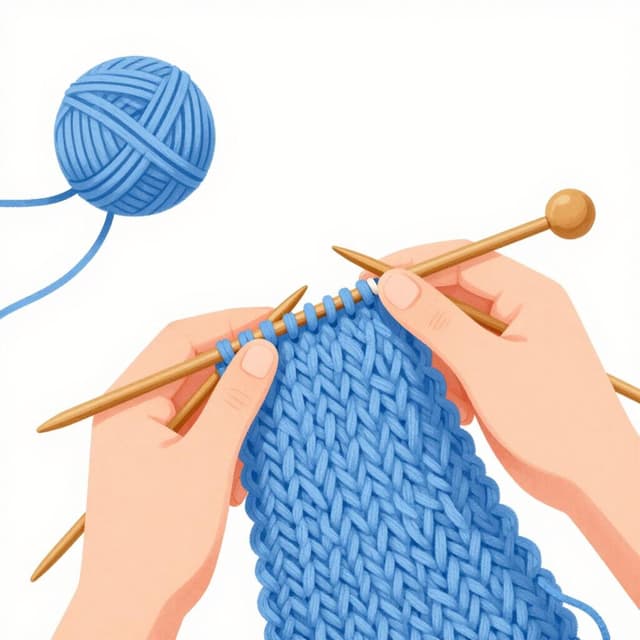
tejer — to knit
Use 'teja' (yo/él/ella/usted), 'tejas' (tú), 'tejamos' (nosotros), 'tejan' (ellos/ellas/ustedes), 'tejáis' (vosotros) after expressions of doubt, desire, emotion, or uncertainty.
tejer Present Subjunctive Forms
When to Use the Present Subjunctive
This tense is used when the main clause expresses doubt, desire, emotion, or an impersonal opinion, and the subordinate clause involves a different subject. For example, 'Dudo que teja bien' (I doubt that he knits well) or 'Me alegra que tejas' (I'm happy that you knit).
Notes on tejer in the Present Subjunctive
Tejer is regular in the present subjunctive, following the standard pattern for -er verbs. The stem 'tej-' is consistent across all forms.
Example Sentences
Espero que tejas un gorro bonito.
I hope you knit a pretty hat.
tú
Dudo que ella teja tan rápido como su madre.
I doubt she knits as fast as her mother.
él/ella/usted
Es importante que tejamos con cuidado.
It's important that we knit carefully.
nosotros
Quiero que ustedes tejan esto para el mercado.
I want you all to knit this for the market.
No creo que vosotros tejáis mucho en verano.
I don't think you guys knit much in the summer.
vosotros
Common Mistakes
Mistake: Using the present indicative ('tejes') instead of the present subjunctive ('tejas') after doubt or desire.
Correct: Use 'tejas' after phrases like 'dudo que', 'espero que', 'quiero que'.
Why: The subjunctive mood is required to express non-factual or subjective situations.
Mistake: Forgetting the 's' in the vosotros form 'tejáis'.
Correct: The correct form is 'tejáis'.
Why: The '-éis' ending is characteristic of the vosotros present subjunctive for -er and -ir verbs.
Master Spanish verbs in context
Memorizing tables only gets you so far. Read 200+ illustrated and narrated Spanish stories to see verbs like 'tejer' used naturally — in the tenses you're learning.
Related Tenses
Present
yo: tejo
Use 'tejo', 'tejes', 'teje', 'tejemos', 'tejéis', 'tejen' for knitting happening now, habitually, or as a general truth.
Preterite
yo: tejí
Use 'tejí', 'tejiste', 'tejió', 'tejimos', 'tejisteis', 'tejieron' for completed knitting actions in the past.
Imperfect
yo: tejía
Use 'tejía', 'tejías', 'tejía', 'tejíamos', 'tejíais', 'tejían' for ongoing or habitual knitting in the past.
Future
yo: tejeré
Use 'tejeré', 'tejerás', 'tejerá', 'tejeremos', 'tejeréis', 'tejerán' for future knitting actions or probability.
Conditional
yo: tejería
Use 'tejería', 'tejerías', 'tejería', 'tejeríamos', 'tejeríais', 'tejerían' for hypotheticals ('would'), polite requests, or future-in-the-past.
Imperfect Subjunctive
yo: tejiera
Use 'tejiera'/'tejiese' (yo/él/ella/usted), 'tejieras'/'tejieses' (tú), 'tejiéramos'/'tejiésemos' (nosotros), 'tejieran'/'tejiesen' (ellos/ellas/ustedes), 'tejierais'/'tejieseis' (vosotros) for past hypotheticals or wishes.
Affirmative Imperative
yo: teje
Use 'teje' (tú), 'teja' (usted), 'tejamos' (nosotros), 'tejan' (ustedes), 'tejed' (vosotros) for direct commands.
Negative Imperative
yo: no tejas
Use 'no tejas' (tú), 'no teja' (usted), 'no tejamos' (nosotros), 'no tejan' (ustedes), 'no tejáis' (vosotros) for negative commands.