asegúrate
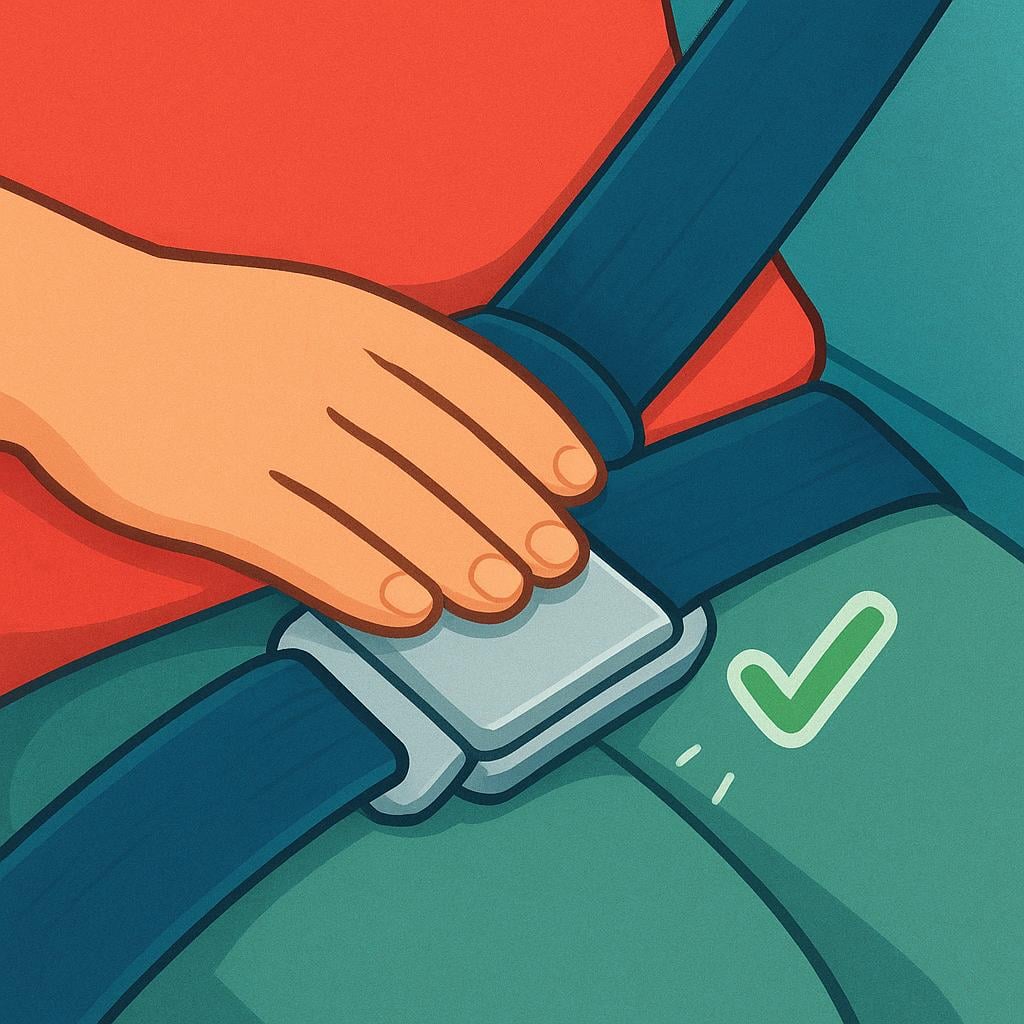
“asegúrate” means “Make sure” in Spanish (Informal command to check something).
📝 In Action
Asegúrate de llevar tu pasaporte antes de salir.
A2Make sure you take your passport before leaving.
El perro está bien. ¡Pero asegúrate de cerrar la puerta con llave!
A2The dog is fine. But make sure you lock the door!
Antes de comprar el boleto, asegúrate de que la fecha sea correcta.
B1Before buying the ticket, be sure that the date is correct.
Word Connections
Indicative
Present
Imperfect
Preterite
Subjunctive
Present Subjunctive
Imperfect Subjunctive
Translate to Spanish
Words that translate to "asegúrate" in Spanish:
✏️ Quick Practice
Quick Quiz: asegúrate
Question 1 of 2
Which sentence correctly uses the formal command equivalent of 'asegúrate'?
📚 More Resources
👥 Word Family
🎵 Rhymes
📚 Etymology
Comes from the Latin *securus* (safe, secure), which gives us the Spanish root *seguro* (sure/safe). The prefix *a-* was added to form the verb *asegurar* (to make safe/sure). *Asegúrate* is the command form of the reflexive version, *asegurarse* (to make oneself sure).
First recorded: The verb *asegurar* dates back to the 13th century in Spanish.
Cognates (Related words)
💡 Master Spanish
Take your Spanish to the next level. Read 200+ illustrated and narrated Spanish stories tailored to your level with the Inklingo app!
Frequently Asked Questions
Why does 'asegúrate' have 'te' at the end?
The 'te' means 'yourself.' The base verb is *asegurarse* (to assure oneself, or make oneself sure). When you give an affirmative command in Spanish, the pronoun that tells *who* is doing the action to themselves must be attached to the end of the verb.
What is the difference between 'asegúrate' and 'asegura'?
'Asegura' means 'Assure (something/someone else)' (e.g., *Asegura la puerta* - Secure the door). 'Asegúrate' means 'Make sure (you yourself are certain)' (e.g., *Asegúrate de que la puerta esté cerrada* - Make sure the door is closed).