asteroide
“asteroide” means “asteroid” in Spanish (a small rocky body orbiting the sun).
asteroid
Also: minor planet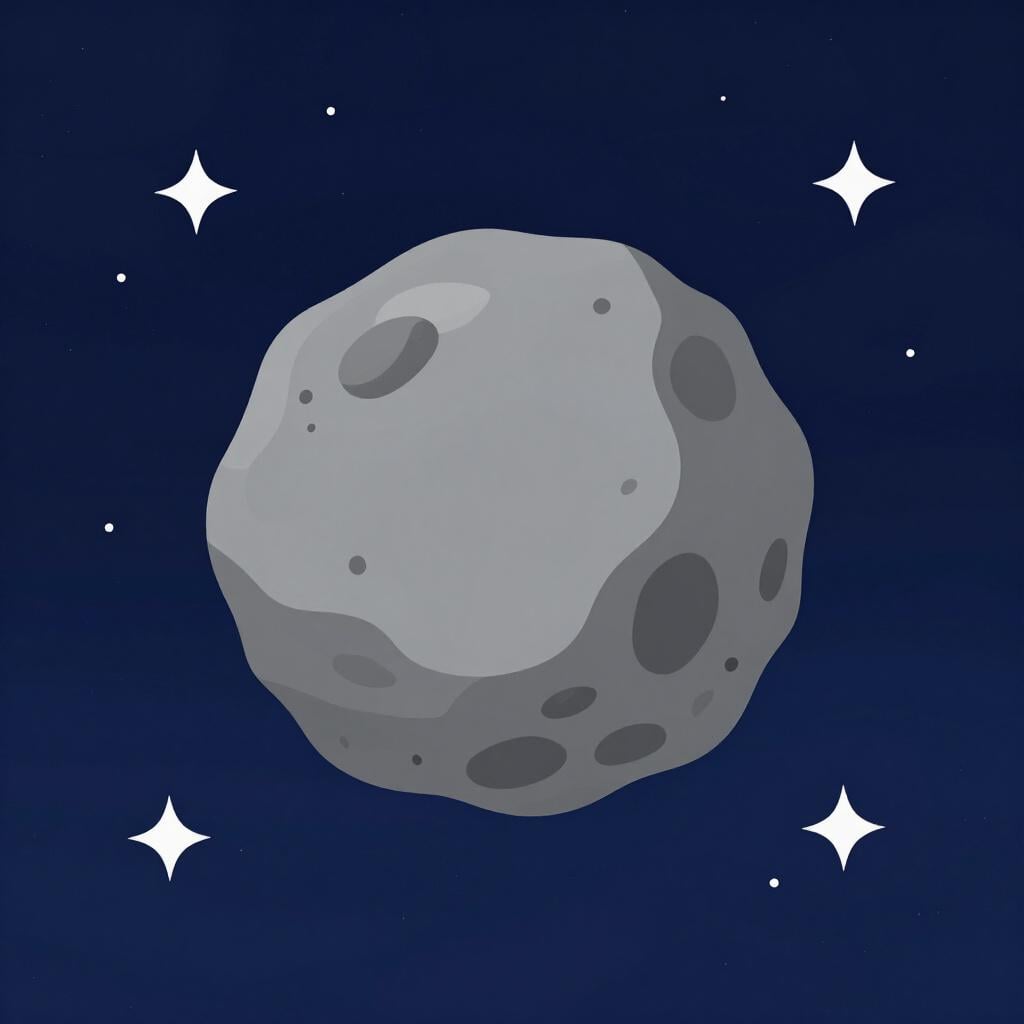
📝 In Action
El asteroide pasó muy cerca de la Tierra.
A2The asteroid passed very close to Earth.
Los científicos usan telescopios para buscar asteroides nuevos.
B1Scientists use telescopes to look for new asteroids.
Existe un gran cinturón de asteroides entre Marte y Júpiter.
B2There is a large asteroid belt between Mars and Jupiter.
Translate to Spanish
✏️ Quick Practice
Quick Quiz: asteroide
Question 1 of 3
Which of these is the correct way to say 'the asteroid'?
📚 More Resources
👥 Word Family▼
🎵 Rhymes▼
📚 Etymology▼
From the Greek word 'asteroeidēs', which means 'star-like' or 'star-shaped'. It was named this because through early telescopes, they looked like tiny points of light, just like stars.
First recorded: 19th century
Cognates (Related words)
💡 Master Spanish
Take your Spanish to the next level. Read 200+ illustrated and narrated Spanish stories tailored to your level with the Inklingo app!
Frequently Asked Questions
Is 'asteroide' masculine or feminine?
It is masculine (el asteroide).
Is the word the same in English and Spanish?
Almost! They are cognates. In Spanish, we add an 'e' at the end and pronounce it with four syllables: as-te-roi-de.
When should I use 'asteroide' instead of 'cometa'?
Use 'asteroide' for rocks. Use 'cometa' (comet) for objects made of ice and dust that have a 'tail' of gas.